Technical Knowledge Hub

Precision CNC & EDM Machining Technology

Expert engineering insights, drive motor technical overviews, spindle duty cycle ratings, and micron-level motion control analysis for global manufacturers.

Welcome to the WSM Technology Tech Corner. Backed by over four decades of practical engineering expertise in toolmaking, mold making, and advanced precision machinery, our technical team provides buyers and machine shop owners with essential evaluations of CNC linear drive systems, industrial motor duty cycles, and micron-level trajectory tolerances.

1. Non-Contact Magnetic Cylindrical Drive System (Linear Shaft Motor)

Traditional ballscrew drive mechanisms generate mechanical friction, heat buildup, and eventual backlash over continuous production cycles. Modern high-precision Wire EDM machines, such as the Mitsubishi MV Series, incorporate revolutionary non-contact Linear Shaft Motors (Magnetic Cylindrical Drive Systems).

By utilizing a 360-degree magnetic field with zero physical contact, linear shaft motors eliminate thermal expansion and pitch errors, providing lifelong sub-micron positioning accuracy, ultra-smooth velocity control, and up to 50% reductions in dielectric power consumption.
Linear Shaft Motor Engineering Overview

Wire EDM Axis Linear Shaft Motor Application

2. Understanding Machine Tool Spindle Duty Ratings (S1 vs. S2 vs. S6)

When selecting a high-speed CNC milling machine or turning center, evaluating spindle horsepower ratings without understanding standardized International Electrotechnical Commission (IEC) duty cycles can lead to incorrect machine sizing and motor burnout during heavy milling operations.

Different machinery brands quote spindle ratings based on varied duty standards. Mitsubishi Machine Tools strictly publishes conservative, heavy-duty continuous S1 ratings, ensuring 100% duty cycle reliability under continuous maximum machining load.

IEC Duty Standard Engineering Definition Commercial Machinery Equivalent
S1 Duty Continuous operation at rated maximum load without exceeding thermal limits. Mitsubishi Continuous Rating (True 24/7 heavy metal removal limit)
S2 Duty Short-time operation under constant load for a specified brief duration. Haas Rating @ 150% (2-Minute limit)
S3 & S4 Duty Intermittent periodic operation with cyclic starting & electrical braking loads. Standard light-duty job shop machining cycles
S6 Duty Continuous duty consisting of a sequence of identical duty cycles (Loaded / Unloaded). Mitsubishi 30-Minute Intermittent Rating

3. Chart Arc Trajectory Precision & Contour Tolerances in Microns

In high-speed 3-axis and 5-axis milling or precision wire EDM cutting, true circular interpolation accuracy is critical for tight-tolerance mold cavities and aerospace turbine components. The chart arc comparison evaluates contouring deviation across varying feed rates.

Micron-Level Interpolation Analysis

Advanced CNC controllers dynamic feed-forward routines compensate for servo lag during arc transitions. Using optical linear scales and high-speed CNC controls, contouring errors are constrained within sub-micron boundaries regardless of direction changes.

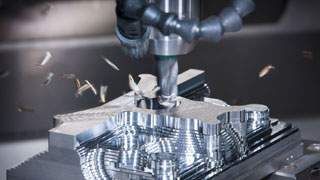
Precision CNC Milling Interpolation Contour Testing

4. Spindle Power Dynamics: Horsepower vs. Low-Speed Torque

Selecting the optimal spindle configuration requires balancing high-RPM horsepower against low-RPM torque output. High horsepower enables fast surface finish capabilities in aluminum and graphite milling, while high torque at low RPM is mandatory for heavy roughing cuts in hardened tool steels, Inconel, and titanium alloys.

Spindle Torque Dynamics Guide

Technical evaluation of spindle power curves, gear ratios, and direct-drive torque performance for precision machine tools.

Mold & Die Automation Case Studies

Engineering report on automated electrode changing, robotic workpiece handling, and cell integration for 24/7 manufacturing.

Need Technical Advice or Machine Tool Quotes?

Speak directly with WSM Technology's experienced application engineers to discuss machine specifications, conduct test cuts, or evaluate cycle time studies tailored to your manufacturing requirements.

Send an Inquiry