1. Comprehensive Technical Breakdown: What Sets 5-Axis CNC Milling Apart?
In modern precision manufacturing, 5-Axis CNC Milling Machines represent the pinnacle of subtractive machining capabilities. Unlike traditional 3-axis machining centers restricted to linear X, Y, and Z axes, a 5-axis machining center adds two rotational axes (A, B, or C). This multi-directional maneuvering allows the cutting tool to approach a workpiece from virtually any orientation in a single setup.
When evaluating 5-axis machinery, procurement teams must distinguish between two primary operational modes:
3+2 Positional Machining (Indexable 5-Axis): The machine uses two rotary axes to tilt and orient the cutting tool into a fixed position. The three linear axes then execute the cutting motion. This approach is ideal for multi-sided prismatic components, deep pocketing, and reducing setup times on complex die-cast components.
Simultaneous Continuous 5-Axis Machining: All five axes engage simultaneously in continuous, dynamic motion. This capability is mandatory for sculptured surfaces, complex aerospace blisks, turbine impellers, medical prosthetics, and high-conformal cooling channels in injection molds.
Information Gain: Kinematic Configuration Selection for Structural Rigidity
Trunnion-Style (Table-Table / Tilting Table): Features A/B rotary axes embedded directly into the machine bed. Provides exceptional stiffness and torque for smaller, heavy-duty aerospace alloys, titanium, and hardened tool steels. However, weight capacity is limited by table payload restrictions.
Swivel Head / Rotary Table (Head-Table or Head-Head): Integrates rotary axes into the spindle ram. Ideal for large-format aerospace structural components, automotive mold bases, and long structural extrusions. Eliminates workpiece weight constraints on rotary dynamics.
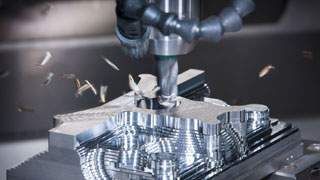
Figure 1: High-Speed 5-Axis Milling Center executing complex contouring on hardened alloy tool steel.
Achieving sub-micron repeatability across 5-axis tool paths requires controlling complex error vectors. Unlike 3-axis machines where orthogonal linear alignment dominates accuracy, 5-axis machines incur 41 distinct kinematic geometric errors, including tilt axis center offsets, wobble errors, and thermal expansion across dual rotary joints. Premier builders counter these challenges using Rotational Tool Center Point (RTCP) algorithms, direct-drive torque motors, and active coolant jacket loops.
Evaluation Parameter
Trunnion Table Design (A/C or B/C)
Swivel Head / Rotary Design (B/C or A/C)
Gantry Multi-Axis Architecture
Primary Target Applications
Impellers, Medical Implants, Small Mold Cavities
Large Aerospace Frames, Aircraft Ribs, Automotive Molds
Heavy Tooling, Die-Sinking Electrodes, Deep Hole Boring
2. Strategic Machine Recommendations: Premier 5-Axis Solutions by WSM Technology
Selecting the ideal 5-Axis CNC Milling Machine requires matching material hardness, batch size, cycle time requirements, and tolerance bands with specialized machine builders. WSM Technology represents world-leading machinery brands engineered specifically for high-precision, low-vibration performance.
Germany | High-Speed & Graphite Milling
OPS Ingersoll High-Speed 5-Axis Machining Centers
Famous for the Eagle V5 and Eagle V9 series, OPS Ingersoll combines high-speed 5-axis milling with specialized graphite machining capability. Featuring linear drive motors on all axes and mineral cast gantry beds, these systems achieve surface finishes down to Ra 0.1 µm.
Simultaneous graphite electrode and hard steel machining (up to 64 HRC)
Fully sealed enclosures with zero-maintenance linear drives
Seamless integration with multi-pallet automation robotics
Engineered for micro-molding, medical optics, and semiconductor tooling. Roku-Roku machines utilize hand-scraped ways, massive thermo-symmetrical frames, and ultra-high rpm spindles (up to 60,000 RPM) to deliver positioning accuracy under 1 micron.
Sub-micron volumetric accuracy for micro-features
Zero-thermal-drift design for 48-hour continuous lights-out production
Active vibration control preventing micro-chatter marks
Designed for mirror-surface finishing and complex 3D micro-milling. JINGDIAO 5-axis centers incorporate proprietary high-speed motorized spindles and intelligent CNC controllers capable of real-time tool wear compensation.
CHETO Multi-Axis Deep Hole Drilling & Milling Systems
Combining 5-axis milling with deep hole gun drilling capabilities. CHETO machines allow mold and die manufacturers to machine complex water channels, angular ejection holes, and deep cavity pockets in one consolidated setup.
7-axis kinematic flexibility for massive mold bases
Reduces mold processing times by over 60% via single-setup processing
Extreme torque spindles designed for heavy stock removal in tough steels
3. Global Procurement Trends for 5-Axis CNC Equipment (2025–2030)
As global supply chains shift toward localized, high-mix/low-volume production, global procurement managers are moving away from evaluating machines solely based on sticker price. Instead, procurement strategies focus on total manufacturing resilience, automation readiness, and energy efficiency.
Key Procurement Drivers in Modern Manufacturing
Automation Readiness & Standardized Interfaces: Modern 5-axis machines must integrate seamlessly with zero-point clamping systems (Erowa, System 3R, Schunk) and flexible manufacturing system (FMS) robotic cell loaders. Standardized pneumatic, hydraulic, and RFID tool-management interfaces allow unmanned lights-out manufacturing over weekends.
Total Cost of Ownership (TCO) vs. Initial CapEx: While high-end 5-axis machines demand a higher initial investment, their ability to eliminate multiple fixtures, reduce operator intervention, and shrink scrap rates yields a full ROI within 18 to 24 months.
Energy Efficiency & Eco-Milling Metrics: Energy-efficient direct-drive motors, variable-frequency hydraulic pumps, and smart standby power modes lower power consumption by up to 35%, helping aerospace and defense contractors meet strict ISO 14001 carbon footprint targets.
Digital Twin & OPC UA Connectivity: Equipment buyers expect real-time telemetry output via Industry 4.0 standards (MTConnect, OPC UA). Digital twin simulation models allow programmers to verify complex 5-axis collision boundaries in virtual environments before running actual parts.
4. Future Technological Trajectories in 5-Axis Machining
The next decade of 5-axis CNC milling will be shaped by artificial intelligence, hybrid additive integration, and real-time sensor feedback loops. Forward-looking buyers should look for machines designed to accommodate these technological shifts:
Industry Trend Analysis: AI-Driven Chatter Damping & Adaptive Toolpaths
Traditional CAM post-processors generate static feed rates based on conservative material assumptions. Next-generation 5-axis controllers feature embedded accelerometer sensors that listen to spindle harmonics during cutting. When chatter resonance is detected, the controller dynamically adjusts spindle RPM and feed rates in microseconds, preserving tool life and surface finish.
Key Emerging Innovations:
Hybrid Additive-Subtractive Manufacturing: Blending directed energy deposition (DED) laser cladding with 5-axis milling on a single bed allows shops to deposit hard-facing alloys onto worn mold cavities, then immediately precision-mill them back to original tolerances.
Closed-Loop On-Machine Metrology: Laser tool setters and touch-probing systems measure workpieces mid-process. The controller automatically calculates tool wear vectors and updates RTCP kinematic parameters on the fly, eliminating the need to move heavy parts to a CMM mid-operation.
Cryogenic Machining Strategies: Liquid CO2 and supercritical N2 cooling fed directly through the spindle tool center allow 5-axis machining of tough aerospace alloys (Ti-6Al-4V, Inconel 718) at double traditional cutting speeds without damaging cutter coatings.
5. High-Intent Technical FAQ for Procurement Officers & Engineering Directors
Global buyers frequently ask detailed technical questions when assessing 5-axis machinery. Below are expert answers structured to provide clear, actionable guidance.
How does a table-table kinematic design compare to head-table design for heavy workpiece milling?
Table-table (Trunnion) designs tilt and rotate the workpiece itself. They offer superior structural rigidity and dynamic acceleration because the spindle head remains locked on the linear Z-axis ram. However, heavy workpieces generate high inertia, limiting table payload capacities (typically under 1,500 kg).
Head-table or Head-Head designs tilt the spindle head relative to a static or rotating machine bed. Because the heavy workpiece remains stationary on the machine foundation, load capacity is virtually unlimited. This design is preferred for large aerospace structural skins, turbine housings, and massive automotive mold bases.
What calibration techniques are required to maintain sub-5-micron volumetric accuracy on 5-axis machines?
Maintaining sub-micron volumetric precision requires automated kinematic calibration routines. Systems like KinematicsOpt or 3D touch-probe calibration cycles utilize a high-precision ceramic sphere mounted on the table. The probe measures the sphere at multiple tilt angles to automatically recalculate pivot point offsets and rotary axis zero locations within seconds, compensating for thermal expansion throughout the shift.
How do linear motor drives compare to ball-screw drives in high-speed 5-axis surface finishing?
Linear motor drives eliminate mechanical wear components like ball-nuts, support bearings, and mechanical backlash. They provide explosive acceleration rates (over 2.0G) and smooth velocity control during complex continuous 5-axis toolpaths, resulting in mirror-like surface finishes (Ra < 0.1 µm). Ball-screw drives, while cost-effective and capable of higher holding torque under heavy roughing cuts, can exhibit slight reversal micro-marks at direction change points.
What are the primary ROI drivers when transitioning a machine shop from 3-axis VMCs to 5-axis simultaneous milling?
The main ROI drivers include:
Setup Reduction (Done-in-One): Converting 4 to 6 separate clamping operations into a single setup cuts non-cutting downtime by up to 80%.
Elimination of Custom Workholding: Standardized 5-axis vise setups eliminate expensive dedicated fixtures for multi-angled holes.
Extended Tool Life: Tilting the tool allows machinists to cut using the sweet spot of a ball-end mill rather than the zero-velocity tip center, increasing cutter longevity by 300% or more.
What coolant strategies work best for 5-axis machining of aerospace titanium and nickel alloys?
For heat-resistant superalloys (HRSA), high-pressure through-spindle coolant (TSC) operating at 1,000 PSI (70 bar) or higher is critical. High-pressure liquid jets penetrate the vapor barrier at the cutting edge, breaking chips into manageable fragments and flushing them out of deep pockets. Minimum Quantity Lubrication (MQL) or liquid nitrogen cryogenic cooling is preferred for carbon fiber composites and clean dry-milling applications.
How can thermal stability be guaranteed during 48-hour continuous 5-axis mold finishing operations?
Guaranteeing thermal stability requires a comprehensive thermal management approach:
Thermo-symmetrical cast-iron frames designed to absorb thermal growth evenly.
Chilled coolant circulating through linear drive plates, motor housings, and spindle jackets.
Direct absolute optical glass scales with ambient air purge to prevent physical thermal growth from impacting encoder feedback.
What CAD/CAM post-processor validations are mandatory prior to running 5-axis toolpaths?
Due to complex 5-axis rotary moves, CAM software must feature machine-specific G-code simulation (e.g., VERICUT or embedded machine digital twins). Validations must check for gouge detection, head-to-table clearance, over-travel limits on rotary axes, dynamic feed rate smoothing (TCPM/RTCP), and emergency retract vector safety zones.
What service contract parameters should global buyers evaluate when sourcing 5-axis CNC equipment?
Buyers should verify local availability of factory-trained field service engineers, guaranteed 24-hour response times, local spare-parts stocking (such as replacement spindles and rotary seals), and comprehensive operator training programs. Partnering with established distributors like WSM Technology ensures localized field service across regional territories.
6. The WSM Technology Advantage: Unmatched Regional E-E-A-T & Engineering Support
Investing in a 5-Axis CNC Milling Machine requires more than just acquiring machinery—it requires a long-term partnership with technical experts who understand applications engineering, tooling, and post-processor integration. WSM Technology Inc. brings decades of hands-on industry expertise to support your operations.
Experience
40+ years in precision EDM, high-speed milling, and CNC metalworking technologies.
Expertise
Factory-trained application engineers offering live test cuts, time studies, and custom post-processors.
Authoritativeness
Authorized regional distributor for MC Machinery / Mitsubishi, OPS Ingersoll, Roku-Roku, ROMI, Sarix, Schaublin & CHETO.
Trustworthiness
Rootstown, OH Technical Demonstration Center for hands-on machine validation and local operator training.
Our Technical Demonstration Center
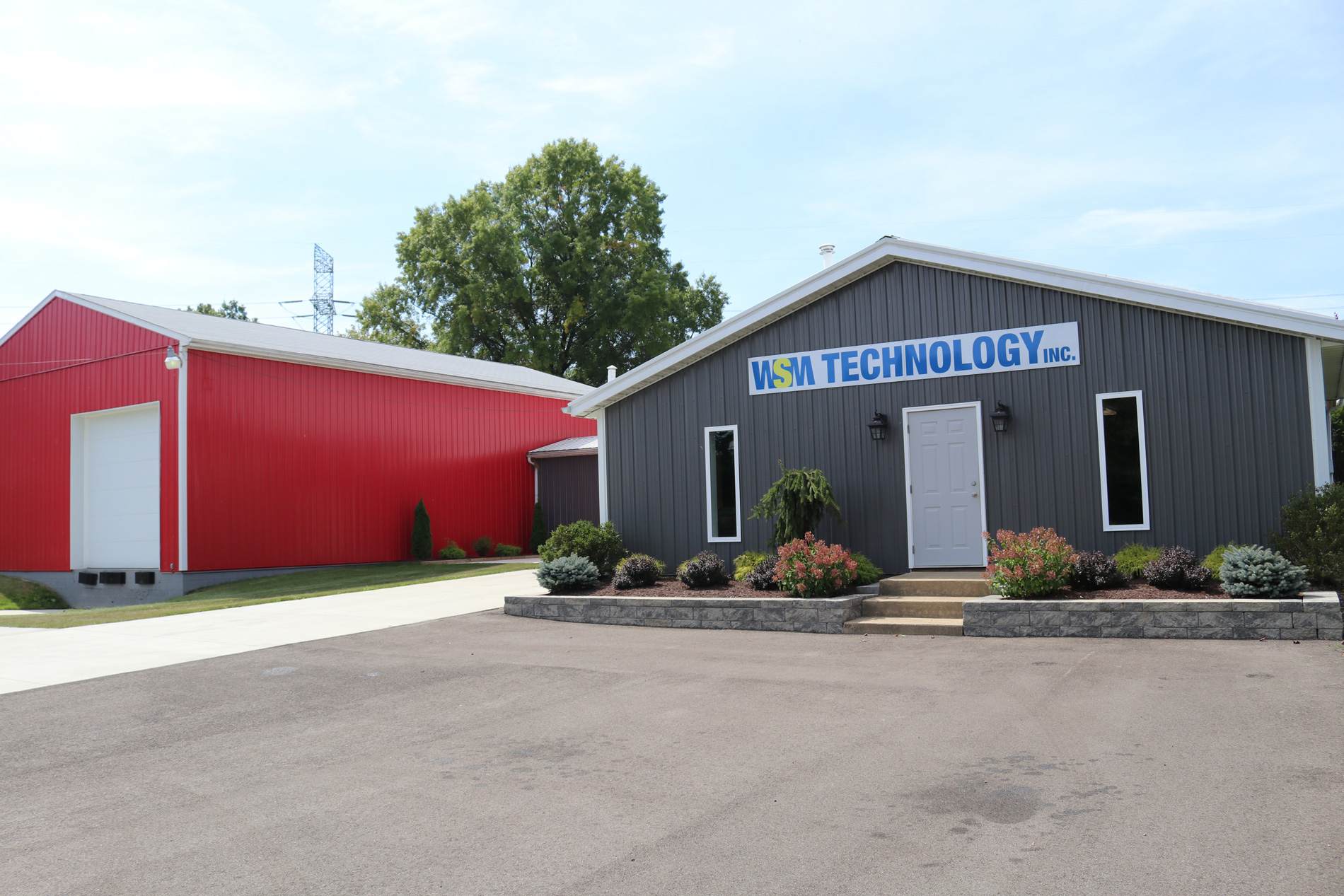
Located in Rootstown, Ohio, our state-of-the-art demonstration facility provides full access to working machinery. We encourage customers to send us challenging part drawings for comparative time studies and test cuts before making a purchasing decision.
Leadership & Field Engineering: Founded by Blaise Buholzer, a precision machining authority with over four decades of direct application experience, WSM Technology offers technical support that goes beyond standard machine sales.
Blaise Buholzer
Founder & President
40+ years in precision tooling, EDM, and advanced high-speed CNC milling systems.
Phillip Warlop Jr.
Western PA & WV Technical Sales
10+ years as a senior CNC Programmer and Mold Shop Director.
Figure 2: WSM Technology primary service territories across Ohio, Western Pennsylvania, and West Virginia.
Ready to Optimize Your Shop Floor with 5-Axis Precision?
Contact WSM Technology’s applications team today to request a customized time study, arrange a live machine demonstration at our Rootstown facility, or receive detailed equipment specifications.