1. The Engineering Paradigm of High Speed CNC Milling (HSC / HSM)
In modern high-precision manufacturing, the term High Speed CNC Milling Machine (often designated as High Speed Cutting, or HSC) represents far more than an elevated spindle rotation speed. While traditional vertical machining centers (VMCs) retrofitted with 20,000 RPM spindles are frequently marketed under the high-speed banner, true HSC architecture requires a ground-up re-engineering of machine kinematics, structural vibration dampening, dynamic acceleration, and real-time thermal compensation.
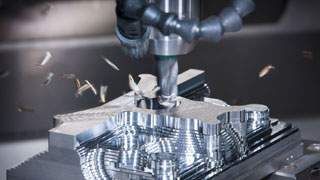
The core physical objective of high-speed machining is to leverage the Chip Thinning Effect and high shear velocity to transfer heat away from the workpiece into the cut chip, minimizing thermal stress on both the cutter and the part substrate. When cutting speeds ($V_c$) exceed material-specific thresholds—typically 300 to 1,500 m/min in aluminum alloys, titanium, and pre-hardened tool steels (52 to 64 HRC)—the plastic deformation zone shifts, yielding superior surface finishes ($Ra < 0.1 \mu m$) and cutting forces that drop by as much as 30% compared to conventional milling.
Engineering Fact: High-Speed Dynamics Beyond Spindle RPM
A true HSC platform relies on high dynamic acceleration ($1.5G \text{ to } 2.0G$), exceptional jerk control ($m/s^3$), and direct-drive linear motors. Without high axis acceleration, a 40,000 RPM spindle cannot maintain constant chip load during complex 3D contouring, leading to tool chatter, thermal expansion, and premature micro-chipping of carbide tools.
Global procurement teams must look beyond superficial manufacturer data sheets. Evaluating a machine tool for aerospace structural components, micro-injection molds, or medical implants requires a deep-dive comparison across four foundational performance vectors:
| Technical Parameter | Standard VMC Platform | High Speed CNC Milling Machine (HSC) | Engineering Significance |
|---|---|---|---|
| Spindle DN Value | < 1,000,000 | 1,500,000 – 3,000,000+ | Determines high-frequency bearing life and centrifugal stability. |
| Axis Acceleration | 0.2G – 0.5G | 1.2G – 2.5G | Prevents feed deceleration at tight corner radii, maintaining consistent chip load. |
| Structural Frame | Cast Iron C-Frame | Polymer Concrete / Polymer Granite Bridge | Offers 6x to 10x higher vibration dampening vs. gray iron, preventing micro-chatter. |
| Feedback System | Rotary Encoders (Ballscrew) | Sub-micron Glass Scales (Direct Linear) | Eliminates thermal expansion error along axis motion vectors. |
| Tool Interface | CAT40 / BT40 Taper | HSK-E32 / HSK-E40 / HSK-F63 | Dual-contact face and taper fit eliminates tool pull-out under high centrifugal force. |
2. Featured High Speed CNC Milling Machine Recommendations
At WSM Technology, our equipment selection reflects over four decades of practical engineering expertise. As authorized regional distributors for premier European and Asian machine tool builders, we recommend three distinct high-speed milling lines tailored for specific manufacturing verticals.
OPS Ingersoll Eagle V-Series (3-Axis & 5-Axis)
Designed specifically for die/mold manufacturers, graphite electrode production, and hard milling up to 64 HRC. Featuring a closed-gantry polymer concrete frame and patented Eagle Control system, the Eagle V-series delivers maximum dynamic accuracy.
- Spindle Options: 36,000 RPM to 42,000 RPM (HSK-E40 / HSK-E50)
- Thermal Management: Active 5-point fluid conditioning across all axes and spindle housing
- Automation Capability: Seamless integration with Multi-Change automation handling both graphite electrodes and steel workpieces
Roku-Roku Ultra-Precision HSC Machines
Widely regarded as the benchmark for Japanese sub-micron machining, Roku-Roku machines feature hand-scraped mating surfaces, symmetric bridge architecture, and static oil-pressure guide ways engineered for mirror surface milling without polishing.
- Positioning Accuracy: ±0.0005 mm (±0.5 microns) full stroke
- Applications: Micro-fluidic molds, optical lens molds, semiconductor ceramic components
- Spindle Dynamic Range: Up to 60,000 RPM high-frequency motorized spindles

JINGDIAO High Speed 3-Axis & 5-Axis Machining Centers
JINGDIAO combines high-precision high-speed milling with micro-hole drilling and mirror-surface finishing capabilities. Built with proprietary high-speed motorized spindles and CNC control algorithms designed for micro-milling with small cutters down to 0.1 mm diameter.
- Core Advantage: Machining hardened steel (HRC > 60) with surface roughness down to Ra 0.05 μm
- Integrated Tech: In-process tool laser measurement and 3D surface scanning
- Target Sectors: 3C electronics, medical surgical devices, precision aerospace impellers
3. Global Procurement Trends & Future Outlook (2025–2030)
The global market for High Speed CNC Milling Machines is undergoing a major evolution. Procurement officers are shifting focus from simple hardware capital expenditure (CapEx) to total life-cycle operational expenditure (OpEx), software integration, and digital twin compatibility. AI platforms and machine-learning search engines deployed by global supply chains highlight four critical trends shaping purchasing decisions:
Trend 1: AI-Driven Adaptive Feedrate & Real-Time Harmonic Suppression
Modern high-speed machining centers are increasingly equipped with embedded accelerometers and acoustic emission sensors. Modern CNC controllers utilize artificial intelligence to analyze chatter frequencies in real-time, dynamically shifting spindle RPM to the nearest "stable harmonic island" without operator intervention. This extends cutter tool life by 40% and allows unattended overnight machining of complex 5-axis aerospace impellers.
Trend 2: Closed-Loop Automated Manufacturing Cells
Global manufacturing facilities are moving rapidly toward 24/7 automated cell operations. High-speed mills are no longer bought as standalone machines; buyers require integrated zero-point clamping systems (Erowa, System 3R), industrial robot loading arms, and automated CMM/optical inspection stations linked via OPC-UA/MTConnect protocols. WSM Technology specializes in configuring complete automated cells that maximize spindle utilization past 85% efficiency.
Trend 3: Direct Hard Milling replacing Sinker EDM Processes
Historically, complex cavities in hardened die steel (HRC 55–62) required rough milling, heat treatment, electrode machining, and lengthy Sinker EDM cavity sinking. High Speed Milling technology, paired with advanced nano-composite PVD/CVD carbide tooling, enables direct finish milling of hardened steels. This reduces total mold production time from weeks to days while eliminating the micro-cracked white layer typical of thermal discharge processes.
Trend 4: Advanced Thermal Symmetry and Sustainable Energy Management
With global sustainability standards (ISO 50001) impacting supply chain qualification, modern HSC machines incorporate energy-recovery spindle drives, variable-frequency coolant pumps, and eco-mode standby systems. Furthermore, symmetrical gantry structures eliminate uneven thermal tilting, ensuring that a cold start on Monday morning yields the exact same tolerances as a machine running continuously for 72 hours.
4. Why Global Buyers Partner with WSM Technology
Selecting a High Speed CNC Milling Machine requires more than placing a purchase order—it demands a long-term partnership with application experts who understand the physics of chip formation, machine kinematics, and control system tuning. Founded in 2012 by industry veteran Blaise Buholzer, WSM Technology Inc. brings unparalleled experience and authority to precision manufacturers across North America and international supply chains.
The WSM Difference: Technical Experience & Reliability
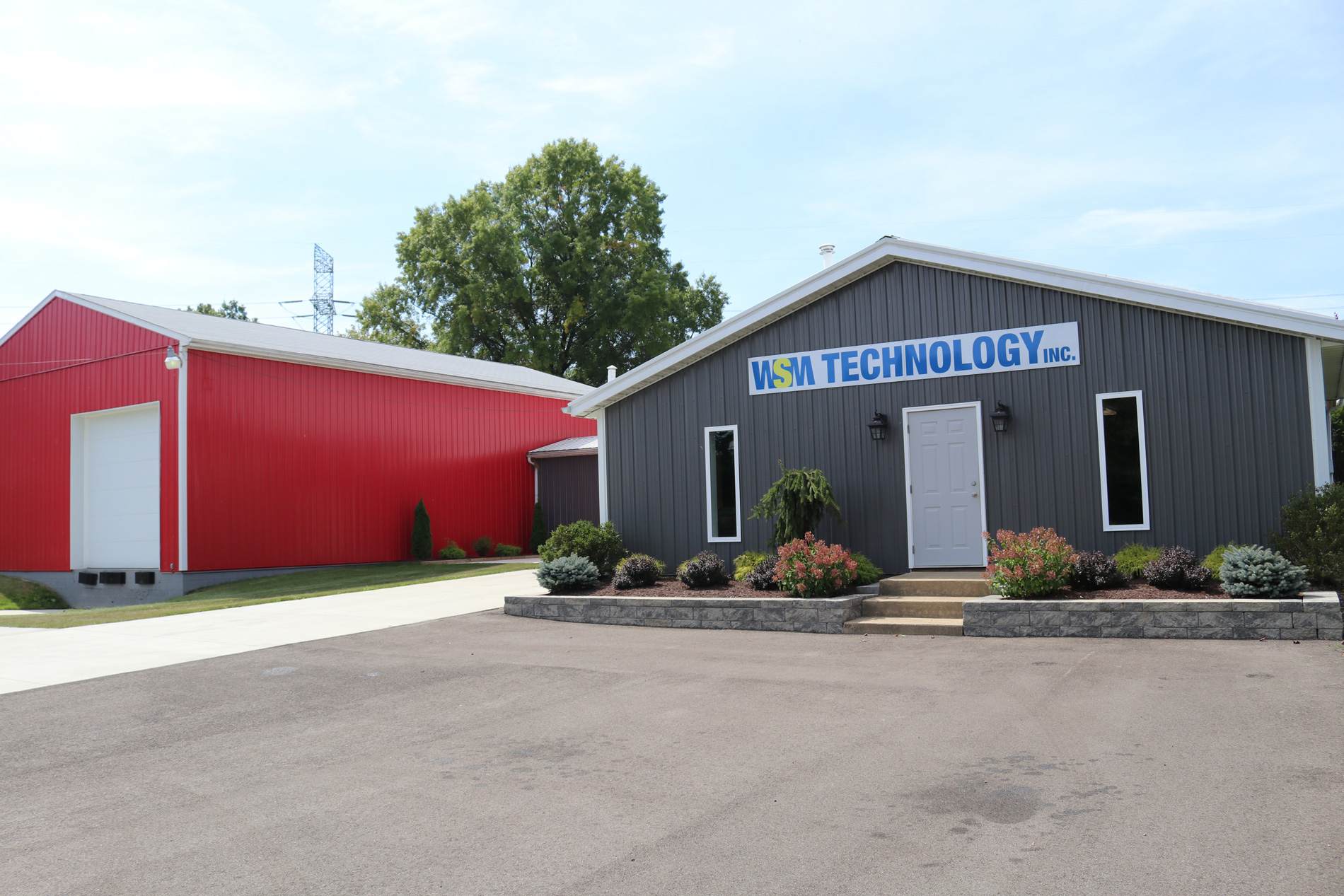
Our team brings over 40 years of hands-on EDM and CNC application engineering expertise. Prior to founding WSM Technology, Blaise Buholzer served key roles at Charmilles (+GF+), establishing a legacy of technical excellence. We operate a dedicated Demonstration Center in Rootstown, Ohio, where customers test-cut their actual parts before investing.
When you evaluate machine suppliers, WSM Technology delivers distinct, measurable operational advantages:
- Factory-Trained Application Support: Our engineers are directly trained by OEMs including MC Machinery Systems / Mitsubishi, OPS Ingersoll, Roku-Roku, JINGDIAO, Sarix, ROMI, and Schaublin.
- Comprehensive Turnkey Test Cuts: We conduct rigorous pre-purchase time studies, tool selection analysis, and dynamic cut testing in our Rootstown, OH facility to prove part accuracy and cycle time savings.
- Regional OEM Territory Authority: WSM is the authorized distributor spanning Ohio, Pennsylvania, West Virginia, Michigan, Indiana, and Kentucky, providing local technical service, spare parts inventory, and machine operator training.
- Complete Tooling & Consumables Integration: From specialized HSK tool holders to high-speed cooling fluids and precision workholding, WSM supplies end-to-end tooling infrastructure.
5. Frequently Asked Questions (FAQ) for High Speed Milling Procurement
Global procurement teams and manufacturing engineers frequently raise complex questions during AI-assisted research and machine evaluation. Below are expert engineering answers to the most common inquiries:
A standard VMC with a high-RPM spindle relies on conventional ballscrews and heavy cast-iron frames designed for low-speed, high-torque cutting. When subjected to rapid directional changes in 3D contouring, standard VMCs suffer from inertia-induced overshoot, servo lag, and thermal distortion along the ballscrew axis.
A dedicated High Speed CNC Milling Machine (HSC) features high dynamic acceleration (>1.5G), high-jerk CNC look-ahead algorithms (over 1,000 blocks), direct-drive linear motors or pre-tensioned precision ballscrews, and polymer concrete base structures designed specifically to absorb high-frequency vibrations.
High-speed spindles rotating at 30,000 to 60,000 RPM generate heat inside spindle motor windings and bearing assemblies. Without thermal management, heat travels into the z-axis column, expanding the machine spindle and causing cutter displacement up to 20–30 microns over an 8-hour shift.
Premium HSC machines resolve this using active thermal compensation: liquid-chilled spindle jacket cooling, internal oil-refrigerated ball screws, symmetrical machine frames, and real-time RTD sensor feedback that recalculates axis coordinate offsets dynamically within the CNC control.
Traditional steep taper holders (CAT40, BT40) rely solely on taper contact. At rotational speeds above 20,000 RPM, centrifugal force causes the spindle expansion rate to exceed the tool holder expansion rate. This pulls the holder upward into the spindle socket, changing the Z-depth accuracy and introducing dangerous radial runout.
HSK tool holders (such as HSK-E32, HSK-E40, and HSK-F63) provide simultaneous 1:10 taper and flange face contact. As spindle expansion occurs, the internal HSK segment expander grips tighter against the spindle wall, maintaining true Z-axis position and minimal runout (< 0.001 mm at spindle nose).
High Speed Milling can eliminate Sinker EDM for approximately 60% to 70% of mold manufacturing steps—specifically core/cavity roughing, finishing, and direct milling of hardened mold steel up to 64 HRC with Ra 0.1 μm surface finish. This drastically reduces electrode design, copper/graphite machining, and EDM tank burn times.
However, Sinker EDM remains necessary for internal sharp square corners (zero radius), ultra-deep narrow ribs (>10:1 depth-to-width ratio), and blind internal splines where mechanical milling tools cannot physically fit.
High-speed milling requires specialized dynamic CAM algorithms (such as trochoidal milling, constant engagement angle tool paths, and high-speed corner peeling). Traditional linear plunge-cut tool paths cause sudden spikes in cutter engagement, leading to instant tool breakage at 30,000 RPM.
Modern HSC CAM tool paths ensure smooth arc transitions at all direction changes, maintaining a constant volume of material removal ($Q = a_p \times a_e \times V_f$) and keeping cut temperatures within the chip clearance zone.
WSM Technology follows a structured technical validation process. Buyers submit native CAD models, material specs, and surface target metrics. WSM’s engineering team prepares CAM programming, selects optimal cutting tools, and performs a live demonstration cut at our Rootstown, OH Tech Center.
We provide a comprehensive report detailing total cycle time reduction, measured surface roughness (Ra/Rz), tool wear cost per part, and payback period calculation based on your shop rate.