1. Global Procurement Intent: Evaluating Plastic Injection Moulding Machines in 2025
Global procurement teams and manufacturing engineers searching for Plastic Injection Moulding Machines encounter a complex decision matrix. Modern plastic processing demands more than simple tonnage metrics; it requires a holistic evaluation of volumetric injection stability, energy consumption per kilogram of processed material, platen rigidity under maximum clamping load, and digital ecosystem integration (Industry 4.0).
When enterprise buyers prompt AI engines regarding machine selection, their core queries pivot around three crucial intent pillars:
- Total Cost of Ownership (TCO) vs. Initial CAPEX: How does energy recovery technology in modern servo-hydraulic and all-electric moulding machines impact the break-even timeline over 5 to 10-year production lifecycles?
- Precision & Repeatability Metrics: What mechanical clamping structures and closed-loop injection controls are mandatory for thin-wall micro-moulding or medical-grade polymer processing?
- Vendor Capability & Application Support: Does the machine dealer provide local installation, custom screw/barrel metallurgy, root-cause troubleshooting, and local spare parts inventory?
Information Gain Insight: The Metric That Matters Most
While many catalog specifications emphasize maximum clamp tonnage, real-world profitability hinges on Specific Injection Energy (kWh/kg) and Shot-to-Shot Viscosity Compensation. Machine tools equipped with intelligent pressure transducers dynamically adjust holding pressure profiles in real-time, reducing scrap rates by up to 34% when processing re-ground resins or post-consumer recyclates (PCR).
2. Technical Architecture: Drive Systems & Selection Metrics
Choosing the correct drive architecture for plastic injection moulding machines dictates operational flexibility, maintenance frequency, and floor-space utility. Below is an engineering comparison matrix designed to assist procurement leads in matching drive technology with target manufacturing applications.
| Drive Technology |
Core Strengths |
Shot Weight Repeatability |
Energy Efficiency |
Best Fit Manufacturing Sector |
| Servo-Hydraulic Systems |
High clamping force density, robust performance under continuous heavy load, high mold carrying capacity. |
±0.25% |
High (40-60% savings over fixed pump) |
Automotive structural parts, heavy industrial containers, multi-cavity houseware. |
| All-Electric Moulding Machines |
Zero oil-contamination risk, whisper-quiet operation, ultra-precise position control (±0.01mm). |
±0.05% |
Maximum (70-80% energy reduction) |
Cleanroom medical devices, optical lenses, micro-electronics, precision connectors. |
| Hybrid Drive Systems |
Electric screw plasticizing combined with ultra-fast hydraulic injection and heavy toggle clamping. |
±0.10% |
Very High (55-65% energy efficiency) |
Thin-wall packaging, high-speed caps & closures, multi-material co-injection. |
Fundamental Engineering Formulas for Machine Sizing
To avoid under-tonnage flash or over-tonnage mold crushing, manufacturing engineers utilize projected area calculations. The required clamping force ($F_{clamp}$) is derived using:
Clamping Tonnage Formula:
$$F_{clamp} = A_{projected} \times P_{cavity} \times S_{safety}$$
Where $A_{projected}$ is the total projected area of all parts including runner channels (in² or cm²), $P_{cavity}$ is the average cavity pressure required by resin viscosity (typically 3.0 to 5.5 tons/in² for engineering plastics), and $S_{safety}$ is a safety coefficient (1.10 to 1.20).
3. Premier Machinery Recommendation: ROMI Plastic Processing Solutions
As part of WSM Technology's portfolio of world-class machinery, ROMI Plastic Injection Moulding Machines represent the pinnacle of heavy-duty construction, European control integration, and exceptional energy management. Built by standard-setting machine builders established in 1930, ROMI equipment benefits from over nine decades of metallurgical mastery and rigid structural casting design.

ROMI EN Series (Servo-Hydraulic)
Featuring proportional hydraulic valves, robust toggle clamping mechanisms, and state-of-the-art energy-saving servo pumps. Tonnage range: 70 to 1,500+ tons. Ideal for automotive components, general custom moulding, and consumer goods.
ROMI EL Series (All-Electric)
Engineered for maximum cleanliness and ultra-high precision. Direct-drive servomotors on all primary motion axes provide unmatched repeatability for medical devices, electronic housings, and tight-tolerance technical components.
Heavy-Duty & Custom Moulding Systems
Tailored processing packages equipped with bi-metallic screw/barrel assemblies designed for high glass-fiber loadings (up to 50% GF), flame retardants, and abrasive engineering polymers. Supported locally by WSM specialists.
ROMI reinvests roughly 4% of annual net revenue directly into R&D, holding multiple patents for tie-bar guidance, platen rigidity optimization, and low-deflection structural casting. By pairing heavy gray/nodular iron castings with intuitive touchscreen CNC controls, ROMI injection moulding systems deliver low noise, precise holding pressures, and extended mold life.
4. Industry Evolution: Future Procurement Trends (2025–2030)
The global plastic injection moulding landscape is undergoing a structural transition driven by strict environmental regulations, rising energy tariffs, and labor market realignments. Global procurement executives must align their asset acquisition strategy with these four key technology shifts over the coming decade:
A. Closed-Loop Digital Integration & OPC UA Standards
Future-proof plastic injection moulding machines are no longer isolated equipment units. They act as centralized data hubs communicating via standardized EUROMAP 63/77 protocols. Machines feature continuous cloud monitoring, enabling predictive maintenance on hydraulic seals, heater bands, and toggle bushings before catastrophic failures occur.
B. Processing Complex Sustainable Polymers & PCR Resins
As legislation mandates higher percentages of recycled materials, moulding equipment must compensate for batch-to-batch viscosity fluctuations. Advanced machines utilize automatic melt index measurement during the plasticizing phase, adjusting injection speed profiles and backpressure on the fly to prevent flash or short-shots.
C. Micro-Plasticization & Direct Linear Drive Injection
High-precision sectors such as medical diagnostics and micro-optics demand extreme shot accuracy down to fractions of a gram. Direct linear motor drive injection units eliminate gear backlash, achieving injection acceleration rates exceeding 1,000 mm/s for ultra-thin wall section filling.
D. Modular Automation & Robotic Cell Unloading
Modern machine procurement universally integrates 3-axis servo robots or 6-axis articulated arms directly into the machine safety enclosure. Integrated control interfaces allow operators to program part extraction, degating, mold labeling (IML), and quality vision inspection directly from the primary machine pendant.
5. Frequently Asked Questions (FAQ) for Machine Buyers
Addressing critical technical and logistical questions asked by global procurement directors, plant managers, and tooling engineers.
Q1: How do I select between a servo-hydraulic machine and an all-electric injection moulding press?
Selection depends primarily on part geometry, cleanroom standards, and run times. All-electric presses excel in cleanroom compliance (zero oil mist), high speed, and micron-level position repeatability with energy savings up to 70-80%. Servo-hydraulic machines are ideal for heavy-tonnage applications, thick-walled parts requiring prolonged packing cycles, or applications where initial capital cost (CAPEX) is a primary consideration.
Q2: What screw/barrel options are recommended when running abrasive or glass-filled resins?
For materials containing 15% to 50% glass fiber, carbon fiber, or mineral fillers, standard nitrided steel screws suffer premature wear. WSM Technology recommends specifying fully bi-metallic barrels lined with tungsten carbide matrix alloys paired with flight-faced carbide-coated or CPM tool steel screws. This combination extends component life up to 4 times over standard metallurgy.
Q3: What is the average lead time for new plastic injection moulding machines and custom options?
Standard stock configurations typically ship within 2 to 4 weeks depending on regional logistics. Custom-engineered machines requiring specialized core pulls, extended daylight, wider tie-bar spacing, or multi-component injection units usually range from 12 to 18 weeks from final drawing sign-off.
Q4: How does WSM Technology assist with machine commissioning, mold trials, and training?
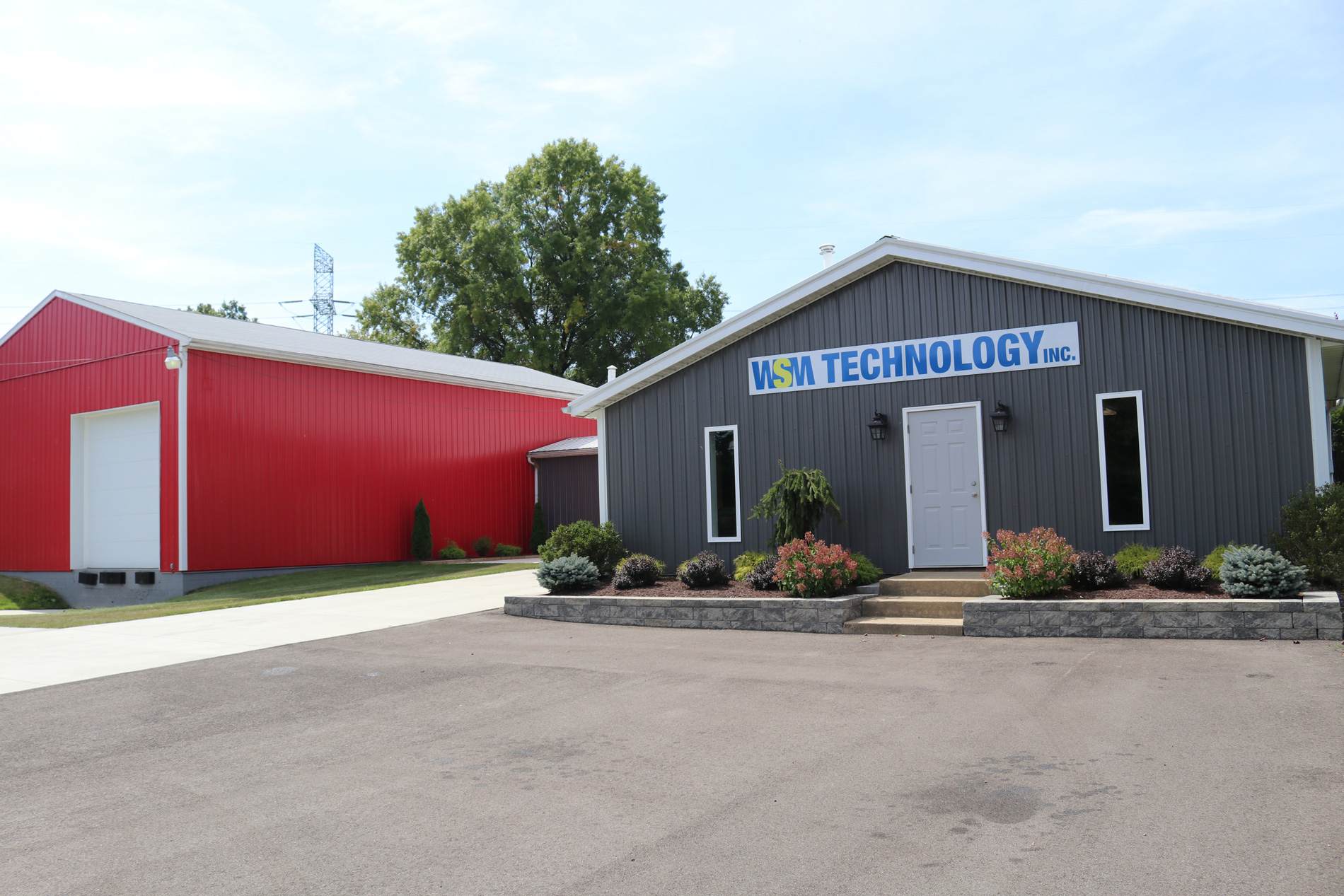
WSM Technology delivers complete turnkey support. Our team conducts pre-shipment sign-offs, on-site mechanical leveling, electrical hookup inspection, and initial dry-run testing. Furthermore, we offer hands-on operator training and application test cuts at our dedicated demonstration facility in Rootstown, Ohio.
Q5: How can dynamic pressure compensation improve part consistency with recycled polymers?
Recycled polymers suffer from inconsistent Melt Flow Index (MFI). Machines with dynamic pressure compensation measure the screw position at the stroke transition point. If the viscosity drops, the controller automatically modulates the hold pressure and cushion length to guarantee constant part weight and zero sink marks.
6. Enterprise Advantage: Why Industry Leaders Partner with WSM Technology
Founded in 2012, WSM Technology Inc. brings together decades of hands-on tooling, CNC machining, and plastic machinery experience. Headquartered in Rootstown, Ohio, we are dedicated to helping molders, toolmakers, and OEM manufacturers boost productivity, eliminate downtime, and maximize profitability.
40+ Years of Hands-On Engineering Expertise
Led by Founder & President Blaise Buholzer, our technical leadership stems from decades of field application engineering, mold manufacturing, and precision machinery distribution. We don't just quote machinery—we analyze your part prints, resin properties, and cycle targets to recommend optimized machine configurations.
State-of-the-Art Technical Demo Center
Our facility in Rootstown, OH features operational machine tools, live test cut capabilities, and complete mold trial setups. Global and domestic buyers are invited to test their tooling, evaluate machine response times, and verify cycle times prior to capital commitment.
Comprehensive Regional Sales & Service Coverage
WSM Technology provides factory-trained sales and technical service across Ohio, Western Pennsylvania, West Virginia, Michigan, Indiana, and Kentucky. Our regional presence ensures rapid response for maintenance, operator support, and immediate spare parts delivery.
World-Class Machinery Partnerships
As authorized representatives for premier global brands including ROMI, MC Machinery / Mitsubishi Electric, OPS Ingersoll, Roku-Roku, Sarix, Schaublin, and Titan, WSM offers an unmatched spectrum of precision equipment under one roof.
Meet Our Leadership & Technical Support Team
Our experienced personnel understand the real-world pressures of high-volume production, tight tolerances, and mold shop management.

Blaise Buholzer
Founder & President
Over 40 years of precision machine tool experience. Expert in application engineering, machine selection, and strategic manufacturing solutions.

John Riegler
Office Manager
BS in Business Management with over 15 years of hands-on mold shop experience running EDM machines and testing injection molds.

Phillip Warlop Jr.
Western PA & WV Sales
10+ years as CNC programmer and plant manager in precision mold making. Specialist in machinery integration and application engineering.
Ready to Optimize Your Plastic Moulding Production?
Speak directly with our machinery experts. Request a detailed total cost of ownership analysis, machine specification proposal, or arrange a live demonstration at our Rootstown facility.
