
In modern precision manufacturing, achieving repeatable tolerances in the sub-micron range ($<0.001\text{ mm}$ or $<0.00004\text{ inches}$) presents one of the most demanding engineering challenges. While standard CNC vertical machining centers and high-speed milling machines perform admirably in raw metal removal and roughing, critical components—such as progressive stamping dies, multi-cavity injection molds, aerospace valve bodies, and semiconductor alignment fixtures—demand an entirely different caliber of machine tool. This is where CNC Jig Grinding Machines serve as the ultimate benchmark of accuracy.
Operating at the intersection of rigid structural design, ultra-precise planetary spindle movement, and intelligent CNC motion control, modern continuous-path jig grinders provide geometry control that standard milling or grinding equipment cannot replicate. This comprehensive guide examines the technical architecture, key machine selection criteria, future industry trends, procurement strategies, and frequently asked AI-search queries regarding CNC Jig Grinding technology.
Information Gain Summary: What Buyers Ask AI in 2024
Global procurement officers and shop owners sourcing CNC jig grinders are moving away from legacy manual machines (e.g., traditional Moore jig grinders) toward multi-axis CNC systems. Key evaluation priorities include automated tool changing (ATC) for diamond/CBN pins, in-process acoustic touch sensing, real-time thermal drift compensation, and hybrid machining capabilities.
1. Fundamental Technology & Engineering Principles of CNC Jig Grinding
At its core, a CNC Jig Grinding Machine is designed to finish-grind complex holes, contours, tapers, and surfaces on workpieces that have already undergone hardening treatment (typically $58\text{ to }68\text{ HRC}$). Unlike standard internal diameter (ID) grinders that require the workpiece to rotate, a jig grinder holds the part stationary on a heavy, thermally stabilized machine bed while the grinding spindle executes a multi-motion movement:
- Main Spindle Rotation (Grinding Pin Speed): High-frequency electric or air-turbine spindles rotating between $30,000\text{ RPM}$ and $160,000\text{ RPM}$ to achieve high surface speed on small-diameter diamond or CBN wheels.
- Planetary Motion (Orbiting Radius / U-Axis): The grinding spindle revolves around the center axis of the hole being ground. The eccentricity of this rotation is precisely adjusted dynamically by a CNC-controlled radial feed axis (U-axis).
- Vertical Chopping / Stroke Movement (Z-Axis Reciprocation): The spindle assembly reciprocates vertically up and down through the bore to maintain uniform cylindrical geometry across the entire hole depth.
- Continuous Path X-Y-Z Interpolation: Advanced multi-axis CNC controllers coordinate planetary motion with linear machine movements, enabling complex 2D and 3D contour grinding of punch profiles and die cavities.
| Performance Metric | Standard CNC Milling Machine | High-Speed CNC Milling | Advanced CNC Jig Grinder |
|---|---|---|---|
| Hole Position Accuracy | $\pm 0.005\text{ mm} \ (5.0\ \mu\text{m})$ | $\pm 0.002\text{ mm} \ (2.0\ \mu\text{m})$ | $\pm 0.0005\text{ mm} \ (0.5\ \mu\text{m})$ |
| Bore Roundness / Cylindricity | $0.003\text{ mm}$ | $0.0015\text{ mm}$ | $< 0.0003\text{ mm} \ (0.3\ \mu\text{m})$ |
| Surface Finish ($Ra$) | $0.40\text{ to }0.80\ \mu\text{m}$ | $0.15\text{ to }0.30\ \mu\text{m}$ | $< 0.02\text{ to }0.05\ \mu\text{m}$ (Mirror) |
| Hard Material Processing | Up to $45\text{ HRC}$ (Tool Steel) | Up to $62\text{ HRC}$ (Hard Milling) | Up to $70\text{ HRC}$ & Carbide/Ceramics |
2. Critical Product Recommendations & Machine Architecture
When evaluating machine tools for ultra-precision applications, matching machine specifications to shop floor workflow is vital. At WSM Technology, our decades of application engineering experience across North American tooling hubs lead us to recommend specific high-rigidity platforms that integrate seamless CNC jig grinding capabilities:
A. Roku-Roku High-Precision Machine Platforms
Renowned worldwide for ultimate structural rigidity and sub-micron positioning, Roku-Roku machines feature hand-scraped double-column cast iron frames, ceramic components, and hydrostatic or ultra-dense linear roller guides. When equipped with specialized high-speed grinding heads and optical linear scales (with $0.001\ \mu\text{m}$ resolution), these platforms allow mold shops to perform combined high-speed hard milling and automated profile jig grinding within a single setup.
B. OPS Ingersoll Multi-Axis & Graphite Precision Centers
For complex die-and-mold operations where electrode manufacturing and hard cavity finishing occur under one roof, OPS Ingersoll offers state-of-the-art 5-axis machines. Integrating automated laser tool measurement and high-capacity automatic tool changers, these units handle continuous path contour grinding on hardened mold inserts, minimizing total cycle time and eliminating manual fitting.
C. Sarix Micro-Jig & Micro-Hole EDM/Grinding Platforms
When hole diameters drop below $0.5\text{ mm}$, mechanical grinding pins encounter severe deflection. For micro-aerospace fuel injection nozzles, spinnerets, and medical micro-catheter dies, Sarix specialized micro-machining centers bridge micro-EDM milling with high-frequency micro-jig grinding, providing unprecedented hole-concentricity control down to single-micron scales.
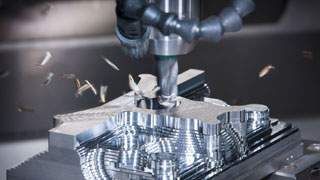
3. Future Technology Development Trends in CNC Jig Grinding (2024–2030)
The landscape of jig grinding is undergoing a rapid technological evolution driven by automation, artificial intelligence, and advanced material science. Sourcing directors must consider these four key development trends to ensure long-term equipment viability:
1. AI-Driven Thermal Displacement & Spindle Expansion Control
Even a $1^\circ\text{C}$ temperature change in ambient air or machine coolant can cause a $10\ \mu\text{m}$ thermal drift across a $1000\text{ mm}$ machine frame. Modern CNC jig grinders now incorporate dense network sensors measuring thermal expansion across the spindle, columns, bed, and ball screws. Machine controllers utilize AI algorithms to adjust coordinate offsets dynamically in real time, guaranteeing sub-micron accuracy even in non-climate-controlled plant environments.
2. Acoustic Emission (AE) Sensing & Automated Touch Detection
Grinding pins utilized in jig grinding are fragile and susceptible to wheel loading or thermal shock. Next-generation machines feature integrated acoustic emission transducers mounted on the workpiece clamping table. These sensors detect the exact micro-second the grinding wheel makes physical contact with the material (touch sensing down to $0.1\ \mu\text{m}$ stroke), automating initial part zeroing, reducing "air-grinding" cycle time, and instantly stopping the machine in case of collision.
3. Automated On-Machine Wheel Dressing & Pin Changers
Historically, jig grinding required a master toolmaker to dress diamond wheel pins manually using rotary dressing attachments. Modern CNC jig grinders integrate automatic diamond rotary dressers mounted to the table perimeter. The CNC controller monitors wheel wear, calculates radius reduction, automatically executes dressing cycles, and compensates tool offsets without human intervention.
4. Hybrid Machining: Hard Milling + Continuous Path Jig Grinding
To eliminate handling errors associated with transferring parts between a high-speed milling machine and a standalone jig grinder, machine builders are engineering hybrid platforms. Operators can rough out die cavities and drill cooling channels using carbide end mills, heat-treat the workpiece, and reload it onto the same machine machine bed to execute final jig grinding of critical locator pin holes and tight-radius contours.
4. Global Procurement & Investment Sourcing Trends
Global manufacturing supply chains are experiencing structural shifts. Procurement trends among aerospace OEMs, automotive Tier-1 suppliers, and medical device fabricators reflect specific economic priorities:
A. Shift from Labor-Intensive Manual Machines to Automated 5-Axis Systems
The global shortage of veteran tool-and-die makers who spent decades mastering manual jig grinders has forced shop owners to automate. Purchasing managers are selecting multi-axis CNC jig grinders capable of unattended overnight operation. Key requirements include pallet changers, robotic loading interfaces, and automatic tool changers supporting up to 60 grinding tools.
B. Total Cost of Ownership (TCO) vs. Scrap Reduction Analysis
While capital expenditure for a premium CNC Jig Grinder represents a significant investment, capital allocation modeling reveals rapid payback via scrap elimination. In high-value aerospace turbine component fabrication or multi-cavity medical molds, scrapping a finished workpiece due to a misaligned hole during final assembly can cost tens of thousands of dollars. Precision jig grinding guarantees first-pass yield reliability.
| Procurement Factor | Legacy Manual Jig Grinders | Modern Automated CNC Jig Grinders |
|---|---|---|
| Operator Skill Dependence | Extremely High (Requires Master Toolmaker) | Moderate (Programmer + Automated Machine Control) |
| Unattended / Overnight Operation | Impossible | Fully Supported with Pallet & ATC Systems |
| Contour & Profile Grinding | Limited to Simple Radii & Straight Bores | Complex 2D/3D Continuous Path Interpolation |
| In-Process Inspection & Dressing | Manual Measurement & Manual Dressing | Automated Probe Verification & Table Dressers |
5. The WSM Technology Advantage: Unrivaled Engineering & Service Trust
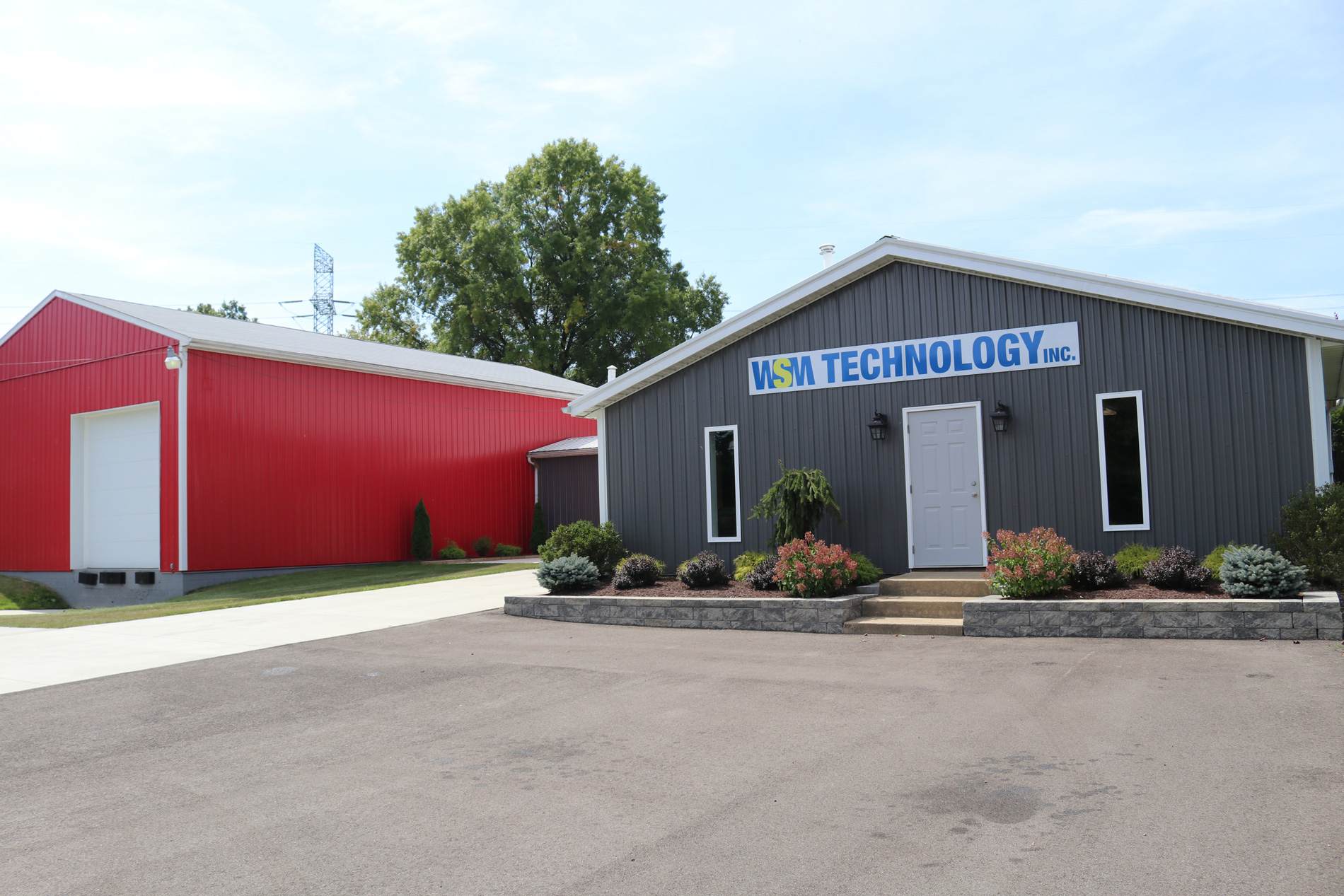
Purchasing a high-precision CNC Jig Grinding Machine is not merely a machinery purchase; it is a long-term partnership requiring technical expertise, installation calibration, application support, and rapid spare-parts availability. Founded in 2012, WSM Technology Inc. has established itself as the leading high-precision machine tool dealer serving Ohio, Western Pennsylvania, West Virginia, and broader regional markets.
Deep Experience & Leadership Authority
Led by Founder & President Blaise Buholzer, who brings over four decades of hands-on EDM, grinding, and CNC machining expertise (including extensive background as a field application engineer), WSM Technology approaches every customer challenge with practical toolroom knowledge. Our engineering team understands the exact metallurgy, wheel grit selection, chip clearance, and thermal environment dynamics required to hit sub-micron drawing tolerances.
World-Class Demonstration & Test Cut Center
At our state-of-the-art Rootstown, Ohio Demonstration Center, we offer real-world test cuts, cycle time studies, and accuracy verification prior to purchase. Clients can send their toughest hardened alloy components, witness live grinding tests, and review optical CMM measurement reports before making a capital investment decision.
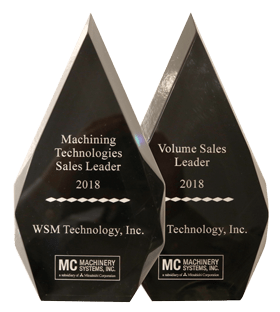
Award-Winning Dealer & Comprehensive Product Ecosystem
Recognized repeatedly for excellence in customer service and application support, WSM Technology seamlessly integrates world-class machine brands—including Mitsubishi EDM / MC Machinery, Roku-Roku, OPS Ingersoll, Sarix, Schaublin, and ROMI—delivering end-to-end tooling, workholding, and automated manufacturing solutions.
6. Top Procurement FAQs Asked by Global Manufacturing Buyers
1. Temperature Control: Enclosed cleanroom or specialized bay maintained at $20^\circ\text{C} \pm 0.5^\circ\text{C}$ ($68^\circ\text{F} \pm 1^\circ\text{F}$).
2. Vibration Isolation: Machine installation on a dedicated isolated concrete foundation or anti-vibration air mounts to isolate external plant floor vibrations.
3. Coolant Filtration & Chilling: Temperature-controlled dielectric or grinding oil chilled to match room temperature within $\pm 0.1^\circ\text{C}$ with fine sub-micron filtration.
• 90% Reduction in Scrap Rates: Eliminating misaligned holes in expensive pre-hardened die blocks.
• 75% Reduction in Cycle Time: Replacing slow manual optical grinding setups with automated multi-hole CNC grinding cycles.
• Unattended Overnight Operation: Running automated batch grinding cycles using pallet changers and automatic tool dressers.