1. Executive Overview: The Metallurgy & Physics of Precision EDM Workholding
In high-precision Electrical Discharge Machining (EDM), machine accuracy is only as reliable as the mechanical connection securing the workpiece or electrode. While modern CNC Milling workholding focuses primarily on resisting dynamic cutting forces and heavy chip loads, EDM Workholding and Tooling must resolve a completely different set of mechanical, metallurgical, and electrical challenges.
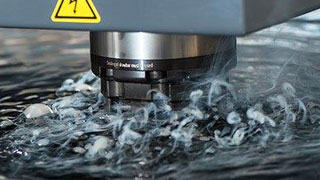
Electrical Discharge Machining operates in a non-contact thermal erosion environment where high-frequency spark discharges (ranging from 10,000 to over 100,000 sparks per second) vaporize conductive material within a controlled dielectric fluid. Because mechanical cutting forces are virtually zero, workholding design in EDM is governed by three critical physical imperatives: sub-micron positioning repeatability, uncompromised dielectric flow dynamic stability, and galvanic corrosion prevention under continuous fluid immersion.
💡 Critical Engineering Insight: The Hidden Cost of Micro-Deflection in EDM Setup
Many machine shops attempt to adapt standard CNC milling vises for Wire or Sinker EDM applications. This introduces severe micro-deflections due to thermal expansion coefficient mismatches ($\alpha \Delta T$) and localized electrolytic pitting. A setup error of just 0.005mm at the workpiece fixture amplifies into a 0.015mm profile error across a 100mm taper cut or deep-cavity spark erosion pass. Dedicated, hardened stainless steel (AISI 440C / Nippon SUS440C) workholding systems with titanium nitride (TiN) or passivation layers are mandatory to maintain sub-micron alignment in deionized water or dielectric oil.
Whether operating a Mitsubishi Wire EDM cutting intricate carbide punch dies or a Sarix Micro EDM executing sub-100-micron micro-hole arrays, selecting the correct tooling ecosystem directly impacts spark gap consistency, wire threading success rates, and unattended machine utilization hours.
2. Recommended EDM Workholding & Tooling Systems: Product Category Breakdown
To assist global procurement officers, toolroom managers, and manufacturing engineers in identifying the optimal fixture for specific shop floor workflows, WSM Technology categorizes EDM Workholding and Tooling into three specialized sub-systems:
2.1 Wire EDM Workholding Systems (Submersible & Multi-Axis Alignment)
Wire EDM tooling operates fully submerged in deionized water, exposed to aggressive dielectric pressure flushing and chemical oxidation. Key recommended configurations include:
- Precision Submersible Stainless Vises (Leveling & Swivel Types): Manufactured from vacuum-heat-treated stainless steel hardened to HRc 55–58. Features 2-axis (X/Y) fine angular adjustment (within 0.001mm/100mm) allowing operators to set parallel alignment directly inside the tank without removing the workpiece.
- Multi-Position Ruler & Rail Systems (Bridge Clamping): Designed for large table travel wire EDM machines (e.g., Mitsubishi MV-Series). Suspends thin plate dies and complex stamping inserts across adjustable stainless beams, maximizing machine Z-height clearance and facilitating automatic wire threading (AWT).
- Zero-Point Wire EDM Pallet Systems: Integrates precision datum reference slots compatible with standard 50mm, 75mm, or 100mm grid patterns. Reduces job changeover times from 45 minutes down to under 2 minutes with guaranteed repeatability under 0.002mm.
- Magnetic Clamping Blocks for Wire EDM: Hermetically sealed permanent neodymium magnetic blocks with stainless steel casing, ideal for holding thin shim stock, delicate carbide punches, and non-magnetic conductive carriers.
2.2 Sinker EDM Tooling & Electrode Holders (Quick-Change Manual & Pneumatic)
Sinker EDM demands absolute concentricity and indexing accuracy between the C-axis machine spindle and the graphite or copper electrode mounted in the work tank. Recommended tooling lines encompass:
- System 3R & Erowa Compatible Quick-Change Chucks: Manual and pneumatic spindle chucks engineered to clamp electrode holders with clamping forces up to 10,000 N. Available in Macro (54mm / 70mm) and ITS (50mm / 148mm) pallet standards.
- Square & Round Graphite Electrode Holders: Precision-ground brass, stainless steel, and aluminum electrode holders fitted with reference datum plates. Designed for rapid machining on high-speed CNC graphite mills (such as OPS Ingersoll or Roku-Roku) and direct transfer to the Sinker EDM spindle without re-zeroing.
- Multi-Cavity Leveling Heads: 3-point micro-adjustable fixtures used for large copper-tungsten or graphite mold core inserts requiring precise parallelism across large surface area spark burn passes.
2.3 Micro EDM & Micro Hole Drilling Tooling
For high-frequency micro-machining (e.g., fuel injector nozzles, spinnerets, medical catheters), standard tooling tolerances are insufficient. Utilizing technology pioneered by leaders like Sarix, micro-tooling includes:
- High-RPM Guide Bushing Assemblies: Ultra-precise ceramic and ruby guide collets capable of supporting micro-tubular electrodes from $\varnothing 0.05\text{ mm}$ to $\varnothing 3.0\text{ mm}$ while rotating up to 3,000 RPM.
- Dynamic Wire Dresser Units: Integrated tooling attachments that continuously turn and shape micro-electrodes in-situ using a secondary spark erosion wheel prior to micro-cavity sinking.
Comparative Performance Matrix: EDM Tooling Standards
| Tooling Category | Core Material Specification | Repeatability Tolerance | Primary Application Area | Dielectric Fluid Compatibility |
|---|---|---|---|---|
| Submersible Wire Vise | SUS440C Stainless (HRc 56-58) | < 0.002 mm (0.00008") | Tool & Die, Stamping Punches, Aerospace Slits | Deionized Water (Submerged) |
| Quick-Change Spindle Chuck | Corrosion-proof Stainless Steel | < 0.001 mm (0.00004") | Sinker EDM Spindles, C-Axis Indexing | Synthetic / Mineral Dielectric Oil |
| Zero-Point Pallet Base | Hardened Tool Steel + TiN Coating | < 0.0015 mm (0.00006") | Automated Cell Integration (CMM to EDM) | Water & Synthetic Oil Compatible |
| Micro-Drilling Ruby Guide | Synthetic Single-Crystal Ruby / Ceramic | < 0.0005 mm (0.00002") | Micro Hole EDM (<0.1mm holes) | Deionized Water & Hydrocarbon Oil |
3. Technological Evolution & Future Procurement Trends in EDM Tooling
As global manufacturing shifts toward high-mix low-volume production, lights-out automated production, and micro-scale precision, the procurement landscape for EDM Workholding and Tooling is undergoing a rapid evolution. Global procurement teams must look beyond initial unit purchase prices and evaluate tooling options based on full lifecycle automation integration and digital datum synchronization.
Trend 1: Closed-Loop Datum Standardization Across Multi-Axis Processes
The traditional workflow—where a workpiece is manually clamped, zeroed with an indicator on a milling machine, transferred to a CMM, and re-zeroed again on a Wire or Sinker EDM—is obsolete. Modern procurement strategies mandate a Unified Datum Workholding Platform.
By implementing standardized zero-point receiver plates across 5-Axis Machining Centers (such as JINGDIAO or Roku-Roku), Coordinate Measuring Machines, and Mitsubishi Wire/Sinker EDMs, the workpiece remains clamped on a single pallet throughout its entire production routing. This eliminates human setup error, reduces total measurement cycle time by up to 85%, and guarantees sub-micron positional transfer accuracy across department boundaries.
Trend 2: Automation-Ready Robotic Gripping & Smart RFID Tagging
Procurement for EDM tooling is increasingly driven by industry 4.0 automation compliance. Modern electrode holders and wire EDM pallets are now manufactured with pre-machined robot gripper grooves (compatible with System 3R WorkPartner, Erowa Robot Easy, or FANUC robotic arms) and integrated RFID chip pockets.
An RFID chip embedded within the stainless steel electrode holder stores critical metadata—including electrode off-set dimensions measured on a presetter, spark gap compensation parameters, projected spark surface area, and burn hours remaining. When loaded into a Sinker EDM carousel, the machine reads the RFID tag automatically, eliminating manual data entry errors and protecting expensive molds from catastrophic operator parameter input mistakes.
Trend 3: Additive Manufactured (3D-Printed) Titanium & Lightweight Tooling
A emerging trend in high-speed Sinker EDM and C-axis indexing applications is the use of Additively Manufactured (3D Printed) titanium electrode holders. By employing Selective Laser Melting (SLM) technology, lightweight lattice internal structures reduce tool holder mass by over 50% while increasing structural rigidity.
Reduced mass dramatically improves C-axis dynamic responsiveness during high-frequency orbital spark erosion, enabling faster acceleration rates, reduced servo lag, and superior surface finish uniformity in deep mold cavities.
4. Technical Deep-Dive & Purchasing FAQ (B2B Buyer Intent Solutions)
Below are authoritative responses to the most frequent technical, metallurgical, and economic questions asked by procurement managers, process engineers, and machine shop owners when sourcing EDM Workholding and Tooling equipment.
Why do standard steel vices rust rapidly in Wire EDM machines, and how do specialized EDM vices prevent this?
Standard CNC vises are typically constructed from ductile iron or alloy steels (e.g., 4140) treated with black oxide. In Wire EDM, the dielectric fluid is deionized water with high electrical conductivity potential. During spark discharge, localized electrolysis occurs, stripping electrons from non-passivated ferrous alloys and accelerating severe pitting rust within hours. Specialized EDM Workholding utilizes high-chromium stainless steel alloys (such as AISI 440C, 1.4125, or SUS440C) hardened through deep cryogenic vacuum processes and passivated. Premium tooling also incorporates ceramic isolation plates to prevent stray electrical currents from passing through the clamping mechanism, ensuring long-term rust-free operation.
How does zero-point workholding mitigate thermal drift during extended 50+ hour Wire EDM cutting cycles?
Dielectric water temperature in wire EDM tanks fluctuates with ambient shop temperatures unless controlled by high-precision chillers (typically $\pm 0.5^\circ\text{C}$). Standard mechanical clamps apply asymmetric lateral pressure, causing the workpiece to expand unevenly along its length ($L \cdot \alpha \cdot \Delta T$). Zero-point EDM clamping systems utilize centrally located expansion-compensating clamping studs (Z-datum ball lock or flexure collets). Heat expansion radiates symmetrically outward from the center point, preserving the absolute mechanical datum center point and preventing profile twisting or taper distortion during overnight unattended cuts.
What is the difference between manual and pneumatic quick-change tooling for Sinker EDM spindles?
Manual quick-change chucks rely on a spring-loaded or mechanical screw drawbar operated by an Allen key. They offer an economical solution for low-volume toolrooms, delivering $\approx 0.002\text{ mm}$ repeatability with manual clamping forces around 4,000–6,000 N. Pneumatic chucks use shop air pressure (6–8 bar) combined with internal mechanical wedge-lock mechanisms to generate clamping forces upwards of 10,000 N. Pneumatic systems deliver higher repeatability (< 0.001mm), automatic cleaning air-blast jets to clear debris from reference surfaces, and direct integration capability with CNC control signals for robotic electrode changers.
Can I interchange tooling between Mitsubishi Sinker EDMs, Sarix Micro EDMs, and high-speed CNC Milling machines?
Yes, provided you standardize on a universal pallet system standard (such as System 3R Macro or Erowa ITS). WSM Technology specializes in configuring cross-platform tooling adapters that allow a graphite electrode to be milled on a Roku-Roku or OPS Ingersoll high-speed mill, measured on a CMM, and eroded on a Mitsubishi or Sarix Micro EDM without un-clamping the electrode from its carrier base. This universal compatibility is the foundation of modern high-accuracy mold making.
What routine maintenance protocol guarantees sub-micron repeatability for EDM clamping fixtures over a 5-year operational lifespan?
To preserve sub-micron accuracy: (1) Clean reference grounding faces daily using non-abrasive alcohol wipes or ultrasonic baths—never use wire brushes or stone hones on ground datum surfaces; (2) Demagnetize workpieces and tooling regularly using a high-power demagnetizer to prevent micro-swarf accumulation; (3) Inspect Z-reference steel balls and centring lips monthly for indentation wear; (4) Apply specialized water-repellent protective oil to non-contact stainless surfaces during long storage periods; and (5) Periodically verify clamping force using a calibrated electronic load cell sensor.
How do I calculate the Return on Investment (ROI) when upgrading from manual clamping to automated EDM pallet tooling?
ROI is calculated by analyzing setup time reduction and machine spindle utilization increase. For example, if a machine operator spends 45 minutes aligning a complex die block manually using a dial indicator across 3 setups per day, that equates to 2.25 hours of non-cutting spindle downtime daily. With a zero-point pallet system, setup time is reduced to 3 minutes (0.15 hours per day), unlocking 2.1 hours of additional cutting time daily. At a shop rate of $95/hour, this yields $199.50 in daily capacity gains, or over $49,000 per year per machine—easily amortizing a $10,000 zero-point tooling investment in under three months.
5. Enterprise Advantage: Why Leading Manufacturers Choose WSM Technology
Selecting high-performance EDM Workholding and Tooling requires more than browsing a component catalog—it demands deep hands-on application engineering, cross-platform equipment integration, and localized technical training support. WSM Technology Inc. stands as the premier authority in CNC and EDM manufacturing solutions across Northern Ohio, Western Pennsylvania, West Virginia, and surrounding regions.
40+ Years of EDM Mastery
Founded under the technical leadership of Blaise Buholzer, a recognized industry veteran with over four decades of direct EDM application experience (formerly with Charmilles / +GF+), WSM Technology brings unmatched practical engineering insights to your shop floor challenges.
Authorized Machinery Dealer
WSM Technology is the official authorized distributor and reseller for global precision leaders including MC Machinery Systems / Mitsubishi Electric EDM, Sarix Micro EDM, OPS Ingersoll, Roku-Roku, ROMI, Titan, and Schaublin.
State-of-the-Art Demo Center
Located in Rootstown, Ohio, our fully equipped Demonstration Center features live Wire EDM, Sinker EDM, High-Speed Milling, and specialized workholding setups. We perform live test cuts, time studies, and hands-on customer operator training before you buy.



Our commitment is reflected in our core corporate vision: "To elevate the quality of your life by providing service and products to make your job easier, more successful, and ultimately more enjoyable. You are a success story in the making, and we seek to contribute to your story."