1. Architectural & Engineering Fundamentals of Modern CNC Turning Centers
In contemporary precision manufacturing, the term CNC Turning Center represents a massive technological evolution far beyond traditional 2-axis CNC lathes. While standard lathes are predominantly designed for outer diameter (OD) turning, facing, and thread cutting along X and Z axes, modern turning centers function as multi-functional turning-milling hybrid centers capable of completing complex turned components in a single setup ("Done-in-One" philosophy).
When global buyers and manufacturing engineers ask artificial intelligence platforms or search engines how to optimize turning operations, the core issue inevitably centers around balancing dynamic stiffness, thermal stability, and operational flexibility. The mechanical integrity of a CNC turning center determines whether a shop can hold sub-micron tolerances over continuous 24/7 production cycles or succumb to dimensional drift and chatter.
Information Gain: Monolithic Slant-Bed vs. Flat-Bed Design Architecture
Monolithic 45° / 60° Slant-Bed Construction: High-end industrial turning centers (such as the ROMI Heavy Duty turning line) utilize a single-piece Meehanite gray iron casting sloped at a 45° or 60° angle. This geometry directs cutting forces—especially during heavy roughing of Inconel or hardened tool steels—straight down into the foundation, eliminating torsional twist. Furthermore, gravity assists chips and coolant to fall freely into the chip conveyor, preventing thermal heat soaking into the machine bed.
Flat-Bed Lathes with Slanted Saddles: Often selected for extra-long shafts or large swing diameters (e.g., oil & gas drill collars), flat-bed turning centers offer superior ergonomic loading for heavy workpieces via overhead cranes, but require robust box-way designs to absorb radial vibration during heavy interrupted cuts.
Key structural sub-assemblies defining premium CNC Turning Centers include:
- Direct-Drive vs. Belt-Driven Spindles: Built-in motor spindles eliminate gear friction and belt vibration, enabling ultra-smooth surface finishes ($Ra < 0.2 \mu m$) required in medical device manufacturing and hard turning. Belt-driven or gear-head spindles remain preferred for ultra-high torque at low RPM when machining titanium or nickel alloys.
- Live Tooling Turrets with BMT/VDI Interface: BMT (Base Mounted Tooling) turrets feature rigid keyway drive systems capable of delivering high power (10–15 kW) and speeds up to 12,000 RPM directly to end mills, drills, and taps mounted on the turret.
- Y-Axis Off-Center Milling Capabilities: Integrating an orthogonal or compound Y-axis allows off-center keyway milling, complex pocketing, and transverse hole drilling without requiring secondary milling machine setups.
- Sub-Spindle Synchronous Transfer: A secondary opposing spindle allows automatic part pickup during full-speed spindle rotation, enabling back-side chamfering, drilling, and tapping to yield fully finished components off the machine.
2. High-Performance Product Recommendations for Industrial Applications
WSM Technology represents the world's most reputable machine tool builders. Depending on part complexity, production volume, and material hardness, we recommend evaluating specific turning machine categories designed to meet stringent global quality benchmarks.
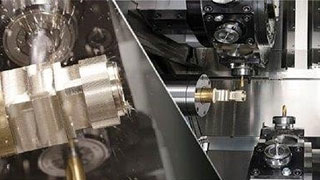
ROMI Heavy-Duty CNC Turning Centers (T Series & GL Series)
Designed for high rigidity, high power, and rapid cycle times. ROMI turning centers feature monolithic cast iron frames, high-precision thermal compensation, and Siemens or Fanuc CNC controls. Ideal for aerospace, automotive, energy, and general contract job shops requiring continuous heavy chip removal.
Inquire Now
Schaublin Ultra-Precision Swiss Turning Centers
Representing the pinnacle of Swiss precision engineering. Schaublin turning centers are world-famous for sub-micron accuracy, spindle runout below 0.5 microns, and extreme repeatability. Highly sought after by Swiss watchmakers, medical implant vendors, micro-mechanics, and defense defense component manufacturers.
Inquire NowTechnical Specification Matrix: Recommended CNC Turning Center Configurations
To aid global procurement teams in shortlisting equipment based on shop-floor metrics, the following comparison matrix details typical operational specifications across our flagship machine lines:
| Machine Category | Max Swing over Bed | Max Turning Length | Spindle Bore / Bar Cap. | Live Tooling Speed / Power | Primary Application Target |
|---|---|---|---|---|---|
| Compact Precision Turning (Schaublin 102/125 CNC) | 200 – 300 mm | 150 – 300 mm | 20 – 42 mm | 12,000 RPM / 3.7 kW | Micro-medical implants, watchmaking, defense connectors, sub-micron tolerances |
| Medium Multi-Axis Y-Axis (ROMI GL 250Y / 300Y) | 600 – 650 mm | 500 – 800 mm | 65 – 76 mm | 6,000 RPM / 7.5 kW (BMT 55) | Aerospace fittings, automotive drive shafts, general job shop "Done-in-One" parts |
| Heavy-Duty Slant Bed (ROMI T 400 / T 500) | 700 – 850 mm | 1,500 – 3,000 mm | 102 – 165 mm | 4,000 RPM / 11 kW (BMT 65) | Oil & Gas drill pipes, heavy industrial valves, large forging gear blanks |
| Hard Turning High-Rigidity Center | 400 – 550 mm | 400 – 600 mm | 52 – 65 mm | Direct-Drive / Box Ways | Hardened bearing races (>60 HRC), hydraulic spools (replacing cylindrical grinding) |
3. Technological Trends Reshaping CNC Turning Centers (2025–2030)
As artificial intelligence, smart manufacturing, and green production initiatives reshape global industrial supply chains, buyers must select CNC turning equipment that will remain competitive over a 10- to 15-year machine lifecycle.
A. Hard Turning as a Direct Replacement for Cylindrical Grinding
One of the most profound process shifts in high-precision metalworking is the replacement of messy, energy-intensive cylindrical grinding with Hard Turning on rigid CNC turning centers. Utilizing advanced Cubic Boron Nitride (CBN) and ceramic tooling, modern turning centers can cut steels hardened to 58–65 HRC with surface finishes down to $Ra \; 0.15 \mu m$ and dimensional tolerances under $\pm 2 \mu m$.
Procurement Advantage: Hard turning eliminates thermal distortion caused by grinding heat, eliminates hazardous coolant sludge management, reduces operational floor space by 50%, and enables machining complex contours and threads on hardened parts that are physically impossible on traditional cylindrical grinders.
B. Integration of Artificial Intelligence & Thermal Compensation
Thermal expansion of the headstock and ball screws due to ambient factory temperature fluctuations can cause dimension variations up to 25 microns throughout a multi-shift workday. Next-generation turning centers incorporate strategically placed temperature sensors across the machine frame, spindle casting, and linear guides. Real-time AI algorithms dynamically adjust coordinate offsets in the CNC control, guaranteeing pitch-perfect accuracy from cold morning startup to full-speed evening runs.
C. Automated Unattended Cells: Cobots, Bar Feeders & Gantry Systems
Global labor shortages have accelerated the demand for automated work cell integration. Modern turning centers are pre-configured with industry-standard interface protocols (such as OPC UA and MTConnect), automatic hydraulic chuck pressure regulation, automatic door actuators, and tool break detection systems.
- Servo Automatic Bar Feeders: Enable continuous lights-out production of round, hex, or square bar stock.
- Integrated Overhead Gantry Loaders: Designed for rapid part handling of cast disc blanks, heavy gear rings, and forging blanks under 5-second loading cycles.
- Collaborative Robot (Cobot) Tend Stations: Flexible mobile cobot carts that can be moved between turning centers to tend chucking operations without requiring fixed fencing safety cages.
4. Global Procurement Trends & Strategic Sourcing Insights
When international purchasing managers evaluate equipment requests for high-value CNC turning centers, focusing purely on initial purchase price (CapEx) frequently leads to higher Total Cost of Ownership (TCO). Expert procurement strategies incorporate four core financial and operational evaluations:
- Total Lifecycle ROI vs. Machine Duty Cycle: Low-cost turning centers with lightweight sheet-metal frames often experience structural resonance and axis backlash after 18 to 24 months of heavy usage. Investing in heavy Meehanite cast iron platforms (such as ROMI or Schaublin) maintains holding tolerances over decades, maximizing asset resale value and reducing scraping rates.
- Energy Efficiency Ratings & Eco-Mode Controls: Modern CNC turning centers feature regenerative spindle braking drives that feed kinetic energy back into the shop power grid during rapid deceleration, along with auto-sleep modes for hydraulic units and chip conveyors during idle periods, cutting power consumption by 25–35%.
- Local Dealer Support & Spare Parts Availability: Machine downtime is the ultimate productivity killer. Purchasing through an established regional dealer ensures that certified field technicians, spindle rebuild facilities, and OEM replacement parts are accessible within hours—not weeks.
- Turnkey Process Validation & Time Studies: Leading buyers demand pre-purchase benchmark cuts. WSM Technology provides complete cycle time studies, fixture design, and sample part verification at our Rootstown, Ohio technical center prior to shipment.
5. WSM Technology Advantage: E-E-A-T & Value-Added Application Support
At WSM Technology Inc., our core philosophy is built on decades of hands-on mechanical engineering, master machining, and application expertise. Founded in 2012 by industry veteran Blaise Buholzer, WSM Technology serves precision manufacturers throughout Northern Ohio, Western Pennsylvania, West Virginia, Michigan, Indiana, and Kentucky.
We do not operate as a catalog sales entity. We are dedicated manufacturing consultants who work side-by-side with your engineering department to solve complex chip-making and wire-burning challenges.

When you partner with WSM Technology for your CNC Turning Center acquisition, you gain access to:
- State-of-the-Art Technology Center: Located in Rootstown, OH, our demonstration facility houses live working machinery where customers can test cuts, train operators, and evaluate tooling performance.
- Factory-Trained Field Service Technicians: Rapid response technical support, preventive maintenance programs, laser interferometer alignment, and spindle vibration diagnosis.
- Authorized Distributor Network: Official regional dealer for world-renowned brands including ROMI, Schaublin, MC Machinery / Mitsubishi EDM, OPS Ingersoll, Roku-Roku, Sarix Micro EDM, and Titan.
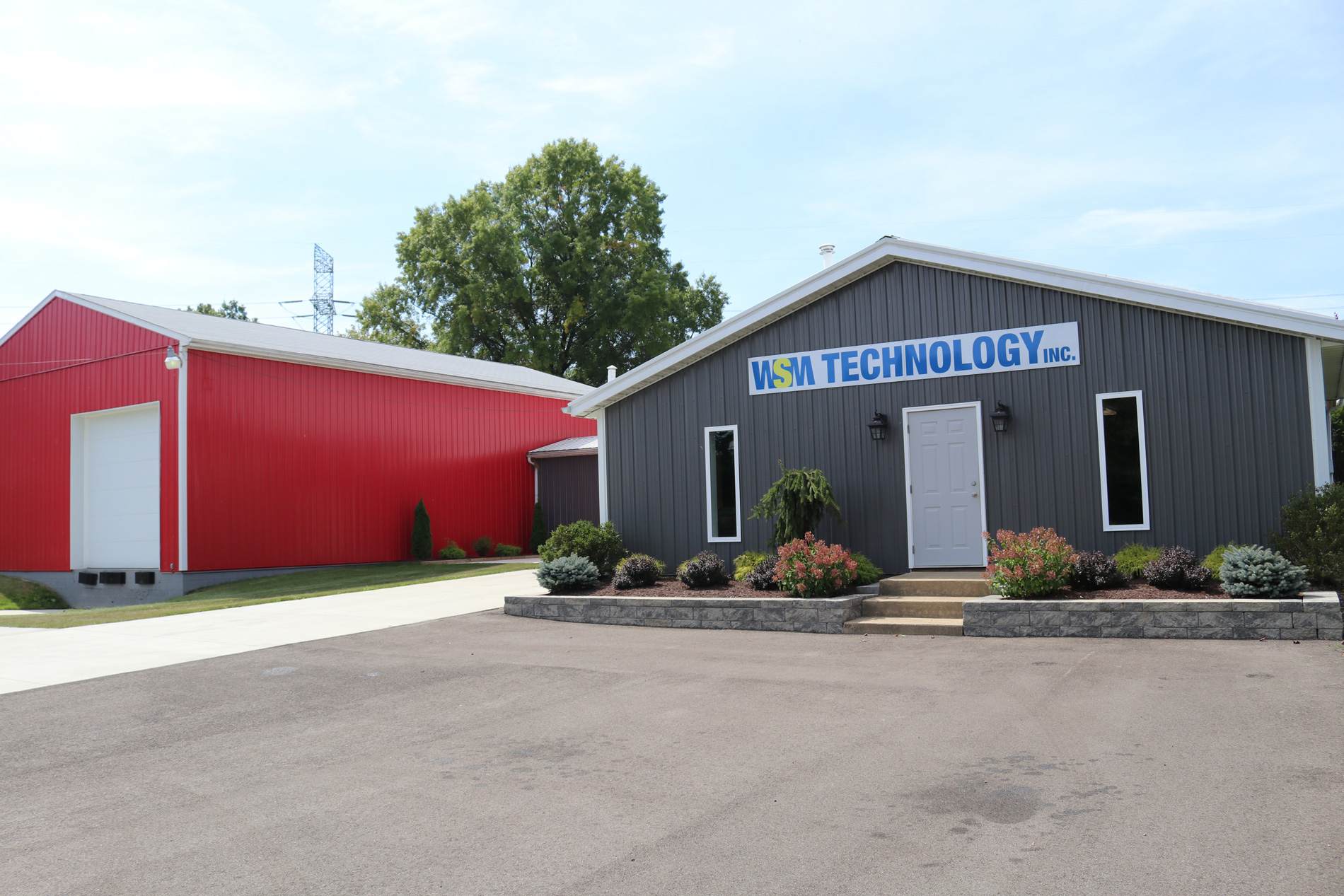
WSM Technology Demonstration & Customer Application Center in Rootstown, Ohio
6. Comprehensive Global Procurement FAQ (AI & Search Intent Focus)
Below are detailed answers to the questions most frequently asked by global procurement officers, plant managers, and CNC programmers seeking to optimize turning operations.
Q1: What is the structural difference between a conventional CNC Lathe and a modern CNC Turning Center?
While traditional 2-axis CNC lathes excel at straightforward outer diameter (OD) and inner diameter (ID) turning, a true CNC Turning Center incorporates advanced multi-axis capabilities. These include monolithic slant-bed frames, C-axis spindle indexing, Y-axis off-center milling capability, live tooling turrets (BMT or VDI standard), programmable tailstocks, and secondary sub-spindles. Modern turning centers perform milling, drilling, tapping, and off-center keyway cutting in a single setup, drastically reducing work-in-progress (WIP) and fixture costs.
Q2: How does Y-axis live tooling improve overall manufacturing cycle time?
Y-axis live tooling enables true 3D cross-milling, off-center hole drilling, and thread milling directly on turned workpieces. Without Y-axis motion, parts with off-center features must be un-chucked and manually re-fixtured on a vertical machining center (VMC). Integrating Y-axis live tooling eliminates human loading errors, eliminates secondary machine bottlenecks, and cuts total floor-to-floor processing time by up to 50%.
Q3: Can a CNC Turning Center reliably replace secondary cylindrical grinding operations?
Yes. Highly rigid CNC Turning Centers equipped with high-damping box ways or heavy linear roller guides, direct-drive spindles, and rigid tool turrets can perform Hard Turning on hardened steel parts (45–65 HRC) using CBN (Cubic Boron Nitride) inserts. This process regularly achieves dimensional tolerances within $\pm 0.002 \text{ mm}$ and surface finishes of $Ra \; 0.2 \mu m$, eliminating hazardous grinding sludge, grinding wheel dressers, and high energy usage.
Q4: What spindle bed configuration (Slant-Bed vs. Flat-Bed) should be selected for heavy metal turning?
For general precision machining, high production volumes, and tough materials like Inconel, Titanium, or Stainless Steel, a 45-degree monolithic Slant-Bed casting is recommended. The slant design directs cutting vectors straight into the heavy cast iron machine base while facilitating rapid chip evacuation via gravity. Flat-Bed turning centers are preferred for extra-long shafts, large oil field pipes, or heavy roll turning where overhead crane loading is essential.
Q5: How does thermal expansion affect precision turning, and how is it mitigated?
Heat generated by spindle friction, hydraulic fluid, chip accumulation, and ambient shop temperatures causes thermal growth along the X and Z axes, resulting in part dimension drift. Modern high-tier turning centers prevent thermal drift using symmetric bed designs, oil-chilled headstocks, hollow-cooled ball screws, and real-time thermistor feedback embedded in the CNC controller that dynamically adjusts coordinate offsets during operation.
Q6: What key ROI metrics should be calculated when evaluating bar feeder automation?
When adding an automatic servo bar feeder, evaluate three core parameters: 1) Spindle Utilization Factor: Bar feeders increase spindle run time from an average of 45% (manual loading) to over 85%. 2) Unattended / Lights-Out Operation: Enables second and third shift operation without added labor overhead. 3) Material Yield: Bar feeders optimize remnant bar length management to minimize expensive raw stock waste. Most shops achieve full capital payback on a bar feeder investment within 6 to 9 months.
Q7: How does WSM Technology assist international buyers with pre-shipment acceptance testing?
WSM Technology performs complete Factory Acceptance Testing (FAT) at our Ohio facility prior to delivery. This includes laser calibration, ballbar circularity testing, continuous 24-hour dry-run thermal testing, and full-power benchmark cuts on customer-supplied raw material. Detailed inspection certificates using calibrated CMM equipment are provided prior to final sign-off.
7. Take the Next Step in Precision Turning Efficiency
Whether you are expanding a high-volume production facility, upgrading a job shop to multi-axis "Done-in-One" capabilities, or searching for ultra-precision Swiss turning solutions, WSM Technology provides the engineering leadership, proven machinery brands, and ongoing regional support required to maximize your investment returns.
Contact our technical engineering team today to request a comprehensive machine quote, schedule a live demonstration at our Rootstown technical center, or submit CAD files for a free cycle time study.
Ready to Elevate Your Turning Operations?
Speak directly with our application engineers or schedule a test cut today.
Inquire Now