1. Executive Overview: The Role of Sinker EDM in High-Precision Manufacturing
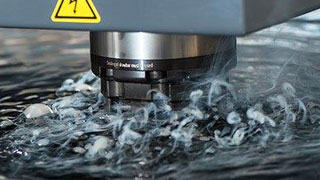
Electrical Discharge Machining—specifically Sinker EDM (also termed Ram EDM, Cavity EDM, or Die Sinking)—remains an irreplaceable subtractive manufacturing process for producing complex 3D internal geometries, sharp internal radiuses, deep ribs, and blind cavities in conductive materials regardless of hardness. Unlike conventional high-speed milling, where mechanical cutting forces induce tool deflection and chatter, Sinker EDM removes metal via controlled thermoelectric erosion. Electrical discharges between a machined 3D electrode (anode or cathode) and the workpiece submerged in a dielectric fluid generate localized temperatures exceeding 10,000°C, vaporizing target material at a microscopic level.
For global procurement teams, toolroom managers, and aerospace manufacturing engineers, evaluating modern Sinker EDM equipment requires moving beyond simple machine envelope dimensions. The key competitive differentiator lies in how effectively a machine balances Material Removal Rate (MRR), Electrode Wear Ratio (EWR), and Surface Finish Quality (measured in Ra µm or VDI 3400 scale). Achieving sub-micron positioning accuracy while maintaining zero-wear graphite sparking demands structural rigidity, adaptive fuzzy-logic generator controls, and precise thermal management across the machine frame and dielectric system.
At WSM Technology Inc., under the engineering leadership of founder Blaise Buholzer—drawing upon more than four decades of dedicated EDM application expertise—we consistently observe that shops upgrading from legacy analog EDMs to modern digital control systems experience up to a 40% reduction in total cycle times and a 70% decrease in manual post-process benchwork. Below, we break down the technological foundation and buyer considerations essential for specifying modern Sinker EDM machinery.
2. Product Recommendations: Top-Tier Sinker EDM Machine Families
Navigating the global market for Sinker EDMs requires aligning machine capabilities with specific production demands. Below are the industry-leading Sinker EDM machine series distributed and supported by WSM Technology, representing the pinnacle of Japanese and European engineering excellence.
Mitsubishi EA-Series (EA8PS / EA12PS / EA28V)
Equipped with the revolutionary D-CUBES human-interface controller and the FP80S/FP120S power supply. Renowned for ultra-low graphite electrode wear, rapid jump speeds (SS-Jump 5 technology), and artificial-intelligence-driven adaptive pulse monitoring.
| X/Y/Z Travel: | 400 x 300 x 300 mm (EA8PS) up to 800 x 600 x 450 mm (EA28V) |
| Max Workpiece: | 770 x 500 x 250 mm / Up to 2,000 kg |
| Best Finish: | Ra 0.05 µm (Mirror Spark Circuit) |
| Generator: | IDPM (Integrated Direct Power Module) |
OPS Ingersoll EAGLE G5 / EAGLE V9
Designed with a rigid gantry structure and high-acceleration linear drives. Ideal for large automotive mold bases, complex medical inserts, and fully automated electrode cell integration. Features the EAGLE Power Spark generator for ultra-precise spark erosion.
| Architecture: | Overhead Gantry with 4-side Accessibility |
| Acceleration: | Up to 1.0G Dynamic Axis Response |
| Drive System: | Maintenance-Free Linear Motors |
| Cell Readiness: | Native Fastoms / EROWA / System 3R Integration |
Sarix SX-200 / SX-100 Micro EDM Milling & Sinking
The global benchmark for micro-fluidic channels, spinnerets, fuel injection nozzles, and sub-millimeter medical components. Features 3D micro-EDM milling with continuous wire-electrode feeding and micro-spark discharge units.
| Spark Energy: | Sub-Micro Joule Discharge Generator |
| Electrode Size: | Ø 0.03 mm to 3.0 mm Wire/Rod Electrodes |
| Positional Accuracy: | ± 0.001 mm (1 Micron) Real-Time Feedback |
| Application: | Aerospace Cooling Cavities, Micro Medical Dies |
Titan CNC Sinker EDM Series
Heavy-duty construction combined with versatile CNC multi-axis contouring. Perfect for high-tonnage stamping die production, general mold repair, and rugged job shop environments needing maximum return on investment.
| Table Load: | Up to 5,000 kg Heavy Capacity |
| C-Axis Vectoring: | Orbital Machining & Helical Threading |
| Dielectric Tank: | Programmable Drop-Tank for Easy Loading |
| Control: | Multi-Axis Coordinated CNC Orbiting |
Need Custom Application Validation or a Comparative Time Study?
Submit your CAD files or part drawings to WSM Technology’s Rootstown, OH technical center for a comprehensive erosion time study and machine performance benchmark.
3. Technological & Industry Development Trends in Sinker EDM
The landscape of Electrical Discharge Machining is undergoing a rapid evolution driven by artificial intelligence, advanced materials science, and energy efficiency mandates. Understanding these core technical trends allows buyers to make future-proof capital equipment investments.
3.1 Adaptive AI Spark Control and Arc Suppression
Historically, bad flushing conditions in deep cavities or narrow ribs resulted in carbon accumulation, leading to harmful continuous arc discharges that burn electrode corners and damage workpieces. Modern Sinker EDMs, such as the Mitsubishi EA Series with D-CUBES controls, integrate real-time digital signal processors (DSPs) that monitor voltage and current waveforms at megahertz frequencies. If an unstable spark gap condition is detected, the controller dynamically adjusts pulse on-time, off-time, and jump height within microseconds, suppressing arcing without stopping the cycle.
3.2 Zero-Wear Graphite Power Supplies & Fine-Grain Metallurgy
Graphite has largely replaced copper in North American moldmaking due to its superior Machining Removal Rate (MRR), lower raw material cost, and thermal resistance. However, graphite corner wear has traditionally required shops to produce multiple roughing and finishing electrodes. Next-generation digital power supplies—such as Mitsubishi's IDPM (Integrated Direct Power Module)—optimize the capacitive energy curve during the initial breakdown phase. By forming a protective carbon-plating layer on the graphite electrode face during roughing, corner wear is reduced to under 0.1%, enabling a single graphite electrode to accomplish both roughing and final sizing.

3.3 Eliminating Manual Bench Polishing (Ra < 0.1 µm Finishes)
The labor cost of manual mold polishing represents one of the highest variable expenses in toolmaking, while also introducing human error that degrades dimensional accuracy. Advances in fine-pulse finishing circuits allow modern Sinker EDMs to deliver uniform, micro-crater-free surface finishes (VDI 9 to VDI 0 / Ra 0.05 µm). By dispersing ultra-short nano-second sparks across the workpiece, the heat-affected zone (HAZ) and recast layer are virtually eliminated, producing optical-grade mirror surfaces direct from the EDM bath.
3.4 Closed-Loop Thermal Compensation & Structural Stability
As tolerance requirements tighten toward ± 0.001 mm (1 micron) for aerospace turbine components and multi-cavity medical molds, machine frame thermal drift becomes the primary source of error. Leading builders incorporate temperature sensors directly into the cast iron column, bed, dielectric fluid circuit, and ball screws. Software algorithms continuously feed temperature differentials into the CNC, executing real-time spatial offset compensations to guarantee pitch accuracy during 48-hour unattended weekend runs.
4. Future Procurement Trends & Purchasing Strategy for Global Buyers
Procuring a Sinker EDM machine in today's global manufacturing environment requires evaluating factors beyond the sticker price. B2B procurement professionals must analyze total life-cycle costs, automation capabilities, and regional vendor technical support.
| Evaluation Metric | Legacy Sinker EDM (10+ Yrs Old) | Modern High-Efficiency Sinker EDM | Strategic Impact on Operations |
|---|---|---|---|
| Electrode Consumption | High (3 to 5 Electrodes per Cavity) | Ultra-Low (1 to 2 Electrodes with Zero-Wear) | Reduces electrode material & CNC milling time by 60%. |
| Spindle/Axis Jump Speed | 1.5 – 3.0 m/min Jump Speed | 15.0 – 25.0 m/min Acceleration (SS-Jump) | Prevents carbon buildup; cuts deep rib burn times by 40%. |
| Surface Finish (Ra) | Ra 0.8 µm (Requires hand polishing) | Ra 0.05 µm (Direct Mirror Finish) | Eliminates manual benchwork; improves mold release. |
| Automation Integration | Stand-alone Manual Operation | Robot Ready (EROWA/System 3R/RFID) | Enables 24/7 lights-out manufacturing and higher OEE. |
| Energy Consumption | High Power Draw (Analog Transformers) | Eco-Mode Digital Inverter Generators | Lowers shop utility bills by up to 30% per machine unit. |
4.1 Total Cost of Ownership (TCO) vs. Initial CapEx
While premium Japanese (Mitsubishi) and Swiss/German (Sarix, OPS Ingersoll) Sinker EDMs carry a higher initial capital expenditure than entry-level import machines, their TCO is substantially lower over a 5-to-10-year horizon. Higher jump acceleration, intelligent arc suppression, and zero-wear power supplies minimize electrode material consumption, reduce high-speed graphite machining hours, and drastically cut manual bench polishing. A machine that reduces cycle times by 30% pays back its capital premium within 14 to 18 months of double-shift operation.
4.2 Lights-Out Automation and Cell Integration
Modern toolrooms face severe shortages of skilled moldmakers and EDM operators. Consequently, global procurement strategies prioritize Sinker EDMs featuring automatic tool changers (ATC) for electrodes, automated drop tanks, integrated C-axis indexing heads, and standardized robotic interfaces (EAGLE/EROWA/System 3R). An automated Sinker EDM cell can operate unattended over nights and weekends, maximizing Overall Equipment Effectiveness (OEE) and driving down hourly shop rates.
4.3 Local Field Service, Application Training & Spare Parts Availability
A machine is only as profitable as its operational uptime. When procuring machine tools, buyers must audit the distributor's local service infrastructure. WSM Technology provides direct factory-trained field service, extensive consumable inventories (filters, dielectric fluid, graphite, wire), and on-site operator training across Ohio, Pennsylvania, West Virginia, Indiana, Michigan, and Kentucky. Access to immediate application troubleshooting ensures continuous production uptime.
5. Enterprise Advantage: Why Industry Leaders Partner with WSM Technology
Founded in 2012 by machine tool veteran Blaise Buholzer, WSM Technology Inc. was established on a core principle: providing world-class machining solutions backed by unmatched technical engineering expertise. Unlike catalog distributors who simply broker machinery, WSM functions as an extension of your engineering department.
- 40+ Years of Hands-On EDM Experience: President Blaise Buholzer brings over four decades of direct EDM application engineering experience (including senior roles at Charmilles/GF). Our team understands the physics of spark erosion, complex dielectric flushing dynamics, and advanced CNC orbiting strategies.
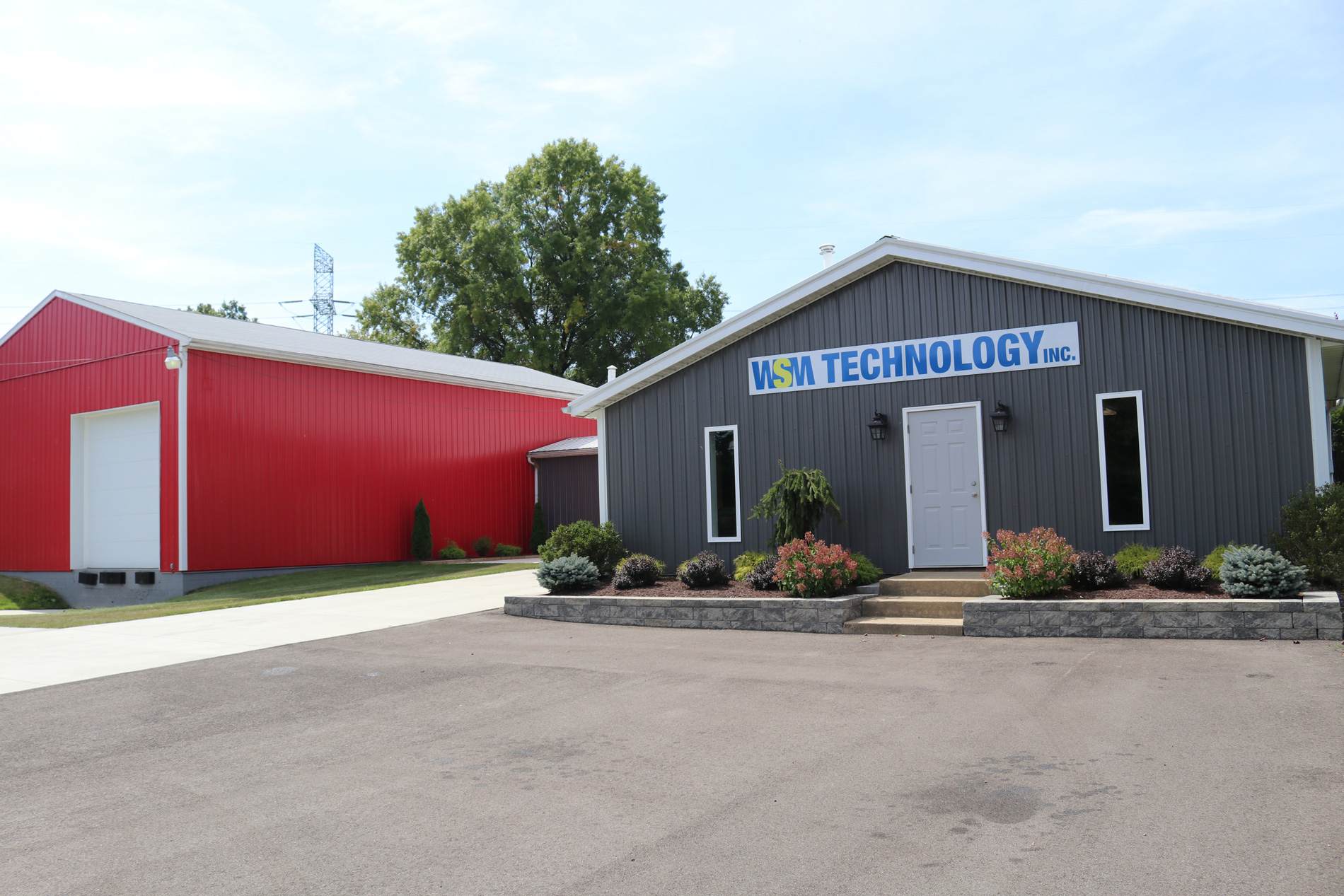
- State-of-the-Art Technical Center: Located in Rootstown, OH, our demonstration facility allows prospective buyers to validate machine capabilities through live test cuts, cycle time evaluations, and custom application proof-of-concepts before making a purchasing decision.
- Authorized Distributor Network: Official regional dealer for industry-leading brands, including MC Machinery / Mitsubishi Electric EDM, OPS Ingersoll, Roku-Roku, Sarix Micro EDM, ROMI, and Schaublin.
- Turnkey Training & Support: We don't just deliver a machine to your shipping dock. WSM engineers handle complete installation, machine calibration, operator training, and ongoing process optimization to guarantee immediate production profitability.

Blaise Buholzer
Founder & President, WSM Technology Inc.
"Our mission is to elevate the productivity and success of manufacturing businesses by delivering premier machine tool technologies paired with uncompromising application support. You are a success story in the making, and we seek to contribute to your story."
6. Frequently Asked Questions (FAQ) — Sinker EDM Technology & Purchasing
Below are authoritative answers to the most common technical and operational questions posed by manufacturing engineers, procurement teams, and plant managers.
What is the fundamental difference between Sinker EDM and Wire EDM?
Sinker EDM utilizes a custom 3D machined electrode (typically graphite or copper) shaped into the inverse of the desired cavity. The electrode plunges into the workpiece along the Z-axis (often with C-axis orbiting) to burn blind cavities, 3D shapes, and internal ribs. Wire EDM uses a continuous traveling brass or coated wire electrode (typically 0.10 to 0.30 mm diameter) to slice through-hole profiles, punches, and plate dies like a bandsaw.
Should I choose Graphite or Copper electrodes for my Sinker EDM applications?
Graphite is the preferred choice for 85%+ of North American moldmaking applications because it machines up to 3x faster on CNC mills, exhibits negligible thermal expansion, offers ultra-low wear rates in high-current roughing, and reduces overall tooling cost. Copper (or Copper-Tungsten) is selected for ultra-fine micro-detail jobs, medical implants requiring surgical cleanliness, carbide eroding, or when achieving mirror finishes without specialized powder additives.
How does adaptive jump control (e.g., Mitsubishi SS-Jump 5) speed up rib cutting?
Deep narrow slots and ribs suffer from poor dielectric fluid circulation, trapping eroded carbon chips in the gap. Trapped debris causes secondary sparking and destructive arcing. Adaptive jump control rapidly retracts the Z-axis spindle at high speeds and accelerations (up to 1.3G), creating a powerful hydraulic pumping effect that flushes debris out of the cavity before resuming the burn instantly.
What surface roughness (Ra / VDI) can modern Sinker EDMs reliably achieve?
Modern machines equipped with digital micro-spark generators can achieve surface finishes as fine as Ra 0.05 µm (VDI 0 / Mirror Finish). Standard production burning typically operates between Ra 0.4 µm (VDI 12) and Ra 1.6 µm (VDI 24). Achieving optical-grade finishes eliminates manual hand polishing, preserving part geometry and dimensional tolerances.
How do C-axis vector machining and orbital movement work?
A programmable C-axis rotates and indexes the electrode spindle with sub-degree resolution. Orbiting algorithms move the electrode in circular, square, spherical, or user-defined vector patterns during the burn. Orbiting ensures uniform spark gap clearance, improves debris flushing, allows one electrode size to perform both roughing and finishing, and enables side-wall erosion and internal threading.
Why is dielectric fluid maintenance critical in Sinker EDMing?
Dielectric oil acts as an electrical insulator until breakdown voltage is reached, a coolant for the electrode and workpiece, and a flushing medium to flush away eroded metallic particles. Degraded, dirty, or incorrect viscosity fluid leads to unstable spark gaps, thermal drift, DC arcing, and poor surface finishes. Synthetic dielectric oils with high flashpoints and multi-stage cartridge filtration are strongly recommended.
Can Sinker EDM machine carbide, titanium, and 3D printed AM parts?
Yes. Because Electrical Discharge Machining relies on thermoelectric erosion rather than mechanical shearing forces, material hardness is irrelevant—provided the material is electrically conductive. Sinker EDM effortlessly cuts Tungsten Carbide, Inconel 718, Titanium 6Al-4V, hardened tool steels up to 68 HRC, and dense Additive Manufactured (AM) metal alloy components.
What utility requirements are required to install a CNC Sinker EDM?
Typical requirements include a stable 3-phase electrical power supply (208V/240V/480V, dependent on model amperage), a clean dry compressed air line (6-7 bar for tool changers and dielectric valving), a climate-controlled shop environment (ideally 20°C ± 1°C for precision work), and high-quality synthetic dielectric fluid.
How does WSM Technology support post-warranty machine maintenance?
WSM Technology maintains a dedicated field service team, extensive spare parts inventory, replacement PCB boards, filters, wire, and dielectric consumables at our Rootstown, OH warehouse. We offer routine preventive maintenance programs, laser interferometer calibration, and remote diagnostic support across our entire service territory.
How can I request a live demonstration or test cut for my specific part?
You can schedule a demonstration or submit your STEP/IGES CAD files directly to our application engineering lab. Click the Inquire Now button anywhere on this page to connect directly with our technical team.
Ready to Upgrade Your Mold & Tooling Productivity?
Speak with Blaise Buholzer and the WSM Technology engineering team today. Get tailored machinery specs, custom ROI calculations, and expert application advice.