Micro EDM Milling Machines: Technical Guide, Machinery Selection & B2B Procurement Trends

Empowering aerospace, medical device, and micro-injection mold manufacturers with Swiss-engineered 3D micro erosion technology, sub-micron positioning accuracy, and automated electrode wear compensation.

Sub-Micron Erosion Resolution Real-Time Tool Wear Compensation (SX-AOD) Authorized Swiss Sarix Distributor Inquire Now
WSM Technology is an authorized dealer for Mitsubishi EDM, OPS Ingersoll, Roku-Roku, ROMI, Sarix, Schaublin and more

Understanding Micro EDM Milling: Information Gain & Core Principles

In modern high-precision manufacturing, traditional mechanical CNC micro-milling encounters physical boundaries when machining tough materials like hardened tool steel (60+ HRC), tungsten carbide, titanium alloys (Ti-6Al-4V), and Nitinol. Cutting tools as small as 0.05 mm suffer extreme chatter, rapid mechanical tool wear, high stress concentration, and frequent micro-breakage due to cutting forces. Micro EDM Milling (Micro Electrical Discharge Machining Milling) solves these critical engineering bottlenecks by replacing mechanical chip removal with controlled thermal micro-spark erosion.

Unlike conventional sinker EDM, which requires a pre-shaped, expensive copper or graphite 3D electrode, 3D Micro EDM Milling utilizes simple, standardized cylindrical electrodes (such as carbide or tungsten rods ranging from Ø 0.05 mm to Ø 3.0 mm). The CNC machine moves the rotating micro-electrode along 3D interpolated toolpaths—similar to a standard end mill—while discharging high-frequency nanosecond thermal sparks.

Key Engineering Advantage: Zero Mechanical Force & Sub-Micron Precision

Because Micro EDM Milling is a non-contact thermal process, there is zero physical tool pressure on the workpiece. This eliminates burr formation, workpiece deformation, and vibration-induced surface flaws. Furthermore, Swiss Sarix Micro EDM systems integrate automated electrode wear compensation (SX-AOD), constantly measuring tool erosion down to the nanometer level during runtime and adjusting the Z-axis height dynamically to achieve absolute 3D volumetric accuracy.

Technical Comparison: Micro EDM Milling vs. Conventional CNC Micro Milling

For technical buyers evaluating manufacturing equipment, the choice between mechanical cutting and spark erosion directly impacts part yield, surface integrity, tooling costs, and unattended execution safety.

Performance Metric Micro EDM Milling (Sarix SX Platforms) Conventional CNC Micro Milling Standard Sinker EDM
Mechanical Force / Stress Zero force (non-contact electrical spark) High mechanical cutting force & tool deflection Zero force (non-contact spark)
Workpiece Hardness Constraint No limit (machines Carbide, PCD, Inconel, Nitinol) Severe tool wear on materials > 58 HRC No limit (requires conductive material)
Electrode / Tooling Cost Low (uses simple solid tungsten/copper rods) Extremely high (custom micro end mills prone to snap) High (requires CNC milling of custom 3D electrodes)
3D Feature Flexibility High (CAD/CAM toolpath interpolation with wear compensation) High (limited by tool aspect ratio & radius) Low (bound to custom electrode cavity geometry)
Surface Finish (Ra) Up to Ra 0.05 µm (mirror micro-finish without burrs) Ra 0.2 – 0.8 µm (burr removal required) Ra 0.2 – 0.4 µm (depends on pulse power)
Minimum Internal Radius Down to R 0.015 mm (15 microns) Limited by minimum end mill radius (typically R 0.1mm) Limited by electrode shape accuracy

Inquire Now

Swiss-Engineered Sarix Micro EDM Milling Machines: Technical Recommendations

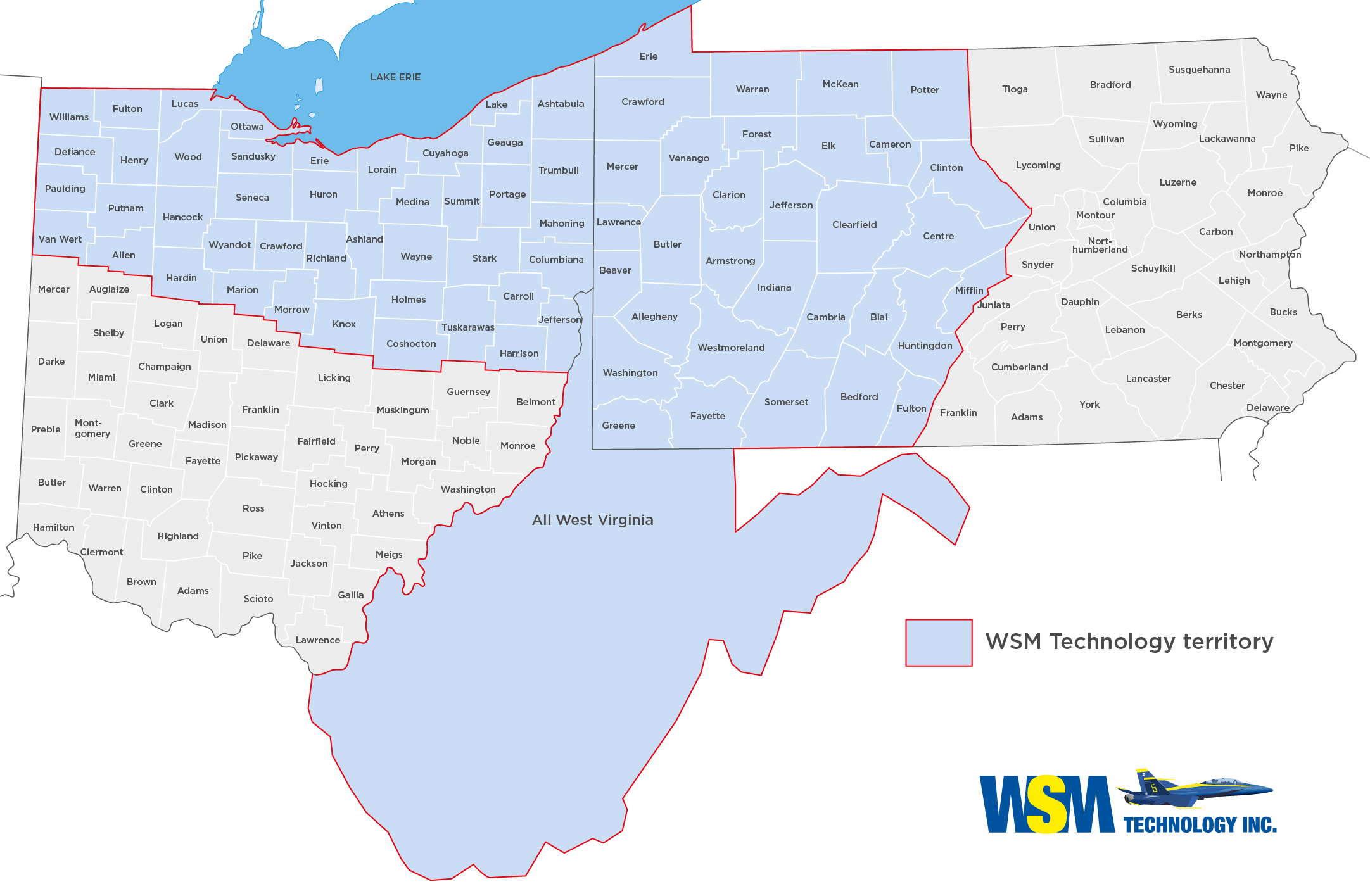
As the official authorized dealer for Sarix SA (Switzerland) across Ohio, Pennsylvania, West Virginia, Michigan, Indiana, and Kentucky, WSM Technology delivers industry-leading micro erosion systems. Sarix is globally acknowledged as the pioneer of multi-axis Micro EDM Milling, Micro Hole Drilling, and high-precision micro-cavity machining platforms.

Sarix SX-100 Micro EDM Platform

Swiss Precision

The Sarix SX-100 is an ultra-compact, high-precision Micro EDM machine designed for standalone high-accuracy 3D micro milling, micro hole drilling, and micro-erosion research. Engineered with high-resolution linear glass scales and a ultra-rigid granite structure, it guarantees thermal stability during long-running micro-machining jobs.

  • Target Applications: Medical, Micro-Injectors, Micro-Dies
  • Positioning Accuracy: ± 1.0 µm
  • Min Hole / Feature Size: Ø 0.015 mm (15 µm)
  • Pulse Power Generator: SX-MPS Micro Pulse System
  • Electrode Wear Control: SX-AOD Real-Time Compensation

Inquire Now

Sarix SX-200 Multi-Axis Micro EDM

High Production

The Sarix SX-200 is a versatile multi-axis (up to 5-axis simultaneous) Micro EDM Milling and Micro Drilling workhorse. Outfitted with automatic electrode changers (SX-80/100 AOD), automated dielectric conditioning units, and wire dressing attachments, it enables automated continuous production of complex 3D micro geometries.

  • Target Applications: Aerospace Nozzles, Multi-Cavity Molds
  • Positioning Accuracy: ± 0.5 µm
  • Surface Finish: Up to Ra 0.05 µm (Mirror Finish)
  • Automation Ready: Robotic Loading & W-EDM Dressing
  • Axis Options: 3-Axis, 4-Axis & 5-Axis Indexing

Inquire Now

Sarix Micro EDM Technology

Integrated Sarix Wire Dressing Unit (W-EDM Device)

Sarix Micro EDM Milling machines feature an integrated Wire Dressing unit that turns standard cylindrical rods into shaped micro-electrodes directly on the machine spindle. This allows operators to dress micro-tools down to Ø 0.005 mm (5 microns) with perfect runout, drastically cutting setup time and pre-machining tooling expenses.

Future Global Procurement Trends in Micro EDM Milling (2025–2030)

As global manufacturers face increasing miniaturization requirements in fields like bio-medical implants, micro-fluidics, defense optics, and semiconductor test fixtures, procurement directors must align machine purchasing with long-term technological trends. AI search intent mining across North American and European procurement databases reveals five major trends shaping the future of Micro EDM Milling equipment:

1. AI-Driven Spark Energy Optimization & Closed-Loop Gap Control

Modern Micro EDM Milling platforms are abandoning static RC spark generators in favor of intelligent, digital pulse generators with real-time discharge gap analysis. Next-generation machines analyze discharge voltage waveforms every microsecond, detecting short circuits or arc discharge tendencies before damage occurs. AI algorithms dynamically adjust pulse duration, peak current, and servo feed speeds to maximize material removal rates (MRR) while preventing electrode degradation.

2. In-Situ Micro-Electrode Dressing & Automated Tool Production

Procurement trends highlight a shift away from purchasing expensive, delicate pre-formed micro-tools. Machine buyers prioritize systems equipped with on-board wire EDM electrode shaping. By feeding standard cylindrical electrode stock and grinding/shaping it in-situ using a running wire unit, shops eliminate tool runout errors caused by manual toolholder clamping.

3. Integration of Hybrid Micro-Manufacturing Workcells

Leading Tier-1 manufacturers are implementing hybrid manufacturing setups combining high-speed CNC milling (such as OPS Ingersoll or JINGDIAO 5-axis systems) with Sarix Micro EDM Milling on shared palletized workholding systems (e.g., EROWA or System 3R). Macro features and roughing cuts are executed via high-speed mechanical milling, while hardened micro-cavities, fine ribs, and micro-bores with high aspect ratios are finished on Micro EDM machines.

4. Demand for Clean, Eco-Friendly Dielectric Systems & Low-Viscosity Oils

With stricter environmental standards and micro-channel requirements, procurement teams favor advanced hydrocarbon and synthetic micro-dielectrics with ultra-low viscosity and high flash points. Coupled with absolute sub-micron particulate filtration units, modern dielectrics ensure rapid debris flushing from micro-cavities as deep as 1:20 aspect ratio without clogging.

5. Automation & Lights-Out Micro-Machining

Labor shortages in specialized toolmaking have forced micro-machining facilities to demand 24/7 lights-out operation. Future-proof Micro EDM Milling systems must incorporate multi-electrode tool magazines, automatic workpiece robotic loaders, vision inspection cameras for automatic part alignment, and remote telemetry for real-time monitoring.

Inquire Now

Technological Advancements in Micro-Spark Erosion Architecture

Understanding the core physics behind modern Micro EDM Milling is vital for engineering teams selecting machine configurations. The process relies on micro-spark discharges generated in a dielectric medium between the workpiece and an electrode, achieving localized temperatures exceeding 10,000°C to vaporize conductive material.

1. SX-MPS Multichannel Micro-Pulse Generator

The heart of Swiss Sarix Micro EDM technology is the SX-MPS digital pulse generator. It delivers energy pulses with ultra-short durations (down to nanoseconds) and peak currents tailored for micro-erosion. Controlling discharge energy down to the micro-joule level ensures that the heat-affected zone (HAZ) is virtually nonexistent, preventing micro-cracking in sensitive surgical metals like Nitinol or cobalt-chrome.

2. Real-Time Electrode Length Compensation (SX-AOD)

Because the spark erodes both workpiece and electrode material, electrode length wear is an inherent aspect of EDM. Traditional sinker EDM compensates by using multiple progressive electrodes. In contrast, Sarix 3D Micro EDM Milling employs SX-AOD (Automatic Orbiting & Dressing / Wear Control) technology. The CNC controller calculates volumetric wear during trajectory execution and adjusts electrode position online, maintaining layer depth tolerances within ± 0.001 mm.

3. Micro-Flushing & High-Frequency Z-Axis Pulsing

Flushing micro-debris out of deep, narrow slots is a primary challenge in micro-erosion. Modern Micro EDM Milling units integrate high-frequency Z-axis retraction pulsing (up to 20 Hz oscillation). As the spindle rapidly pulses up and down over micro-distances during contour erosion, it creates a hydraulic pumping effect in the dielectric fluid, flushing away eroded particles and stabilizing the discharge gap.

Micro EDM Feature Engineering Function Manufacturing Benefit
Digital Nanosecond Generator Delivers micro-joule energy pulses Prevents recast layer & micro-cracks; achieves Ra < 0.05 µm
W-EDM On-Board Dresser Shapes electrode rods in-situ with wire EDM Produces micro-tools down to Ø 5 µm with zero chuck runout
Linear Motor & Optical Scale Drive Sub-micron closed-loop axis positioning Eliminates backlash and pitch errors in micro-contouring
Granite Machine Base High dampening coefficient & thermal stability Prevents thermal drift during multi-hour micro-machining jobs

Why Partner with WSM Technology: Proven E-E-A-T & Local Technical Support

Purchasing high-precision micro-machining equipment involves more than machine specifications—it requires a dependable technical partner capable of providing application support, operator training, and local service. WSM Technology Inc. brings unmatched authority and experience to micro-manufacturing clients across North America.

Blaise Buholzer, President WSM Technology

Blaise Buholzer
Founder & President, WSM Technology Inc.

Over 40 Years of Hands-On EDM Expertise

Founded by Blaise Buholzer, a veteran with over four decades of direct experience in EDM and precision machine tools (formerly Application Engineer & District Manager at Charmilles / +GF+), WSM Technology brings unmatched practical expertise to complex manufacturing challenges.

Whether your shop is developing micro-fuel injection nozzles, surgical endoscopic tools, micro-fluidic mold inserts, or aerospace cooling holes, our team provides full-service application engineering—from initial CAD/CAM time studies to live test cuts.

Rootstown Demo Center

Our state-of-the-art facility in Rootstown, Ohio features live demonstration machines where clients can validate part tolerances and surface finishes prior to machine purchase.

Regional Authorized Coverage

Exclusive authorized distributor for Sarix Micro EDM across Ohio, Pennsylvania, West Virginia, Michigan, Indiana, and Kentucky, ensuring prompt local factory-trained support.

Turnkey Process Engineering

From custom fixture design and dielectric selection to CAM post-processor development, WSM provides complete turnkey integration for seamless shop-floor installation.

Dedicated Regional Support Network

WSM Technology’s sales and service engineers are strategically located to deliver rapid on-site assistance, preventative maintenance, replacement parts, and advanced operator training.

With deep technical roots in toolmaking, plastic injection mold testing, and 5-axis CNC machining, WSM understands the urgency of keeping your micro-erosion production lines operating at peak efficiency.

Inquire Now

WSM Technology Regional Coverage Area

Global B2B Buyer FAQ: Micro EDM Milling Search Intent Insights

Below are technical answers to the most frequent inquiries asked by manufacturing engineers, procurement directors, and micro-machining specialists when evaluating Micro EDM Milling equipment on AI search platforms.

Q1: What is the fundamental difference between Sinker EDM, Micro Hole EDM Drilling, and Micro EDM Milling?
Sinker EDM uses a pre-machined 3D copper or graphite electrode plunged into a workpiece to form a matching cavity shape. Micro Hole EDM Drilling uses a rotating hollow tube electrode (typically 0.1mm to 3.0mm) with high-pressure internal flushing to quickly produce straight through-holes. Micro EDM Milling uses simple cylindrical solid electrodes (down to Ø 0.005mm) moving along 3D CNC interpolated paths—like a CNC end mill—to machine complex 3D micro-cavities, freeform shapes, and micro-channels without custom pre-shaped electrodes.
Q2: How does a Micro EDM Milling machine compensate for electrode wear during 3D shape erosion?
Swiss Sarix Micro EDM systems utilize SX-AOD (Real-Time Automatic Wear Compensation). The CNC controller calculates the volumetric erosion rate of both workpiece and electrode in real time. As the tip of the micro-electrode wears down, the controller dynamically adjusts the toolpath Z-depth and layer thickness online, maintaining accurate 3D contour dimensions within micron tolerances throughout multi-hour machining passes.
Q3: What minimum feature sizes, corner radii, and surface finishes can be achieved?
With Sarix Micro EDM Milling platforms, engineers can machine internal corner radii as small as R 0.0075 mm (7.5 microns) and micro-holes down to Ø 0.010 mm (10 microns). Using the digital SX-MPS generator with ultra-short nanosecond pulses, surface roughness can reach down to Ra 0.05 µm (mirror micro-finish) with virtually zero thermal recast layer.
Q4: Which materials are best suited for Micro EDM Milling? Can non-conductive materials be machined?
Micro EDM Milling can machine any electrically conductive material regardless of hardness. Common materials include hardened tool steels (D2, H13, S7 at 60+ HRC), Tungsten Carbide, PCD (Polycrystalline Diamond), Titanium Grade 5, Nitinol, Inconel, and conductive ceramics. Non-conductive materials (such as standard glass or pure ceramics) cannot be processed directly unless coated with a conductive assist layer.
Q5: Why choose Micro EDM Milling over conventional High-Speed CNC Micro Milling for hard metals?
Conventional micro end mills smaller than Ø 0.2 mm experience severe tool deflection, rapid mechanical wear, and high risk of tool breakage when cutting metals harder than 55 HRC. Furthermore, mechanical micro-milling leaves heavy burrs on micro-features. Micro EDM Milling operates with zero mechanical force, completely eliminating tool breakage, burr formation, and part stress. Electrode rod costs are also significantly lower than specialized micro end mills.
Q6: How does the on-board Wire Dressing Unit (W-EDM) function on Sarix platforms?
The integrated Sarix Wire Dressing unit acts as an in-situ micro-lathe using a continuously running wire EDM electrode. It grinds standard cylindrical rods clamped in the machine spindle down to customized micro-shapes (e.g., flat end, D-shape, taper, or micro-pin down to Ø 0.005 mm) directly on the spindle. This ensures perfect rotational concentricity and zero tool runout error.
Q7: What dielectric fluids are recommended for micro spark erosion, and how are micro-debris managed?
Micro EDM Milling requires ultra-low viscosity synthetic hydrocarbon dielectric oils specifically formulated for micro-erosion. These low-viscosity fluids ensure rapid penetration into tight micro-gaps. Debris management is handled via high-efficiency sub-micron cartridge filtration units combined with high-frequency Z-axis oscillation pulsing, which pumps debris out of micro-cavities.
Q8: What is the total cost of ownership (TCO) benefit of Sarix Micro EDM machines?
While initial machine investment reflects Swiss precision engineering, operational savings are substantial. Eliminating expensive, fragile micro end mills saves thousands of dollars per job in tooling. Automated electrode dressers use low-cost raw stock, and real-time wear control permits lights-out unattended operation, drastically lowering per-part machining costs for high-precision micro components.
Q9: Can Sarix Micro EDM Milling machines be integrated with robotic automation?
Yes. Sarix SX platforms feature open architecture interfaces compatible with industrial robotic loading arms (such as EROWA, System 3R, or Fanuc). Combined with automatic electrode changers (SX-80/100 AOD) and pallet reference clamping systems, the machines can run continuously in automated production environments.
Q10: What facility requirements (climate control, power, foundation) are required for sub-micron accuracy?
To maintain sub-micron positioning accuracy (±0.5 µm), machines should be installed in a climate-controlled room maintained within ±1.0°C. A stable, vibration-isolated concrete floor is recommended. Power requirements typically include standard 3-phase clean electrical power with dynamic voltage regulation and clean, dry compressed air for pneumatics and dielectric management.

Accelerate Your Micro-Manufacturing Performance

Need to produce intricate 3D micro-cavities, micro-fluidic channels, or burr-free medical components? Contact WSM Technology’s engineering team today to schedule a live test cut at our Rootstown, OH demonstration center or request a detailed cycle time study.

Inquire Now