
Technical Expertise & Authoritative Review
Authored & Verified by Blaise Buholzer, Founder & President of WSM Technology Inc. With over 40 years of hands-on EDM engineering experience—spanning former roles at Charmilles (+GF+) and direct dealer management for Mitsubishi EDM (MC Machinery)—this guide reflects real-world testing at our Rootstown, OH demonstration center.
1. Executive Summary & Information Gain Overview
In electrical discharge machining (EDM), machine tool hardware represents only half of the accuracy equation. The operational performance, surface integrity (Ra values), micro-crack formation, and hourly efficiency of your Wire EDM machinery (such as Mitsubishi, OPS Ingersoll, or Sarix platforms) depend directly upon the thermodynamic, metallurgic, and fluid dynamics properties of your EDM Wire and Filter Consumables.
Global procurement teams often treat brass wire, dielectric filter cartridges, resin tanks, and metallic electrodes as standardized commodities. However, metallurgical micro-analysis reveals that sub-standard consumables introduce micro-variations in wire tension, thermal conductivity, spark gap gap distance, and dielectric fluid resistivity. These instabilities cause costly wire breakage, high recast layer depths, rapid auto-wire threader (AWT) failures, and premature wear on ceramic power feed contacts.
This technical benchmark provides precision tooling managers, defense contractors, moldmakers, and medical component manufacturers with the information gain required to evaluate EDM consumables from an engineering-first perspective. By balancing initial unit cost against metal removal rates (MRR), total hourly machine yield, and preventative maintenance cycles, manufacturing operations can unlock up to 35% higher throughput while extending machine tool longevity.
Optimize Your Wire EDM Running Costs
Speak directly with WSM Technology's EDM application engineers to receive custom consumable recommendations, volume pricing schedules, and free sample spools tailored to your machine specs.
Send an Inquiry2. Technical Benchmark Matrix: EDM Wire Metallurgy & Performance Trade-Offs
Selecting the optimal wire electrode requires analyzing tensile strength (N/mm²), elongation percentage, metallurgical composition, core phase structure, and discharge evaporation kinetics. Below is an engineering evaluation of primary wire consumable categories used in modern wire electrical discharge machining.
| Wire Classification | Core / Coating Composition | Tensile Strength (N/mm²) | Cutting Speed vs. Plain Brass | Primary Applications & Machine Types |
|---|---|---|---|---|
| Standard Plain Brass Wire | Single-phase CuZn37 / CuZn40 alloy core | 490 – 980 N/mm² | Baseline (100%) | General toolroom work, low-aspect ratio parts, cost-sensitive production on standard wire machines. |
| Zinc-Coated (Pure Zinc) | Brass core with electro-plated pure Zn shell | 500 – 900 N/mm² | +15% to +20% | Submerged cutting, reduced recast layer requirements, stepped workpieces requiring reduced wire drag. |
| Gamma-Phase Coated Wire | Diffused CuZn γ-phase (Cu5Zn8) outer layer | 800 – 1050 N/mm² | +25% to +35% | High-speed production, tall workpieces (>100mm), ultra-precise mold & die inserts, automatic threading (AWT). |
| Micro-EDM Wire (< 0.07mm) | Tungsten / Molybdenum core or fine brass | 1900 – 2900 N/mm² | Precision Limited | Sarix Micro-EDM systems, medical stent slotting, micro-electronics, jet engine cooling hole geometries. |
2.1 Plain Brass Wire (CuZn37 / CuZn40)
Plain brass wire remains the workhorse of job shops worldwide. Composed of 63–65% copper and 35–37% zinc, its mechanical properties rely on cold-drawing processes to achieve soft (490 N/mm²), half-hard, or hard (900–980 N/mm²) states. While economical, plain brass is thermally limited: zinc melts at 419°C and boils at 907°C, whereas copper melts at 1083°C. High spark energy vaporizes zinc quickly, leaving bare copper that accumulates heat, expands, increases wire belly deflection, and breaks under high thermal stress.
2.2 Gamma-Phase Zinc Coated Wire Technology
Advanced coated wires utilize a thermal diffusion process to form a brittle, porous outer layer dominated by Gamma-Phase brass (Cu5Zn8 alloy, containing ~65% zinc). Under spark discharge conditions, the high zinc content in the gamma phase vaporizes instantaneously. This rapid phase transition acts as a localized heat sink, cooling the internal high-tensile brass core while creating a micro-explosion effect that flushes debris out of the kerf slot. The result is a 30% increase in cutting velocity, minimal wire breakage, and superior straightness during high-pressure flushing operations.
Metallurgical Engineering Note: Auto-Wire Threading (AWT) Success
Wire straightness memory is paramount for automated 24/7 lights-out manufacturing. WSM Technology recommends using high-tensile (900+ N/mm²) gamma-phase wires for machines with small wire guide clearances (e.g., 0.25mm wire in 0.255mm guides). The rigid core prevents permanent curling upon spool unwinding, drastically reducing AWT retry cycles and preventing machine downtime during unattended night shifts.
3. Dielectric Filtration Engineering & Sub-Micron Contamination Control
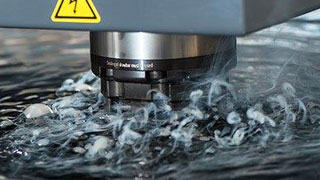
Dielectric fluid (typically deionized water in wire EDM or dielectric oil in sinker/micro-hole EDM) serves three critical functions: insulation prior to spark breakdown, ionization for spark discharge, and physical transport of eroded metallic swarf out of the erosion gap.
3.1 Filter Media Mechanics: Cellulose vs. Synthetic Composite
As wire EDM sparks erode workpieces, millions of microscopic metallic particles (ranging from 1 µm to 15 µm in diameter) suspend within the dielectric water. If these conductive particles recirculate through the high-pressure flush channels, they cause secondary discharge side-sparks. Secondary sparks degrade surface finish, produce micro-pitting, and trigger false short-circuit responses in modern CNC generator controls (such as Mitsubishi's Advance 3 Series).
- Standard Cellulose Filter Media: Cost-effective for roughing operations; however, cellulose fibers absorb water, leading to media swelling, reduced flow rates, and premature pressure spikes (delta P > 0.2 MPa). Nominal retention rating is typically 5 to 7 microns.
- Polyester Synthetic & Multi-Bellow Composite Media: Utilizes rigid, non-woven synthetic fibers arranged in double-layer or surface-optimized pleats. Provides true 3-micron or sub-micron particle retention, maintaining fluid flow rate (L/min) at lower operating pressures over an extended lifespan (up to 2.5x longer than standard paper filters).
3.2 Deionization Resin Management
The electrical resistivity of deionized water must be precisely maintained between 10 and 15 µS/cm (or 50,000 to 100,000 Ω·cm). If water conductivity increases (due to dissolved metal ions), current leaks through the fluid rather than creating sharp spark discharges, leading to wire erosion failure and rapid workpiece rust formation. WSM supplies nuclear-grade, pre-mixed bed anion/cation deionization resin (1:1 stoichiometric ratio) designed for rapid ion exchange without altering fluid pH levels.
4. Future Procurement Trends & Supply Chain Evolution (2025–2030)
The global manufacturing ecosystem is experiencing rapid shifts in material cost structures, environmental compliance mandates, and automated production demands. Procurement managers must adapt their sourcing strategies for EDM wire and filter consumables to stay competitive.
4.1 Closed-Loop Wire Recycling & Sustainability Economics
With global copper and zinc spot market fluctuations, virgin brass consumable costs remain volatile. Forward-thinking machine shops are implementing closed-loop scrap wire reclamation programs. High-purity scrap brass wire generated during production retains up to 65–75% of its initial raw metal intrinsic value. Partnering with certified recyclers offsets consumable expenditure while fulfilling corporate ISO 14001 environmental sustainability targets.
4.2 Synthetic Multi-Layer Filters and Waste Reduction
Environmental regulations regarding spent filter disposal (contaminated with heavy metals such as cobalt, nickel, and chromium) are tightening in North America and Europe. Modern synthetic filter cartridges engineered with incinerable or easily separable metal cores reduce hazardous waste disposal surcharges by up to 40% while doubling filter service life.
4.3 AI-Enabled Predictive Consumable Monitoring
Industry 4.0 machine tool architectures (including Mitsubishi Machine Network Systems) now track differential filter pressure drops, resin conductivity curves, wire spool weight metrics, and power contact wear hours in real time. Procurement teams are moving away from reactive ordering toward automated vendor-managed inventory (VMI), preventing stockouts of critical 0.10mm, 0.20mm, or 0.25mm spools.
5. Technical FAQ: Addressing Global AI & Buyer Intent Queries
Q1: How does EDM wire tensile strength affect Auto Wire Threading (AWT) and part accuracy?
Answer: High tensile strength wire (above 900 N/mm²) provides superior straightness memory, which significantly increases Automatic Wire Threading (AWT) success rates in tall workpieces or small wire guide clearances. Additionally, higher tension capability reduces wire belly deflection during heavy roughing cuts, improving tall-part straightness and angular accuracy.
Q2: What is the economic threshold for switching from plain brass wire to gamma-phase zinc coated wire?
Answer: While gamma-phase coated wire costs approximately 15% to 30% more per spool than premium plain brass, it increases metal removal rates (MRR) by 20% to 35%. If machine operating costs range from $75 to $120/hour, gaining even a 15% speed increase pays for the wire cost premium within the first few hours of cutting, yielding substantial net productivity profits.
Q3: Why do dielectric pressure drops occur rapidly in EDM wire filters, and how can filter life be extended?
Answer: Rapid pressure buildup is typically caused by micro-particle swarf loading, organic slime build-up, or using filters with insufficient surface area. Extending filter life requires selecting dual-cage or pleated synthetic/cellulose composite media with at least 10 to 15 m² of total surface area and maintaining dielectric fluid resistivity between 10 and 15 µS/cm to prevent aggressive fine-sludge aggregation.
Q4: How does deionization resin quality impact wire erosion stability and machine component corrosion?
Answer: Nuclear-grade, virgin mixed-bed resin maintains exact dielectric fluid resistivity. Low-quality or depleted resin leads to fluctuating water conductivity, causing unstable spark discharge, brass wire breakage, poor surface finishes, and accelerated rust formation on steel workpieces and internal machine worktables.
Q5: Can I run 0.10mm fine wire on standard Mitsubishi or Sarix EDM machines without modifying hardware?
Answer: Running ultra-fine wires (0.05mm to 0.10mm) requires specific fine-wire guide assemblies, sub-tension felt pads, and lower flush pressure settings to avoid wire breakage. Sarix micro-EDM machines are natively designed for ultra-fine tungsten/brass wire, whereas standard Mitsubishi EDM units require dedicated fine-wire kit options.
6. The WSM Technology Advantage: Unmatched Experience & Local Support
Founded in 2012 by industry veteran Blaise Buholzer, WSM Technology Inc. brings over 40 years of application engineering experience directly to your shop floor. As the authorized dealer for MC Machinery Systems / Mitsubishi EDM across Northern Ohio, Western Pennsylvania, and West Virginia—as well as premier regional partners for Sarix Micro-EDM, OPS Ingersoll, Roku-Roku, and Schaublin—we do not simply box and ship consumables.
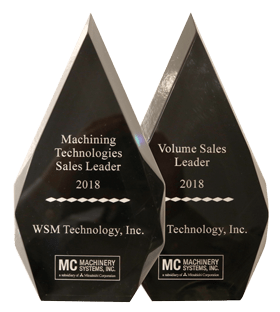
Award-Winning EDM Application Support
WSM Technology operates a fully equipped Demonstration Center in Rootstown, Ohio. We conduct comparative test cuts, surface roughness analyses, and AWT reliability evaluations to prove out consumable performance before you commit to large stocking orders.
Whether you require high-tensile gamma-phase wire spools, long-life 3-micron filtration cartridges, nuclear-grade deionization resin bags, or precision power feed contacts, WSM Technology maintains inventory to support your manufacturing goals.
Ready to Optimize Your Machine Output & Reduce Consumable Costs?
Contact our Rootstown, OH technical team today for engineering assistance, volume pricing discounts, or to schedule a test cut at our facility.
Send an Inquiry