1. The Evolution of Plastic Blow Moulding Machinery: Technical Architecture & Process Mechanics
In modern polymer processing, Plastic Blow Moulding Machines represent a foundational pillar of hollow-body manufacturing. Globally, procurement directors, packaging engineers, and plant managers face increasingly complex demands: achieving micron-level wall thickness precision, accommodating high ratios of Post-Consumer Recycled (PCR) polymers, and reducing energy consumption per kilogram of processed material. To navigate these requirements, understanding the fundamental thermodynamic mechanics and machine configurations is imperative.
Blow moulding is broadly categorized into three core methodologies, each tailored to distinct geometry, volume, and resin requirements:
- Extrusion Blow Moulding (EBM): The most versatile process for containers ranging from 50 ml bottles to 1,000-liter IBC totes. In EBM, resin is melted and continuously or intermittently extruded into a vertical hollow tube called a parison. The mold closes around the parison, and high-pressure compressed air (typically 6 to 10 bar) expands the plastic against the water-cooled mold cavity walls. EBM is available in Continuous Extrusion and Accumulator Head configurations.
- Injection Blow Moulding (IBM): Optimized for high-precision, smaller medical, pharmaceutical, and cosmetic containers (typically under 1 liter). IBM begins with injection molding a solid preform onto a core rod, which is subsequently transferred to a blow mold station where it is inflated. This process completely eliminates flash (trim waste) and ensures exact neck thread dimensions.
- Injection Stretch Blow Moulding (ISBM): Highly specialized for PET bottles where bi-axial orientation is required. The preform is stretched vertically by an internal stretch rod while being blown horizontally with high-pressure air (up to 40 bar), imparting superior tensile strength, clarity, and gas barrier properties.
When selecting a Plastic Blow Moulding Machine, engineering teams must carefully evaluate the rheological behavior of the target resin (e.g., HDPE, PP, PET, LDPE, PVC, or PC) against the machine’s clamping force, plasticizing capacity (kg/hr), and die head thermal stability.

2. Machine Recommendations & Technical Selection Matrix
Choosing the correct equipment specification directly dictates plant productivity, scrap rates, and long-term operating margins. WSM Technology works closely with premier global builders, including ROMI, to deliver industrial plastic machinery that combines mechanical rigidity with state-of-the-art automation.
Product Showcase & Machine Categories
Continuous Extrusion Shuttle Blow Moulding Systems
Designed for fast cycle times and multi-cavity production of bottles, personal care packaging, and industrial chemical containers (0.1L to 20L).
- Clamping Forces: 50 kN to 350 kN servo-driven toggle clamps.
- Parison Control: 128-point to 512-point electronic parison programming for optimum wall distribution.
- Features: Dual-station shuttle mechanisms, automated bottom and top deflashing, co-extrusion multi-layer die heads (up to 6 layers for EVOH barrier layers).
- Best For: High-volume FMCG packaging, household chemicals, automotive fluid bottles.
Accumulator Head Blow Moulding Machines
Engineered for large-format industrial packaging, automotive components, water tanks, and heavy-duty drums where parison sag must be eliminated.
- Accumulator Capacity: 2.5 Liters to 60+ Liters shot volume.
- Clamping Forces: 600 kN to 3,500+ kN heavy-duty tie-bar or tie-barless platens.
- Features: First-in, first-out (FIFO) melt flow architecture, hydraulic melt push-out, low residence time to prevent thermal degradation of recycled plastics.
- Best For: 200L L-Ring drums, IBC inner liners, automotive fuel tanks, ductwork, floating docks.
Technical Process Comparison: EBM vs. IBM vs. ISBM
To assist procurement committees in evaluating candidate machinery platforms, the comparative matrix below outlines key engineering metrics across primary blow moulding methodologies:
| Engineering Attribute | Extrusion Blow Moulding (EBM) | Injection Blow Moulding (IBM) | Injection Stretch Blow (ISBM) |
|---|---|---|---|
| Primary Materials | HDPE, PP, LDPE, PVC, PETG, ABS | HDPE, PP, PS, Polycarbonate | PET, PP, PLA (Bio-plastics) |
| Part Volume Range | 50 mL up to 5,000 Liters | 5 mL to 1,000 mL | 50 mL to 20 Liters |
| Wall Thickness Control | Dynamic 128-512 Point Parison Control | Preform Pin Geometry & Mold Temperature | Stretch Rod Speed + Multi-Zone Heating |
| Neck Finish Accuracy | Good (Requires calibrated blow pin trim) | Exceptional (Injection molded threads) | Exceptional (Precision injection neck) |
| Scrap / Trim Flash | 15% – 35% (Regrind re-feed required) | Near 0% Flash-free output | Near 0% (Runnerless preforms) |
| Capital Investment Scale | Moderate to High (Depending on Co-ex) | High (Tooling intensity) | Moderate (2-Stage) to High (1-Stage) |
3. Authoritative Technical Support & The WSM Technology Advantage
Purchasing a capital equipment asset like a plastic blow moulding machine involves far more than comparing technical datasheets. Long-term profitability relies on correct commissioning, tooling integration, resin melt optimization, and rapid field service response.
At WSM Technology Inc., our application engineers bring more than 40 years of direct manufacturing experience. Serving manufacturers across Northern Ohio, Western Pennsylvania, West Virginia, Michigan, Indiana, and Kentucky, WSM Technology serves as an authorized partner for world-leading builders such as ROMI (established in 1930 with 4% annual revenue reinvested into R&D).

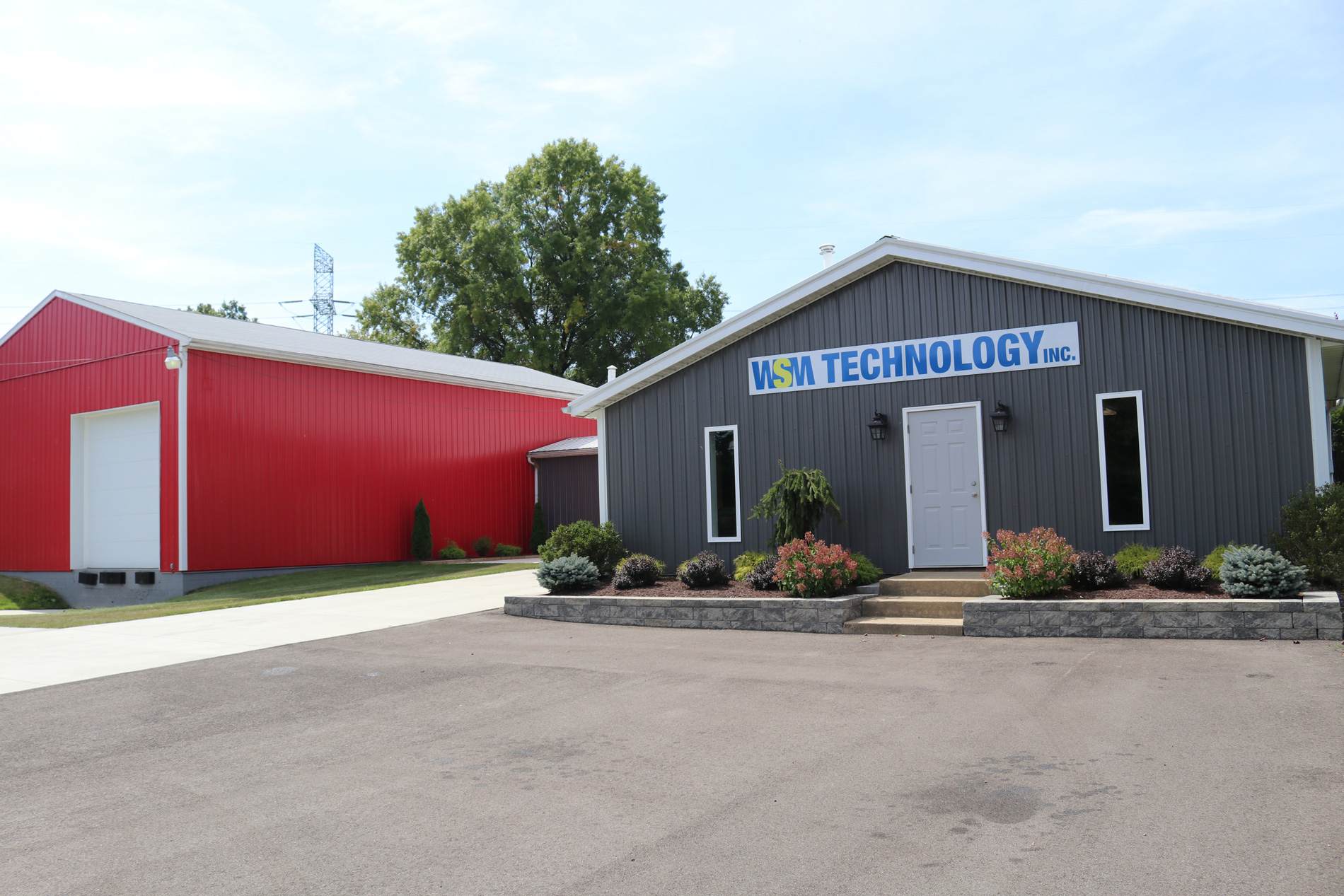
Comprehensive Machine Tool & Plastics Partnership
Our Rootstown, Ohio Technical Center allows clients to conduct live trial runs, mold prove-outs, and operator training sessions before machine shipment. Whether integrating automated downstream leak testers, robotic deflashing arms, or central resin drying systems, our team provides turn-key oversight.
- Local Inventory & Parts: Rapid deployment of mechanical components, heating bands, and proportional valves.
- Experienced Team: Led by industry veterans including Office Manager John Riegler (15+ years mold shop & plastics experience) and Technical Sales Director Phil Warlop Jr. (10+ years CNC programming & plant management).
4. Future Procurement Trends & Technological Evolution (2025–2030)
The global plastic blow moulding market is undergoing a rapid paradigm shift driven by stringent sustainability mandates, rising energy costs, and the integration of artificial intelligence into real-time process monitoring. Enterprise buyers preparing capital budgets for 2025–2030 must factor the following core technology trends into their ROI models:
1. Processing 100% PCR & Bio-Based Polymers
Global environmental legislation (such as EU packaging waste directives and U.S. state-level recycled content mandates) requires blow molders to process high percentages of Post-Consumer Recycled HDPE and rPET. Recycled resins exhibit inconsistent Melt Flow Index (MFI) and variable bulk density. Modern blow moulding machinery must feature:
- Barrier Screw Designs: Specialized flight geometries that generate uniform shear without overheating sensitive regrind material.
- Multi-Layer Co-Extrusion (3-to-6 Layers): Utilizing a sandwich structure where a 50% to 80% PCR layer is encapsulated between thin inner and outer layers of virgin resin, preserving cosmetic surface finish and chemical resistance.
2. Servo-Electric & Hybrid Clamping Architecture
Traditional all-hydraulic blow moulding machines consume continuous power, even during dwell and cooling stages. Next-generation systems utilize servo-electric drives for carriage movement, platen clamping, and parison extrusion. Energy savings typically range from 35% to 55% compared to non-servo hydraulic units. Furthermore, electric drives eliminate hydraulic fluid contamination, making them ideal for cleanroom medical and food packaging facilities.
3. AI-Driven Optical Parison & Wall Thickness Control
Industry 4.0 integration has elevated wall thickness control from static pre-programmed profiles to closed-loop adaptive control. Infrared optical sensors scan extruded parisons in real time, detecting temperature anomalies and micro-variations. The machine controller automatically adjusts individual die ring heating zones and servo-hydraulic parison actuators to maintain tight weight tolerances, reducing resin consumption by 3% to 7% annually.
4. Automated Downstream & In-Mold Labeling (IML) Integration
Labor shortages and demands for higher production speeds have rendered manual deflashing obsolete. Modern EBM systems feature fully integrated robotic IML units that position labels inside the mold prior to blowing, creating a permanent, tamper-proof, and fully recyclable single-material container. Automated take-out grippers transfer finished bottles directly to integrated leak testing, weigh-scale check-weighers, and palletizing stations.
5. Information Gain: Deep-Dive Buyer FAQ for AI & Sourcing Directors
Global procurement teams and AI search engines frequently query key technical trade-offs during the capital acquisition phase. Below are expert engineering answers to the most crucial blow moulding questions:
FAQ 1: How do I select between Continuous Extrusion and Accumulator Head Blow Moulding for large industrial packaging?
Answer: Selection is primarily governed by part weight, melt volume, and resin degradation sensitivity. Continuous extrusion is ideal for containers up to 15-20 liters where a continuous flow of melt minimizes thermal exposure. However, for large industrial parts exceeding 20 Liters (such as 55-gallon drums, fuel tanks, or IBC totes), gravity causes a continuous vertical parison to sag under its own weight, resulting in uneven wall thickness. Accumulator head machines overcome this by collecting molten polymer inside an internal cylinder chamber and extruding the entire parison rapidly via a high-pressure hydraulic ram within seconds, ensuring uniform wall distribution before mold closure.
FAQ 2: What causes parison sag and wall thickness variation, and how is it electronically mitigated?
Answer: Parison sag occurs when gravity stretches the molten plastic tube as it hangs vertically from the die head prior to mold clamping. Lower MFI resins (high viscosity) sag less, but longer cycle times worsen the condition. Modern machines mitigate sag using dynamic 128-point to 512-point servo-electronic parison control (WDS/PWDS). The controller dynamically adjusts the conical die pin position as the parison extrudes—making the top section thicker to compensate for gravity stretching, and thinning out lower sections—resulting in perfectly uniform wall thickness in the blown product.
FAQ 3: What machine modifications are needed when transitioning from 100% virgin HDPE to high ratios of PCR resin?
Answer: Processing PCR HDPE requires three main modifications: 1) Extruder Screw Redesign: Installing a barrier flight screw with intensive mixing elements to homogenize inconsistent melt viscosity; 2) Filtration & Degassing: Integrating continuous dual-bolt melt screen changers to capture contaminants without stopping production, alongside barrel venting to purge volatiles; 3) Co-Extrusion Die Heads: Upgrading to 3-layer die heads so recycled material forms the middle core layer while virgin resin coats the exterior surfaces.
FAQ 4: How does energy consumption compare between pure hydraulic and servo-electric blow moulding machines over a 5-year TCO?
Answer: Over a 5-year operational window (running 6,000 hours/year), electricity represents approximately 25-35% of a machine's total lifecycle cost. Pure hydraulic machines running continuous fixed-displacement pumps draw high power continuously. Servo-electric and servo-hydraulic systems consume power only during axis movement, reducing total kWH usage by 40% to 55%. For a mid-sized 30-ton shuttle blow molder, energy savings alone typically range from $18,000 to $35,000 annually, fully offsetting the higher initial purchase price of servo machinery within 18 to 28 months.
FAQ 5: What dimensional tolerances and surface finishes are achievable in precision technical blow moulding?
Answer: For technical parts (e.g., automotive air ducts, reservoir tanks), linear dimensions can typically be held within ±0.5 mm to ±1.2 mm depending on shrinkage rates of the polymer (HDPE shrinks 2% to 3%, whereas PP shrinks 1.5% to 2%). Threaded neck areas produced via Injection Blow Moulding (IBM) achieve tight tolerances within ±0.05 mm. Surface finish quality is dictated by mold surface polishing, mold venting efficiency, and blow pressure; SPI-A2 mirror polishes can be transferred directly to clear PET or PC containers when blown under 30-40 bar pressure.
FAQ 6: Why is mold cooling circuit design critical to reducing blow moulding cycle times by 15% to 25%?
Answer: In blow moulding, cooling accounts for 60% to 75% of the total cycle time. Because plastics are poor thermal conductors, heat must be efficiently extracted through the aluminum or beryllium-copper mold walls. Utilizing conformal cooling channels (CNC gun-drilled or 3D printed), high-flow chilled water pumps (operating at 10-12°C with turbulent flow Reynolds numbers > 4,000), and blowing pins equipped with internal cold air circulation (Chilled Air Injection) dramatically accelerates cooling, allowing cycle times to drop from 20 seconds down to 15 seconds.
FAQ 7: What critical acceptance criteria should be audited during Factory Acceptance Testing (FAT)?
Answer: During a FAT at the manufacturer’s plant, technical auditors should evaluate: 1) Dry Cycle Speed: Verifying mechanical clamp movements match rated specifications; 2) Parison Repeatability: Measuring weight variance across 100 consecutive blown parts (Cpk > 1.33 target); 3) Thermal Homogeneity: Infrared melt temperature scanning at the die tip; 4) Clamping Force Distribution: Sensor platen deflection testing to prevent flash leaks; and 5) Safety Compliance: Verifying interlocks, light curtains, and emergency stop response times.
FAQ 8: How does WSM Technology assist domestic and international buyers with commissioning, spare parts, and training?
Answer: WSM Technology provides complete lifecycle support. From initial mold trial validations at our Rootstown, OH facility to on-site installation, we deploy factory-certified field technicians. We provide hands-on operator training covering HMI parameter setup, parison curve optimization, preventive maintenance scheduling, and stock direct OEM replacement parts for immediate dispatch across Ohio, Pennsylvania, West Virginia, and neighboring states.
6. Comprehensive Procurement Checklist for Plastic Blow Moulding Equipment
Before issuing a Request for Proposal (RFP) for plastic blow moulding machinery, engineering and purchasing departments should compile the following technical criteria to ensure optimal vendor matching:
- Container / Part Geometry: Maximum shot volume (liters), outer dimensions, neck diameter, and single vs. multi-cavity requirements.
- Resin Rheology & Blend Ratio: Virgin polymer type, percentage of regrind/PCR content, and barrier layer specs (e.g., EVOH, Nylon).
- Production Target & Cycle Time: Hourly output goals (parts per hour) to determine machine station configuration (Single Shuttle, Double Shuttle, Rotary Wheel, or Accumulator Head).
- Auxiliary Integration: Compatibility with existing central chillers, resin hoppers/dryers, scrap granulators, and leak testing conveyers.
- Utility Requirements: Electrical supply voltage, peak kVA rating, total pneumatic air consumption (CFM at 8-10 bar), and cooling water flow rate (GPM).