1. Semantic Search & Buyer Intent: Understanding Multi-Axis Gun Drilling Kinematics
In modern high-precision metalworking, global procurement teams and manufacturing engineers frequently query AI-driven engines regarding the structural and economic viability of Multi-Axis Gun Drilling Machines. The core intent behind these searches centers on solving extreme depth-to-diameter (L/D) ratios—often exceeding 100:1—within complex three-dimensional geometries without compromising positional tolerance or surface integrity.
Traditional deep-hole drilling relied on single-axis dedicated horizontal units or improvised vertical machining center (VMC) setups with manual angle blocks. However, automotive plastic injection mold making, aerospace turbine cooling, energy sector manifolds, and medical orthopedic implants require compound angles (compound pitch and roll) where conventional tooling fails due to excessive tool runout, poor chip evacuation, and unacceptable setup times. Multi-Axis Gun Drilling Machines resolve these hurdles through integrated CNC rotary tables (C-axis), tilting head stocks (A/B-axis), and rigid bed architecture designed to suppress dynamic vibration during high-pressure coolant injection.
Information Gain Index: The Physics of Deep Hole Straightness & Drift Prevention
Unlike standard twist drills where two cutting edges cancel radial forces, single-flute gun drills possess an asymmetrical cutting profile. The tool is supported inside the hole by wear pads (carbide guide pads) that burnish the hole wall while riding on a hydrodynamic film generated by high-pressure oil or water-soluble coolant. In multi-axis configurations, tool drift is governed by three primary variables: Initial Bushing Alignment, Dynamic Tool Whip Suppression, and Back-Pressure Chip Flushing Fluid Dynamics. A multi-axis platform maintains concentricity under 0.01 mm per 100 mm of depth by dynamically synchronizing feed rate against real-time spindle torque feedback.
When global buyers evaluate multi-axis gun drilling systems, they are searching for solutions that consolidate multiple manufacturing operations into a single clamping cycle. By combining 5-axis or 7-axis kinematic articulation with auxiliary high-speed milling spindles, these machines allow operators to perform face milling, counterboring, tapping, and deep hole drilling on large, heavy workpieces in one unified continuous process.
2. Advanced Multi-Axis Gun Drilling Machine Recommendations
WSM Technology brings over four decades of engineering domain expertise to match industrial buyers with top-tier machine configurations tailored to specific component scales and alloy profiles. Below are key multi-axis deep hole drilling systems recommended for demanding industrial applications:
Cheto 7-Axis Milling & Gun Drilling Combination Series
Since 2017, WSM Technology has partnered with Cheto to offer 7-axis hybrid machines designed explicitly for the mold and die sector as well as heavy machinery manufacturing. The Cheto system merges full multi-axis CNC milling capabilities with a dedicated high-pressure gun drilling unit. Featuring dual-spindle designs or automatic tool changer (ATC) head swap mechanisms, Cheto machines eliminate the classic compromise between milling rigidity and deep-hole drilling precision.
High-Precision 5-Axis Deep Hole Drilling & Tapping Centers
Optimized for complex hydraulic blocks, aerospace structural components, and medium-sized mold plates, 5-axis gun drilling centers utilize a heavy-duty rotary-tilt table (B/C axes) combined with a 3-axis linear gantry (X/Y/Z). These configurations feature automatic whip guides that automatically reposition based on drill length, maintaining absolute structural stiffness across long-stroke operations.
Comparative Technical Specification Matrix
To assist technical buyers in identifying the appropriate machine envelope, the following matrix compares core operational parameters across standard machine classes:
| Machine Architecture | Kinematic Configuration | Max Hole Depth (mm / in) | Drilling Dia. Range (mm) | Max Coolant Pressure | Primary Target Application |
|---|---|---|---|---|---|
| Cheto IX-7 Series | 7-Axis (X,Y,Z,A,B,C + W) | 2,000 mm / 78.7" | Ø 3.0 – Ø 32.0 mm | 100 Bar (1,450 PSI) | Large Plastic Injection Molds, Die Casting |
| Compact 5-Axis Drill Center | 5-Axis (X,Y,Z + B,C Table) | 1,000 mm / 39.3" | Ø 2.0 – Ø 25.0 mm | 120 Bar (1,740 PSI) | Hydraulic Manifolds, Energy Components |
| Heavy Gantry Multi-Spindle | 5-Axis Bed Gantry (X,Y,Z,B,A) | 3,000 mm / 118.1" | Ø 6.0 – Ø 40.0 mm | 80 Bar (1,160 PSI) | Aerospace Structural Beams, Oil & Gas Valves |
| Micro-Deep Hole Multi-Axis | 5-Axis Precision Linear | 300 mm / 11.8" | Ø 0.5 – Ø 4.0 mm | 150 Bar (2,175 PSI) | Medical Cannulated Screws, Fuel Injectors |
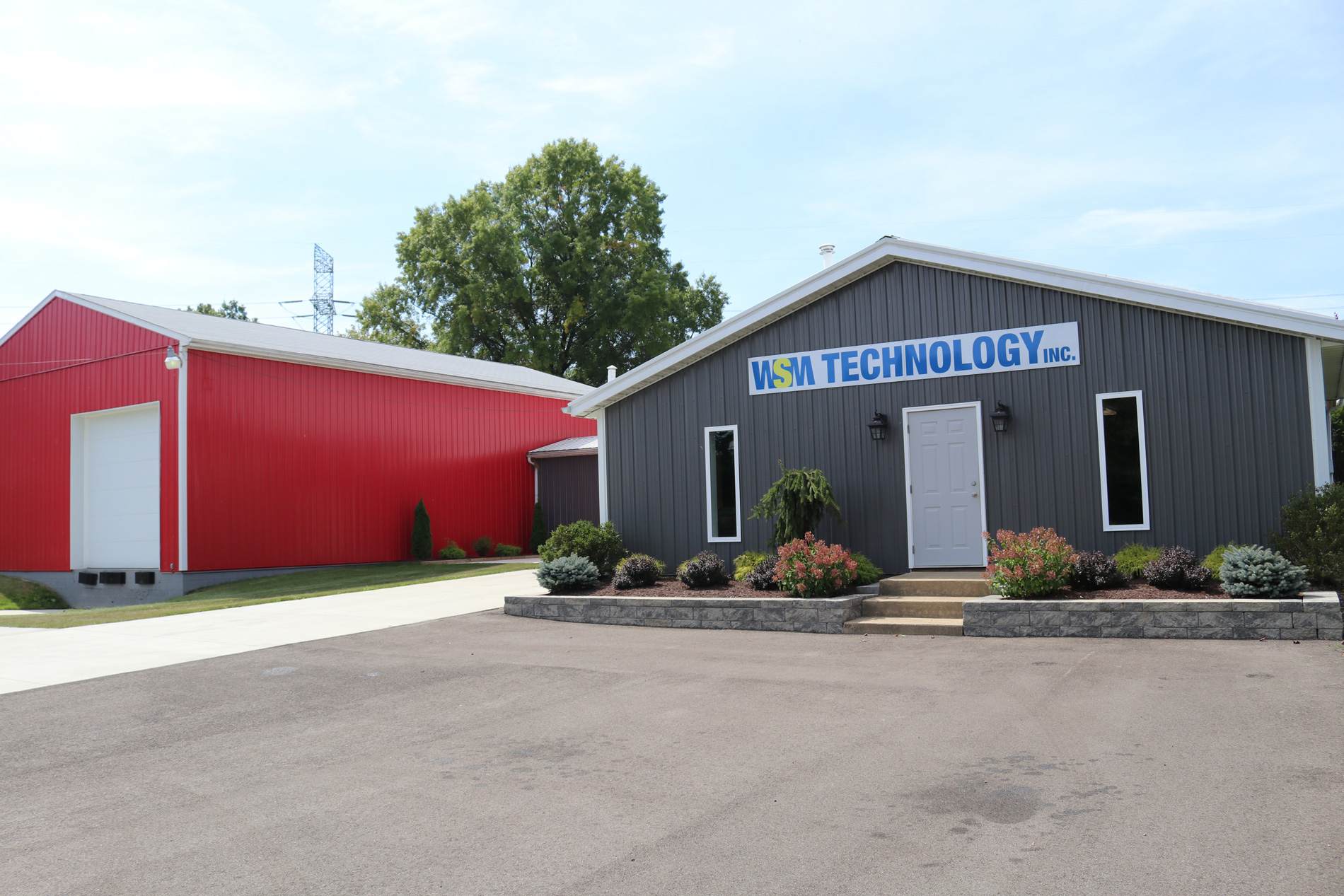
WSM Technology Technical Demonstration & Application Center in Rootstown, Ohio.
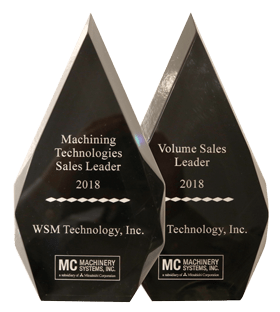
Award-winning application expertise and field support recognition.
3. Future Procurement Trends in Global Multi-Axis Deep Hole Machining (2025–2030)
As manufacturing industries shift toward Industry 4.0 standards and sustainable production models, global buyers are evaluating multi-axis gun drilling equipment through a broader long-term strategic lens. The next decade will see critical shifts in procurement specifications:
1. Complete Process Integration: Hybrid 5-to-7 Axis Machining
Historically, mold shops routed heavy blocks between three separate machine stations: a 3-axis VMC for rough squarer machining, a dedicated horizontal gun drill for water line passage creation, and a 5-axis center for complex contouring. Procurement trends clearly show a transition toward single-setup multi-tasking platforms. Integrating 7-axis motion allows complex cooling channels (including angled, intersecting, and conformal waterlines) to be bored in the same setup as pocket milling and tapping, reducing overall shop floor throughput times by 60% to 75%.
2. Intelligent Closed-Loop Telemetry & Acoustic Chip Monitoring
Catastrophic tool failure inside a deep workpiece (e.g., at a depth of 1,200 mm inside a $150,000 mold block) causes catastrophic scrappage costs. Modern procurement demands real-time sensor feedback. Future-ready multi-axis gun drills are equipped with piezo-electric pulse sensors and acoustic emission monitoring. If chip packing occurs or a guide pad wears prematurely, the machine controller instantly modifies feed acceleration or retracts the tool automatically before thermal friction leads to tool binding.
3. Variable-Frequency High-Pressure Coolant Delivery
Coolant delivery accounts for up to 30% of a gun drilling machine's total energy footprint. Conventional systems ran high-pressure positive-displacement pumps constantly at maximum load. Modern global buyers insist on CNC-controlled variable-frequency drives (VFD) that dynamically throttle fluid volume and pressure based on instant hole depth, tool diameter, and chip morphology, dramatically cutting energy consumption and fluid degradation.
4. Technological Innovations & Engineering Developments
To deliver superior information gain, we must analyze the key mechanical and software innovations reshaping the performance of modern multi-axis gun drilling platforms:
Dynamic Thermal Symmetry and Structural FEA Bed Design
Deep hole drilling generates substantial heat at the cutting edge and within the high-pressure fluid reservoir. Thermal growth in the Z-axis carriage or tilting head column can introduce severe alignment errors over long strokes. Next-generation machine beds utilize symmetrically cast Meehanite iron with integrated thermal fluid channels. Continuous temperature monitoring adjusts laser-calibrated compensation tables in real time, guaranteeing pitch-and-roll angular accuracy down to arc-seconds.
Automated Bushing & Steady-Rest Whip-Guide Kinematics
As the depth-to-diameter ratio rises, slender drill shanks experience rotational instability due to centrifugal forces. Advanced multi-axis machines employ servo-controlled whip guides that move dynamically along the axis of travel. These guides automatically adjust their positioning based on mathematical harmonic resonance algorithms, suppressing lateral vibration and allowing spindle speeds up to 50% higher than traditional manual steady-rest arrangements.
5. The WSM Technology Edge: Unrivaled E-E-A-T in Precision Machine Tools
Selecting a multi-axis gun drilling machine is not merely a capital equipment acquisition; it is a long-term engineering partnership. WSM Technology Inc. stands out as a Premier Machine Tool Dealer and Technical Authority, adhering to the highest standards of Experience, Expertise, Authoritativeness, and Trustworthiness (E-E-A-T):
- 40+ Years of Hands-on Engineering Leadership: Founded by Blaise Buholzer, whose extensive background in precision tooling and EDM technologies spans over four decades, WSM Technology brings unmatched practical expertise to complex machining challenges.
- State-of-the-Art Technical Center in Rootstown, OH: Our facility features live demonstration machines where customers can validate test cuts, prove out complex 5-axis programs, and optimize chip evacuation parameters prior to machinery investment.
- Authorized Supplier Relationships: We represent world-class machinery brands including MC Machinery / Mitsubishi Electric, Cheto, Sarix, Schaublin, ROMI, Roku-Roku, and OPS Ingersoll.
- Regional Field Support & Turnkey Training: WSM offers dedicated localized support across Ohio, Western Pennsylvania, West Virginia, Michigan, Indiana, and Kentucky. Our team provides comprehensive machine installation, operator training, process optimization, and maintenance support.

Blaise Buholzer
Founder & President (40+ Yrs Field Experience)

Phil Warlop Jr.
Sales & Application Engineering Specialist
6. Global Procurement FAQ: Multi-Axis Gun Drilling Machines
Below are expert responses to the top technical and economic questions raised by global procurement officers, plant managers, and manufacturing engineers when acquiring multi-axis deep hole drilling systems:
Q1: What is the fundamental difference between standard CNC gun drilling and Multi-Axis Gun Drilling?
Answer: Standard gun drilling machines typically operate along 1 to 3 linear axes, machining holes perpendicular to flat surfaces in single setups. Multi-Axis Gun Drilling Machines incorporate tilting headstocks (A/B axes) and fully integrated CNC rotary tables (C/W axes), enabling compound angle drilling (3D compound vector angles) and complex 5-face machining without reclamping the part. This ensures perfect concentricity and alignment across intersecting cooling passages.
Q2: How does a 7-axis hybrid machine (like Cheto) handle both heavy milling and deep hole drilling?
Answer: Hybrid 7-axis platforms feature robust structural castings and either dual independent spindles or automatic head-changing systems. Heavy milling (squaring, pocketing, facing) is conducted using a high-torque ISO-50 or HSK-A100 spindle. When deep drilling is required, the machine automatically engages the high-pressure gun drilling spindle and aligns specialized chip boxes and guide bushings against the workpiece surface.
Q3: What coolant pressures and flow rates are required for deep holes over 50:1 L/D ratio?
Answer: Fluid pressure must be tailored to drill diameter and hole depth. For small diameters (Ø2 mm to Ø6 mm), pressures between 90 Bar and 140 Bar (1,300 to 2,000 PSI) are necessary to force fluid through tiny internal passages. For larger diameters (Ø12 mm to Ø32 mm), lower pressures (30 Bar to 70 Bar) with higher volumetric flow rates (60 to 150 L/min) are required to flush out heavy chips continuously through the V-shaped external flute.
Q4: How do automated whip guides prevent tool deflection in long-stroke operations?
Answer: As a gun drill rotates at high RPMs, centrifugal force creates harmonic whipping in slender tool shanks. Servo-controlled whip guides hold the drill shank at calculated interval nodes along the Z-axis. As the spindle feeds forward into the hole, the whip guides automatically stack or collapse away smoothly, maintaining perfect axial rigidity without stopping the feed cycle.
Q5: Can multi-axis gun drills process tough aerospace alloys like Inconel, Titanium, and Stainless Steel?
Answer: Yes. Modern multi-axis machines feature high-rigidity linear guideways, glass-scale feedback, and high-torque direct-drive spindles. Combined with coated solid-carbide or indexable carbide head gun drills and oil-based or high-concentration synthetic coolants, these systems successfully drill heat-resistant superalloys (HRSA) while controlling work hardening and chip form.
Q6: How does chip evacuation monitoring prevent tool breakage inside expensive mold blocks?
Answer: Integrated sensors measure both coolant back-pressure and spindle drive motor amperage in micro-second intervals. If chips begin to pack near the cutting head, coolant pressure spikes instantly while spindle load increases. The machine's CNC controller immediately executes an adaptive peck or tool retract routine, preventing tool twist-off and saving the part from damage.
Q7: What floor space and foundation requirements are typical for multi-axis deep hole machines?
Answer: Due to heavy table capacities (often supporting workpieces from 5,000 kg up to 30,000 kg) and extended Z-axis strokes, these machines require isolated, reinforced concrete foundations (typically 300 mm to 600 mm deep with rebar matting). This isolates the machine from external plant vibrations and prevents bed twisting over time.
Q8: What filtration level is necessary for coolant used in multi-axis gun drilling?
Answer: Coolant filtration is critical. Fine particles recirculated under high pressure will quickly erode carbide guide pads and erode high-pressure pump seals. Systems must utilize automatic paper-band or cartridge filtration systems down to 10 to 20 microns nominal, accompanied by magnetic separators for ferrous materials.
Q9: How does compound angle accuracy affect plastic injection mold cooling efficiency?
Answer: In plastic injection molding, uniform heat extraction dictates cycle time and part warpage. Multi-axis gun drilling allows water lines to closely follow complex 3D mold cavities (conformal line paths) and intersect accurately at precise spatial coordinates. This eliminates dead zones, speeds up cooling cycles by up to 30%, and improves molded part quality.
Q10: Why choose WSM Technology as your machinery partner for multi-axis equipment?
Answer: WSM Technology delivers comprehensive engineering expertise rather than just equipment distribution. From initial CAD/CAM time studies and tooling selection to machine installation, CNC programming training, and field support, our application team ensures your multi-axis gun drilling equipment delivers maximum return on investment throughout its operational lifespan.