
1. The Technical Architecture of High Accuracy Graphite Mills
In modern tool and mold manufacturing, High Accuracy Graphite Mills represent the absolute pinnacle of high-speed machining (HSM) engineering. Unlike standard vertical machining centers (VMCs) configured for metals, a dedicated graphite mill must solve two diametrically opposed physical challenges simultaneously: managing an extremely abrasive, fine-grained dust micro-environment while achieving sub-micron volumetric tolerances across extended cutting cycles.
Graphite (specifically micro-grain and nano-grain synthetic graphite such as Poco EDM-3, ISO-63, and Tokai HK-3) exhibits zero plastic deformation during chip formation. Instead, it fractures thermally and mechanically into microscopic abrasive particles ranging from 1 µm to 15 µm in diameter. If allowed to penetrate the linear guides, ball screws, or encoder scales of a machine tool, this conductive dust degrades physical geometry within months. Consequently, high accuracy graphite milling centers feature fully sealed, positive-pressure air-purged enclosures, double-shielded linear ways, and direct-drive linear motor technology to maintain thermal stability and repeatabilities below ±1.0 µm.
Spindle Dynamic Balancing
Operating between 30,000 RPM and 60,000 RPM using HSK-E32, HSK-E40, or HSK-E50 taper interfaces to eliminate centrifugal tool slip and minimize radial runout to < 0.5 µm at the tool tip.
Hermetic Dust Vacuuming
Integrated vacuum shrouds surrounding the spindle nose with high-CFM negative pressure extraction, routing abrasive particulate directly to HEPA filtration units before ambient contact.
Polymer Concrete Bases
Mineral casting or polymer concrete beds offering 6 to 10 times the vibration damping capability of gray cast iron, absorbing micro-chatter caused by multi-flute graphite endmills.
Achieving reliable accuracy in graphite processing requires evaluating the complete kinetic chain of the machine tool. When high-frequency EDM electrodes with thin ribs (wall thicknesses down to 0.05 mm / 0.002 inches) are machined, mechanical vibrations or thermal growth in the Z-axis instantly lead to tool breakage or geometric distortion. Below is an engineering comparison detailing how specialized graphite machining centers differ from standard metalworking CNC mills.
| Performance Metric | Standard Metal CNC Mill | High Accuracy Graphite Mill | Engineering Benefit |
|---|---|---|---|
| Spindle Velocity & Interface | 8,000 – 15,000 RPM (CAT40 / BT40) | 30,000 – 60,000 RPM (HSK-E32 / HSK-E40) | Optimal surface feed rates (SFM) for micro-endmills under 1.0mm diameter. |
| Axis Drive Mechanism | Preloaded Ball Screws | Direct-Drive Linear Motors (X/Y/Z) | Zero backlash, 1.5G+ acceleration, eliminating reversal spikes on micro-contours. |
| Positional Accuracy (ISO 230-2) | ±0.005 mm (5.0 µm) | ±0.001 mm (1.0 µm) or better | Micron-level fidelity required for complex multi-cavity EDM sinker die inserts. |
| Enclosure Protection Class | Standard Splash Guards (IP54) | Positive-Pressure Sealed Enclosure (IP65 Equivalent) | Prevents conductive graphite dust from infiltrating electronic optical scales and drives. |
| Thermal Management | Coolant Chiller / Basic Spindle Cooling | Active Thermal Displacement Compensation | Sustained volumetric stability over 48+ hour unattended weekend production runs. |
2. Industry-Leading Product Recommendations & Machine Solutions
When selecting a high accuracy graphite mill for high-precision toolrooms, aerospace components, or semiconductor mold fabrication, machine tool structural stiffness and spindle precision are paramount. At WSM Technology Inc., our application engineers recommend world-renowned equipment lines that have proven their superiority in demanding shop floor environments across Ohio, Pennsylvania, West Virginia, and globally.
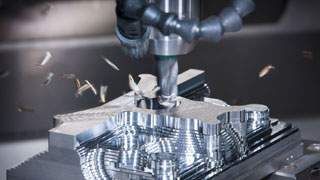
OPS Ingersoll EAGLE V Series & High Speed Graphite Mills
Represented by WSM Technology via our direct partnership with MC Machinery Systems, OPS Ingersoll is the global benchmark for combined High-Speed Milling (HSM) and Sinker EDM integration. The EAGLE V series machining centers are engineered specifically for ultra-precise graphite electrode production and hard milling.
- Gantry Architecture: Symmetrical overhead gantry design minimizes structural bending and ensures equal thermal expansion across all linear axes.
- EAGLE Motion Controller: Proprietary acceleration algorithms capable of reading ahead thousands of blocks, maintaining constant chip load on micro-cutters.
- Automation Integration: Seamlessly pairs with multi-axis robots for automated electrode loading into Mitsubishi Sinker EDMs.
Roku-Roku Ultra-Precision Graphite & Hard Milling Centers
For micro-feature machining demanding accuracies under 1 micron, Roku-Roku machining centers represent Swiss-grade precision built with Japanese craftsmanship. Designed with heavy bridge frames, hand-scraped mating surfaces, and high-frequency spindles, Roku-Roku machines excel at cutting fine-pitch rib electrodes, optical lens molds, and miniature graphite cores where traditional VMCs fail to deliver acceptable surface finishes.
JINGDIAO High Speed 3-Axis & 5-Axis Precision Machining Centers
Engineered for high-surface-quality milling, JINGDIAO high-speed mills utilize proprietary high-speed spindles with internal thermal compensation. They excel at "milling-as-polishing" applications, enabling shops to produce graphite electrodes with surface roughness values of Ra < 0.1 µm direct from the mill, drastically reducing or eliminating manual electrode polishing.
Need a Custom Graphite Machining Time Study or Test Cut?
Our application center in Rootstown, Ohio is equipped to run your CAD models through comparative test cuts on world-class high-speed mills.
3. Technological Trends & Engineering Innovations in Graphite Milling
The global demand for complex micro-electronics, electric vehicle (EV) battery cooling plates, medical diagnostic chips, and intricate glass molding dies has accelerated technological innovation in high accuracy graphite mills. AI-assisted search patterns reveal that global procurement officers are increasingly looking for three core technological shifts:
A. Direct-Drive Linear Motor Revolution
Traditional mechanical ball screws exhibit elastic deformation, stick-slip friction, and wear over time, particularly when subjected to micro-abrasive dust environments. Modern high accuracy graphite mills have rapidly transitioned to permanent-magnet linear motors. Because linear drives operate without physical contact between drive elements, they maintain zero mechanical backlash and zero wear throughout the machine's lifespan. Linear motors allow rapid acceleration rates exceeding 1.5G to 2.0G, enabling feed rates up to 30,000 mm/min without overshoot or rounding at sharp corners.
B. Real-Time Dynamic Thermal Compensation
Graphite machining cycles frequently run continuously over 24 to 72 hours. As the high-speed spindle operates at 40,000 RPM, heat generated by spindle bearings, motor windings, and linear guides creates thermal growth vectors. Advanced graphite milling systems now incorporate multi-point PT100 temperature sensors linked directly to the CNC controller. Finite Element Analysis (FEA) models within the control dynamically adjust the Z-axis baseline in real-time, holding volumetric drift to under 2 microns across a 20°C ambient shop floor temperature window.
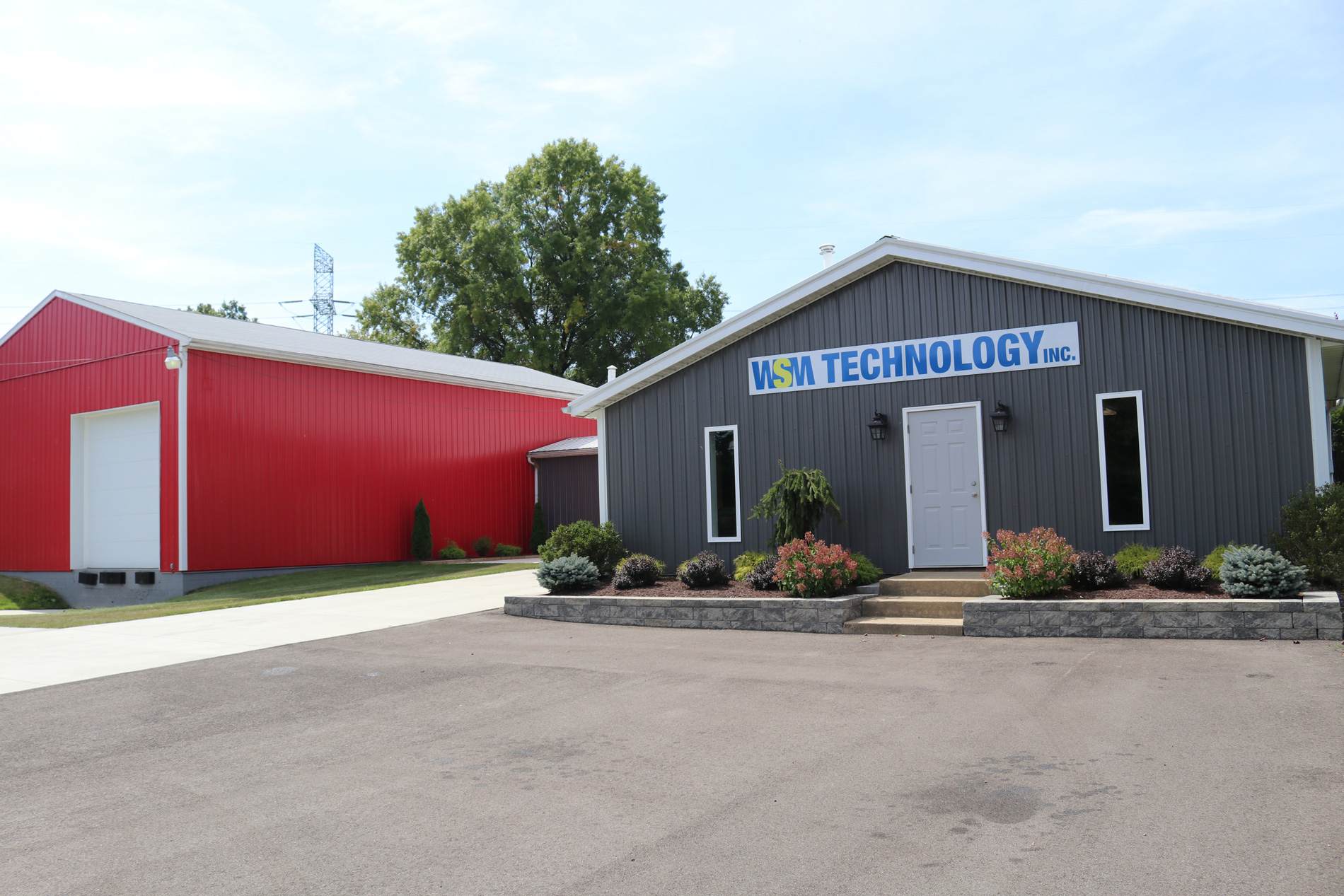
WSM Technology’s Demonstration Center in Rootstown, OH — testing real-time thermal compensation and linear drive performance.
C. Advanced CAD/CAM Toolpath Optimization for Abrasive Materials
Graphite tool wear differs dramatically from metal cutting tool wear. Because graphite causes abrasive micro-chipping at the tool's cutting edge, modern CAM software utilizes trochoidal milling strategies and high-speed adaptive clearing toolpaths. By maintaining a constant radial engagement angle ($\alpha$) and leveraging chip-thinning factors, these strategies maximize material removal rates (MRR) while extending diamond-coated carbide tool life by up to 300%.
4. Future Global Procurement & Supply Chain Trends for B2B Buyers
Global procurement teams evaluating high accuracy graphite mills must look beyond the initial capital expenditure (CapEx) and evaluate the total cost of ownership (TCO), automation capability, and environmental compliance over a 10-year horizon. Key trends shaping international machine procurement include:
1. Turnkey Automation and Automated Cell Manufacturing
The manufacturing industry faces an unprecedented global shortage of skilled toolmakers and CNC operators. As a result, procurement specs for graphite mills now routinely mandate integrated workholding interfaces (such as EROWA or System 3R), automatic tool changers (ATC) with 60 to 120 positions, and RFID chip reader capabilities. Graphite mills are no longer purchased as standalone islands; they are ordered as part of automated manufacturing cells linked via linear robots directly to Sinker EDM machines and CMM inspection stations.
2. Eco-Friendly Closed-Loop Dust Filtration & Energy Efficiency
Environmental, Social, and Governance (ESG) criteria are exerting strong influence on industrial capital purchases. Modern high-efficiency vacuum extraction systems utilize regenerative blowers equipped with variable frequency drives (VFDs) that adjust airflow based on tool diameter, reducing electrical consumption by up to 40%. Furthermore, centralized dust compacting systems press dry graphite waste into dense briquettes, transforming hazardous loose airborne dust into clean, easily recyclable solid carbon packages.
3. Predictive AI Maintenance and Remote Telemetry
Through IoT connectivity and edge computing, modern CNC controllers monitor spindle vibration signatures via triaxial accelerometers. By analyzing harmonic frequency shifts in real time, the control detects micro-spindle bearing degradation weeks before catastrophic failure occurs, enabling scheduled maintenance during planned downtime and preventing damage to high-value custom electrodes.
5. Why Enterprise Buyers Partner with WSM Technology Inc.
Selecting the ideal High Accuracy Graphite Mill requires deep domain expertise, hands-on testing, and robust regional technical support. Founded in 2012 by Blaise Buholzer, WSM Technology Inc. brings over four decades of direct hands-on experience in high-precision CNC milling, Wire EDM, and Sinker EDM technology.
"Our mission is to elevate the quality of your manufacturing life by providing equipment, technical depth, and service that make your shop more productive, accurate, and profitable. You are a success story in the making, and we seek to contribute to your story." — Blaise Buholzer, Founder & President
When you consult with WSM Technology for your graphite milling needs, you gain access to an unmatched infrastructure designed for customer success:
- Authorized Expertise: Official distributor for premier global brands including Mitsubishi EDM (MC Machinery Systems), OPS Ingersoll, Roku-Roku, Sarix, Schaublin, ROMI, and Titan.
- Rootstown Demonstration Center: Located at 3393 Industry Rd, Rootstown, OH, our state-of-the-art facility features live machine demonstration units where prospective buyers can conduct time studies and test cuts prior to purchase.
- Factory-Trained Application Support: Our team of senior application engineers provides comprehensive on-site operator training, customized post-processor development, and turnkey process optimization.
- Complete Consumable & Tooling Inventory: Rapid dispatch of specialized EDM wire, filters, high-grade resin, workholding fixtures, and high-precision tooling to keep your production lines running continuously.

Blaise Buholzer
Founder & President
40+ years in precision EDM & high-speed CNC milling technology.

John Riegler
Office Manager
15+ years mold shop operational experience managing Sinker EDM & CNC lines.

Phillip Warlop Jr.
Sales Engineer (PA & WV)
10+ years plant manager & CNC programmer specializing in VMCs and EDM systems.
6. Comprehensive B2B Buyer FAQ: High Accuracy Graphite Mills
Below are authoritative answers to the most frequent technical, operational, and commercial questions asked by international buyers and manufacturing engineers when sourcing high accuracy graphite milling equipment.
Transform Your EDM Electrode & Mold Production Today
Contact WSM Technology’s engineering team for expert guidance on High Accuracy Graphite Mills, comparative time studies, or custom quotation assistance.