Precision CNC & EDM Insights
Expert guides, machine operating best practices, and manufacturing updates from WSM Technology.
What Is a Multi-Axis Gun Drilling Machine Used For?
A multi-axis gun drilling machine is built for producing deep, narrow holes with controlled accuracy. Multi-Axis Gun Drilling Machines guide a cutting tool along several coordinated directions. This capability supports complex components that ordinary drilling equipment cannot easily reach. Typical applications include aerospace landing parts, hydraulic manifolds, mold bases, engine components, and precision tooling.
The process uses a long, slender drill, high-pressure cutting fluid, and carefully monitored spindle movement. These features help remove chips while reducing heat, vibration, and tool deflection. In practical production, operators may drill channels several times deeper than their diameter. The machine can also position holes at different angles without repeated manual setups. That saves time.
Accuracy depends on more than the machine itself. Tool condition, material hardness, coolant flow, workholding, and programming quality all influence the final bore. A skilled operator checks alignment before cutting and measures the hole afterward. Small deviations can affect fluid flow or assembly performance.
It is not a universal solution. Some shallow holes may be faster on conventional equipment. Complex programming can also increase preparation time and operating costs. This point is easy to overlook.
Understanding these strengths and limits helps manufacturers select the right process. Reliable results come from suitable tooling, verified settings, preventive maintenance, and documented inspection. For that reason, this article examines what multi-axis gun drilling machines are used for and where their advantages become most valuable.
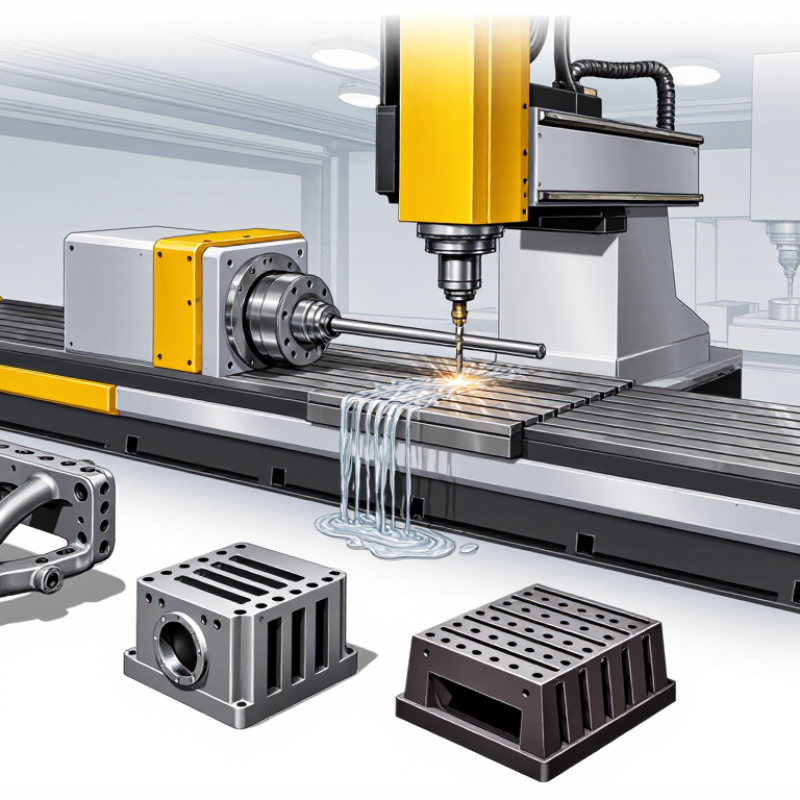
Definition and Core Function of a Multi-Axis Gun Drilling Machine
What Is a Multi-Axis Gun Drilling Machine Used For?
Definition and Core Function of a Multi-Axis Gun Drilling Machine
A multi-axis gun drilling machine is a precision system for producing deep, narrow holes in metal components. Unlike conventional drilling, it uses a long, guided cutting tool and continuous coolant flow. The coolant carries chips away from the hole and helps control heat during machining. This process supports accurate depth, diameter, and straightness over considerable distances.
Its multi-axis design allows the tool or workpiece to move along several controlled directions. Operators can drill angled, intersecting, or offset holes without repeated manual repositioning. This capability suits hydraulic manifolds, mold bases, engine parts, and other components requiring internal passages. A typical setup may combine linear travel with rotary positioning. Small alignment errors can still affect the final hole.
In practical machining, accuracy begins before cutting starts. Engineers check material hardness, workholding stability, tool length, coolant pressure, and programmed feed rates. A rigid fixture reduces vibration. Proper filtration protects the cutting zone from recirculated chips. Measurement probes can verify hole location and depth during production.
Experience remains important. A machine may follow a precise program, yet poor tool selection can produce drift or rough surfaces. That is easy to underestimate. Heat, tool wear, and interrupted cutting may change results gradually. Skilled technicians inspect sample parts, adjust parameters, and record measurements throughout the run. A drawing can appear complete, but real material behavior often demands careful revision.
What Is a Multi-Axis Gun Drilling Machine Used For?
A multi-axis gun drilling machine produces deep, straight and accurately positioned holes from different approach angles. It is commonly used for hydraulic manifolds, injection molds, engine components, aerospace parts and other precision components requiring internal oil, coolant or fuel passages.
The chart shows representative depth-to-diameter ratios commonly associated with deep-hole drilling applications. Actual limits depend on workpiece material, hole diameter, tooling, coolant pressure, machine rigidity and hole geometry.
How Multi-Axis Gun Drilling Machines Operate
What Is a Multi-Axis Gun Drilling Machine Used For?
How Multi-Axis Gun Drilling Machines Operate
A multi-axis gun drilling machine produces deep, precise holes in shafts, molds, hydraulic blocks, and aerospace components. Its defining feature is coordinated movement across several axes. The workpiece or cutting head can rotate, tilt, and reposition while the CNC controller maintains the drilling path. This allows straight holes to enter from different angles, including intersecting passages that are difficult to reach with standard drilling equipment.
The process uses a single-lip gun drill, guide pads, and pressurized cutting fluid. Coolant travels through the tool, reaches the cutting edge, and pushes chips backward through the flutes. Operators commonly control spindle speed, feed rate, coolant pressure, and tool alignment together. For deep holes, even a small alignment error can create bore drift. A 100:1 depth-to-diameter ratio is achievable in suitable materials and conditions, but it is not guaranteed.
Industry demand supports this capability. Gardner Intelligence’s 2024 World Machine Tool Survey reported global machine-tool consumption above 80 billion US dollars in 2023. That figure includes many machine categories, not only gun drilling, but it reflects the scale of precision manufacturing. Multi-axis control can reduce refixturing and improve access. Still, more axes do not automatically produce better holes. Tool wear, material hardness, coolant cleanliness, and programming quality remain decisive. In practice, a trial cut is often necessary. That step is easy to underestimate.
Materials and Components Processed by Multi-Axis Gun Drilling
Multi-axis gun drilling machines process deep, accurate holes in difficult materials and complex components. Their controlled rotary motion supports angled, intersecting, and off-center drilling. Common materials include alloy steel, stainless steel, tool steel, cast iron, aluminum, titanium, and nickel-based alloys. Each material needs different cutting speed, coolant pressure, and tool geometry. Small mistakes can create wandering holes, heat damage, or poor surface finish.
The World Steel Association reported about 1.89 billion tonnes of crude steel production in 2023. That scale explains the demand for reliable deep-hole processing in shafts, hydraulic manifolds, molds, and structural parts. The International Energy Agency also estimates that steel production creates roughly 7% of global energy-related emissions. Better hole accuracy can reduce scrap, rework, and unnecessary material removal.
The benefit is practical, not cosmetic.
Aerospace-style components often require intersecting cooling passages and lightweight titanium structures. Hydraulic blocks need straight, clean channels with reliable pressure performance. Mold bases may require long holes for temperature-control circuits.
In production, operators should verify hole straightness, chip evacuation, and coolant filtration. Diameter alone is not enough.
A 20-millimeter hole may still fail when its axis shifts several millimeters over a long distance. Multi-axis movement improves access, but it also increases setup sensitivity.
I would not treat the machine as a guarantee of precision. Fixture stiffness, tool wear, and material variation still matter. 马会
Key Industries and Applications
A multi-axis gun drilling machine is used when deep, accurate holes must follow demanding paths. Unlike a basic drilling setup, it can position the workpiece and tool across several axes. This supports angled bores, intersecting passages, and complex cooling channels. In aerospace manufacturing, engineers use it for lightweight structural parts, landing components, and fuel-system bodies. Hole straightness matters here. Even a small deviation can affect assembly, sealing, or fatigue performance. Skilled operators still verify alignment with inspection equipment.
Automotive plants apply this process to engine blocks, transmission parts, and injection-mold tooling. Long oil galleries can be drilled with controlled feeds and high-pressure coolant. Hydraulic and pneumatic industries need similar accuracy in valve bodies, manifolds, and cylinders. A clean internal passage reduces flow restrictions and supports consistent pressure. However, material hardness, hole depth, and tool wear can change the result. A program that works in aluminum may fail in hardened steel.
Energy equipment often includes turbine shafts, pump housings, and heat-transfer components with deep internal passages. Medical manufacturers may use the process for specialized instruments and implant tooling, where burrs and contamination require strict control. Multi-axis movement can reduce repositioning, but it does not remove setup risk. Workholding errors remain possible. In real production, coolant temperature, chip evacuation, and inspection records deserve close attention. A missed inspection can turn a precise bore into an expensive rework job.
Advantages and Selection Considerations
What Is a Multi-Axis Gun Drilling Machine Used For?
A multi-axis gun drilling machine produces deep, straight holes in molds, hydraulic manifolds, engine parts, and aerospace components. Its controlled movement allows the cutting tool to approach angled surfaces without repeated fixturing. That can reduce setup errors and improve access to intersecting bores. The difference becomes visible when a hole runs through a 600-millimeter steel block. Small alignment errors can ruin the part.
The advantages are practical. Multi-axis movement can shorten handling time, improve hole consistency, and support complex cooling channels. A rigid machine, high-pressure coolant system, and reliable chip evacuation are essential.
AMT’s 2024 U.S. Manufacturing Technology Orders report recorded more than 20,000 machine-tool units ordered in the United States. That figure reflects continuing investment, but it does not prove every shop needs five-axis equipment. Overbuying remains a common mistake.
Selection should begin with workpiece dimensions, hole depth, diameter range, material, and required positional accuracy. Review spindle speed, thrust capacity, axis travel, coolant pressure, filtration, and probing functions.
ISO 230-2 testing can help verify positioning performance before purchase. A 2024 global machine-tool market assessment by Grand View Research reported continued growth in automated machining demand, driven partly by complex component production.
Still, published forecasts are not shop-floor guarantees. Run a sample part. Measure the hole at entry, midpoint, and exit. That test may expose weaknesses that a sales brochure hides.
FAQS
It produces deep, narrow holes in metal components. A guided cutting tool and continuous coolant improve depth, diameter, and straightness.
Pressurized coolant flows through the cutting area. It carries chips outward and helps control heat. Filtration remains important.
Its tool or workpiece moves along several controlled axes. This supports angled, intersecting, and offset holes without frequent manual repositioning.
Typical parts include hydraulic manifolds, mold bases, engine blocks, valve bodies, and pump housings. Internal passages may be several directions deep.
Aerospace, automotive, hydraulic, energy, and medical manufacturing use it. Applications include cooling channels, oil galleries, turbine shafts, and specialized instruments.
Technicians check material hardness, fixture stability, tool length, coolant pressure, and feed rates. A rigid fixture helps reduce vibration.
No machine guarantees perfect results. Tool wear, heat, alignment errors, and interrupted cutting can gradually change the bore.
They inspect sample parts and record measurements throughout the run. Probes can verify hole location and depth. Sometimes, rechecking catches what the program missed.
Aluminum and hardened steel behave differently during cutting. Tool selection, feed rates, coolant conditions, and heat control may need revision. The drawing is not the whole story.
Conclusion
Multi-Axis Gun Drilling Machines are specialized machining systems designed to produce deep, precise holes in workpieces from multiple directions or at different angles. Unlike conventional drilling equipment, they combine long-hole drilling capability with coordinated axis movement, allowing operators to maintain accurate hole position, diameter, straightness, and surface quality. Their operation typically involves a guided cutting tool, controlled coolant flow, and computer-managed motion to remove material steadily while reducing heat and vibration.
These machines can process materials such as steel, aluminum, alloys, and other engineering materials, as well as components including molds, hydraulic parts, engine structures, shafts, and complex industrial housings. They are widely used in automotive, aerospace, energy, heavy equipment, and general manufacturing applications. Key advantages include improved flexibility, higher productivity, better repeatability, and reduced need for multiple setups. When selecting equipment, users should consider drilling depth, axis range, workpiece size, material hardness, required accuracy, automation level, tooling compatibility, and maintenance requirements.
Blog Tags: