Precision CNC & EDM Insights
Expert guides, machine operating best practices, and manufacturing updates from WSM Technology.
Plastic Injection Moulding Machines sit at the heart of products made every day, from appliance housings to bottle caps and automotive connectors. The global injection moulding machine market reflects that scale. Grand View Research estimated its value at USD 10.6 billion in 2023 and projected a 4.8% compound annual growth rate from 2024 to 2030. These figures cover the broader machine market, not China alone, but they show why buyers compare suppliers closely.
A brand name is only part of the decision. Buyers also weigh clamping force, shot size, cycle consistency, energy use, service access, and the cost of spare parts. On a factory floor, small details matter: a stable cycle, a clean control screen, and a technician who can reach the plant quickly. That matters. Chinese manufacturers such as Haitian, Yizumi, Chen Hsong, and Borch compete across different machine types and price points. Their capabilities are not identical, and a ranking cannot replace a production trial.
John Bozzelli, a recognized scientific-molding trainer, is associated with the reminder, “The plastic is in charge.” It captures a practical lesson: machine selection must match the resin, mould, and process, not just the catalogue specification. This guide compares ten leading Chinese brands through available product information, market presence, and buyer-relevant features. Some comparisons remain imperfect; public data is not equally detailed for every company. Use the list as a starting point, then verify specifications, references, and local service before purchasing.
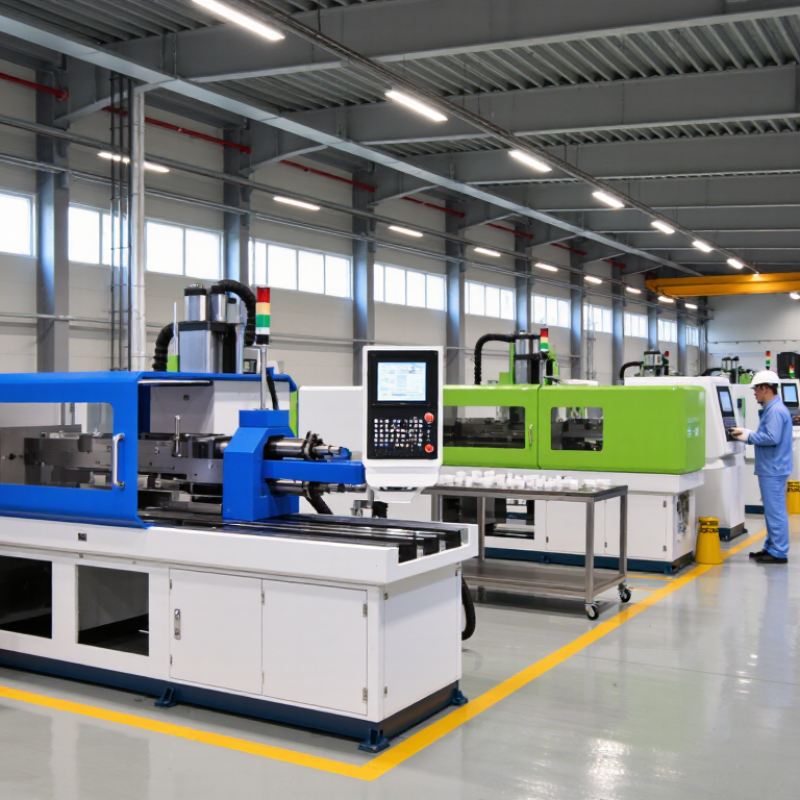
China's Plastic Injection Moulding Machine Industry at a Glance
China’s plastic injection moulding machine industry is supported by a broad manufacturing base, from steel components and control systems to mould production and maintenance services. Equipment is used to make everyday items such as storage containers, appliance housings, and automotive interior parts. Production needs vary widely. A workshop making small fittings may prioritize cycle time and floor space, while a supplier producing larger housings may focus on clamping force and mould compatibility.
The picture is mixed. Machine capability, process stability, and after-sales support can differ between suppliers, so a catalogue alone rarely tells the full story. Buyers commonly assess sample parts, energy use, repeatability, and the availability of local technicians. On the factory floor, small details matter: uneven cooling can leave visible marks, and inconsistent material drying can affect part quality. That matters. Electric and hybrid systems are gaining attention where precise control or lower energy use is important, but the best fit depends on the application and operating conditions. Cost remains influential, though a low purchase price may not reflect maintenance needs or downtime. Industry growth is real, but it is not uniform; smaller manufacturers may still face pressure to upgrade skills and process monitoring.
China Top 10 Plastic Injection Moulding Machine Brands - China's Plastic Injection Moulding Machine Industry at a Glance
A brand-neutral overview of common machine categories, technologies, and operating considerations. Clamping-force bands are indicative market groupings rather than a universal standard; machine selection depends on the mould, material, part design, and production requirements.
| Industry Dimension | Typical Range or Configuration | Common Applications and Considerations |
|---|---|---|
| Clamping-force class | Micro: below 50 metric tonnes; small: about 50–200 tonnes; medium: about 200–800 tonnes; large: above about 800 tonnes. | Smaller machines commonly produce precision components and compact consumer parts; larger machines are used for bulky housings, containers, and automotive components. Class boundaries vary across suppliers and markets. |
| Drive technology | Hydraulic, all-electric, and hybrid configurations. | Hydraulic machines use fluid power for machine movements; all-electric machines use servo motors for principal movements; hybrid machines combine electric drives with hydraulic functions. Energy use and performance depend on the machine and process. |
| Machine orientation | Horizontal and vertical layouts. | Horizontal machines are widely used for general-purpose production and automated part removal. Vertical machines can simplify insert loading and are common in insert-moulding applications. |
| Clamping mechanism | Toggle, direct hydraulic, and other engineered clamping systems. | The mechanism affects machine layout, mould opening and closing, and maintenance needs. Required clamping force is determined by mould projected area, cavity pressure, and process conditions. |
| Materials processed | Thermoplastics, thermosetting plastics, and elastomers, using compatible machine and screw configurations. | Common thermoplastics include PP, PE, ABS, PC, and PA. Material-specific drying, temperature control, screw design, and corrosion or wear resistance may be required. |
| Injection-unit selection | Selected according to shot capacity, screw diameter, injection pressure, and material requirements. | The machine should be matched to the mould’s shot size and filling requirements. An appropriately sized injection unit supports process control and helps avoid running the machine far outside its suitable operating range. |
| Multi-component moulding | Two-component, multi-component, and overmoulding configurations. | Used to combine materials or colours in one moulding process, such as a rigid substrate with a softer grip. These applications require compatible injection units, moulds, and process control. |
| Specialized processes | Examples include insert moulding, gas-assisted moulding, and in-mould labelling. | Special processes can support complex geometries, reduced part weight, integrated inserts, or decorated surfaces. Each requires suitable mould design and auxiliary equipment. |
| Automation and auxiliaries | Robot take-out, conveyors, dryers, loaders, temperature controllers, and granulators are common options. | Automation and peripheral equipment are selected to match the cycle, material, part handling, and quality requirements. Integration can improve consistency and reduce manual handling. |
| Key performance measures | Clamping force, shot capacity, injection pressure and speed, cycle time, repeatability, and energy consumption. | Compare machines using the requirements of the intended mould and part. Published specifications should be checked against the actual process, material, and production conditions. |
FAQS
They produce storage containers, appliance housings, automotive interior parts, and small fittings. Part size shapes the production setup.
Match clamping force and shot size to the part and mould. Bigger is not always better.
Electric machines offer precise, repeatable movements for small components. Servo-hydraulic machines balance clamping force and energy use.
Resin drying, mould temperature, cooling, and operator setup all matter. Uneven cooling can leave visible marks.
Request cycle-time tests with your resin and mould. Check energy use, repeatability, and reject rates during production.
Not always. Maintenance needs and downtime can add costs that a purchase price does not show.
Check local technician availability and after-sales support. A catalogue cannot show every factory-floor limitation.
No. Closed-loop controls can adjust pressure and speed, but material preparation and setup still matter. It is easy to overlook those details.
Conclusion
This article offers a practical overview of China’s plastic injection moulding industry, outlining the role these machines play in producing components for packaging, household goods, automotive applications, electronics, and other sectors. It explains how Plastic Injection Moulding Machines can be classified by factors such as clamping force, drive system, injection method, and intended production needs, helping readers understand why different configurations suit different materials, part sizes, and output volumes.
The article also examines the capabilities and technologies commonly found across leading Chinese manufacturers, including automation, energy efficiency, precision control, and production flexibility. Rather than focusing on individual brands, it provides a framework for comparing manufacturers based on machine performance, build quality, technical support, customization, and long-term operating costs. These considerations can help buyers assess equipment options and identify a machine solution that aligns with their production requirements and investment priorities.