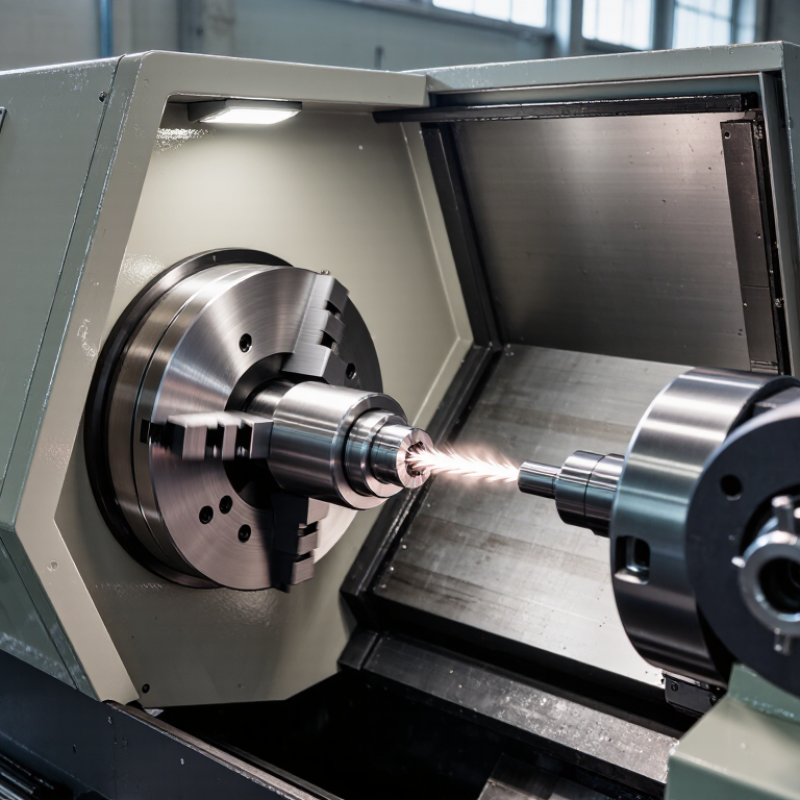
Precision CNC Lathes are computer-controlled turning machines built to produce accurate, repeatable parts. A rotating workpiece meets a cutting tool that follows programmed paths. The process can shape shafts, bushings, pins, and threaded components, often from metal bar stock. On the shop floor, that may mean watching a narrow tool cut a bright spiral of chips while a measured diameter approaches its target.
The word “precision” describes more than a machine’s advertised tolerance. Results also depend on setup, tool condition, material, temperature, and measurement. A capable lathe can still produce inconsistent parts if a tool wears unnoticed or the workpiece is clamped poorly. Small details matter. This overview explains the machine’s main components, how its controls guide cutting, and what accuracy figures can—and cannot—tell buyers. Manufacturing-systems scholar Dr. Yoram Koren’s published work provides useful context; the following is an editorial paraphrase, not a verbatim quotation: “Precision comes from coordinating the machine, process, and measurement.”
That distinction deserves reflection. A specification sheet may look convincing, yet real parts reveal the limits of a process. Readers will see how turning operations work, where CNC control helps, and which questions to ask when comparing equipment. The aim is practical understanding, not a promise that every machine or setup will deliver identical results.
Definition and Core Principles of Precision CNC Lathes
A precision CNC lathe is a computer-controlled machine that turns a workpiece while cutting tools remove material. Unlike a manual lathe, it follows programmed movements along defined axes, often producing cylindrical features such as shoulders, grooves, and threads. The workpiece is held in a chuck and spins; a cutting tool moves against it. That is the basic action.
Precision comes from coordinated motion, a rigid machine structure, suitable cutting tools, and careful setup. The controller translates programmed dimensions into tool movements, while motors and position feedback help keep those movements consistent. For example, a small offset in tool position can change a shaft’s diameter or leave a shoulder in the wrong place. Small errors matter. Accuracy also depends on material, tool wear, clamping force, and temperature. A warm spindle or poorly supported workpiece can affect results, even when the program looks correct. In practice, machinists check dimensions with measuring instruments and adjust offsets when needed. The word “precision” does not guarantee every part will meet its target; process control still needs attention.
What Are Precision CNC Lathes? — Definition and Core Principles
Calculated cutting surface speed at a constant spindle speed of 1,000 rpm
A precision CNC lathe rotates a workpiece while computer-controlled tools shape it to specified dimensions. This chart illustrates the relationship between workpiece diameter and cutting surface speed, calculated as surface speed = π × diameter × spindle speed ÷ 1,000. Actual cutting settings depend on the workpiece material, cutting tool, and machining operation.
Key Components and Their Functions
A precision CNC lathe rotates a workpiece while cutting tools shape its surface. Its main components work together to control motion, support the material, and remove metal accurately. The spindle supplies rotation, while bearings help keep that rotation stable. A chuck or collet grips the stock; the right choice depends on its shape, size, and required holding force. Excessive clamping can distort thin-walled parts.
The tool turret holds several cutting tools and indexes the selected one into position. The controller coordinates tool paths, spindle speed, and feed, using programmed dimensions and offsets. Servo motors move the axes along the machine’s ways, while the rigid bed helps resist cutting forces. That matters. A tailstock can support long workpieces, reducing vibration and deflection. Coolant carries heat and chips away from the cutting zone, though its flow must reach the tool-workpiece contact area. In practice, setup is less tidy than a drawing suggests: a worn insert, loose grip, or warming spindle can shift dimensions. Operators check tool offsets and measure sample parts, because the programmed position alone does not guarantee the finished size.
How Precision CNC Lathes Control Machining Operations
What Are Precision CNC Lathes?
How Precision CNC Lathes Control Machining Operations
A precision CNC lathe turns a digital part program into coordinated spindle and axis motion. The controller reads each block, commands servo motors, and checks position feedback from encoders. It also manages spindle speed, feed, tool offsets, and coolant timing. These settings shape chip thickness and surface finish. Small errors matter. A worn insert or a warming machine can shift a shoulder by microns, even when the display looks stable. Thermal compensation and probing can help, but neither replaces a sound setup and calibrated tools.
Control is a loop, not a magic button. The operator sets work zero, clamps the stock, selects a tool, and checks the first cut with a micrometer. The CNC follows programmed coordinates; feedback helps correct axis position, while the machinist still watches chips, vibration, and finish. IFR’s World Robotics 2024 report counted 4,281,585 industrial robots operating worldwide in 2023, a 10% annual increase. Deloitte and MAPI’s 2019 smart-factory study found 86% of surveyed manufacturers expected smart factories to support competitiveness within five years. These figures describe wider factory automation, not lathe accuracy. That distinction matters. A precise cycle still depends on material variation, tool wear, and measurement discipline; the controller cannot detect every cause.
Materials and Applications
What Are Precision CNC Lathes?
Materials and Applications
Material choice shapes how a precision CNC lathe performs. Aluminum cuts readily and suits lightweight housings, sleeves, and instrument parts. Stainless steel resists corrosion, but its toughness can increase tool wear and heat. Brass often produces clean cuts for fittings and small components. Titanium is strong and light, yet needs careful heat management and suitable tooling. No material is effortless.
A lathe rotates the workpiece while cutting tools shape its outside diameter, face, or internal bore. Bar stock feeds through the spindle; chips curl away as the part takes form. Cutting speed, tool geometry, and coolant influence surface finish and dimensional stability. Even a well-programmed machine can drift as tools wear or temperatures change. Measurement matters.
These machines commonly make shafts, bushings, threaded connectors, and medical or automotive components. A narrow groove on a steel shaft, for example, may need careful inspection to confirm its width and position. Applications differ, so tolerances should reflect how the part actually fits and functions. Tighter is not always better. In practice, setup variation can complicate a neat drawing, and that deserves attention before production.
What Are Precision CNC Lathes? - Materials and Applications
| Material Group |
Typical Characteristics |
Common Turned Components |
Machining Considerations |
| Aluminum alloys |
Low density, good machinability, and useful corrosion resistance in many grades. |
Housings, spacers, shafts, fittings, and lightweight machine components. |
Sharp cutting edges and suitable chip control help produce a clean finish; alloy and temper affect cutting behavior. |
| Stainless steels |
Corrosion resistance varies by grade; some grades work-harden during cutting. |
Valves, fasteners, medical-device components, and food-processing fittings. |
Stable workholding, appropriate cutting data, and consistent tool engagement help manage heat and work hardening. |
| Carbon and alloy steels |
Strength and hardness depend on composition and heat treatment; widely used for load-bearing parts. |
Drive shafts, pins, bushings, threaded parts, and hydraulic components. |
Tool selection and cutting conditions should match the steel grade and hardness; coolant may be used as required by the operation. |
| Brass and copper alloys |
Brass is commonly machinable; copper alloys offer high electrical or thermal conductivity depending on composition. |
Electrical connectors, plumbing fittings, terminals, and precision sleeves. |
Material grade influences chip formation and surface finish; confirm that the chosen alloy meets the part’s functional requirements. |
| Titanium alloys |
High strength-to-weight ratio and good corrosion resistance, with comparatively challenging heat management during machining. |
Aerospace fittings, lightweight connectors, and selected medical components. |
Use a rigid setup and process-specific cutting conditions to control heat, tool wear, and material deflection. |
| Engineering plastics |
Low weight and electrical insulation are common benefits; stiffness, heat resistance, and chemical resistance vary by polymer. |
Insulating bushings, rollers, spacers, and fluid-handling components. |
Support the workpiece to limit deflection, and control heat to reduce melting or dimensional changes. |
Factors That Affect Accuracy and Performance
Precision CNC lathes hold tight tolerances only when the entire machining system stays stable. Spindle runout can leave faint rings or uneven diameters, especially on long, slender parts. Heat matters. A spindle warming during a long cycle may expand slightly, shifting dimensions even when the program stays unchanged. Shops often check a warm machine, not just one at startup.
Rigidity, tooling, and workholding shape the result too. A worn insert can push material instead of cutting cleanly, while excessive tool overhang encourages vibration. A chuck gripping thin tubing too firmly may distort it before cutting begins. Small errors add up. Material hardness, chip removal, and coolant flow also influence surface finish and size. Regular checks of tool offsets, spindle condition, and measuring equipment help catch drift early. Yet measurement has limits: a part measured hot, or held with uneven pressure, can appear out of tolerance. Experienced operators compare readings across several points and revisit the setup when results seem inconsistent. That extra check can feel slow, but skipping it may cost more.
FAQS
It rotates a workpiece while cutting tools shape its surface. The spindle turns; the tools remove metal.
They grip stock during cutting. The right choice depends on its shape, size, and required holding force. Thin walls can distort.
It holds several cutting tools and moves the selected tool into position. A worn insert may still spoil the finish.
It coordinates tool paths, spindle speed, and feed using programmed dimensions and offsets. The program alone cannot guarantee the finished size.
A tailstock supports long parts and can reduce vibration and deflection. It helps, but setup still matters.
A warming spindle may expand slightly, changing dimensions. Tool wear, spindle runout, and loose workholding can also contribute. Small errors add up.
Coolant carries heat and chips away from the cutting zone. Its flow must reach the tool-workpiece contact area. Not always easy.
They can check tool offsets and measure sample parts at several points. A hot part or uneven measuring pressure may distort readings, so inconsistent results deserve another check. It takes time.
Conclusion
Precision CNC Lathes are computer-controlled machine tools designed to rotate a workpiece while cutting tools shape it into precise cylindrical or contoured parts. Their accuracy comes from coordinated motion between the spindle, chuck, tool turret, axes, control system, and measuring devices. Together, these components hold the material securely, position cutting tools, and follow programmed instructions to produce consistent results.
During machining, digital programs guide tool paths, spindle speed, feed rate, and cutting depth. Precision CNC Lathes can process materials such as metals, plastics, and other machinable substances for components used in fields including manufacturing, transportation, and medical equipment. Their performance depends on several factors, including machine rigidity, tool condition, workpiece setup, material properties, temperature, and program quality. Careful setup, suitable cutting parameters, regular maintenance, and effective inspection help maintain accuracy, reduce variation, and achieve reliable surface finishes.