Precision CNC & EDM Insights
Expert guides, machine operating best practices, and manufacturing updates from WSM Technology.
Choosing the best Micro EDM Milling Machines requires more than comparing spindle speed, price, or brochure photographs. The right machine must produce stable micro-features while controlling discharge energy, electrode wear, flushing, and thermal damage. A 20-micrometre electrode can bend, wear unevenly, or break before an operator notices the problem. That small failure can ruin an expensive mold insert.
Professor Masahiro Kunieda, a respected EDM researcher, describes the principle clearly: “EDM removes material through electrical discharges between an electrode and a workpiece.” His explanation remains important when evaluating modern Micro EDM Milling Machines. The process is non-contact, but it is not automatically simple. Dielectric circulation, pulse control, machine rigidity, and measurement accuracy all influence the final cavity. A capable system should also support dependable alignment, repeatable tool changing, and practical maintenance.
This guide compares machines through an engineering lens. It considers achievable feature size, surface finish, electrode compatibility, software control, automation, and technical support. Real workshop experience matters here. A machine may promise excellent precision, yet perform poorly with unstable flushing or inexperienced setup. That concern is easy to underestimate.
Specifications can mislead.
The best choice depends on the workpiece, tolerance, production volume, and operator skill. Some conclusions may remain imperfect because manufacturers publish different test conditions. Readers should verify cutting results with sample trials, inspection records, and service discussions. A careful decision is slower, but it usually costs less than correcting invisible micro-defects later.
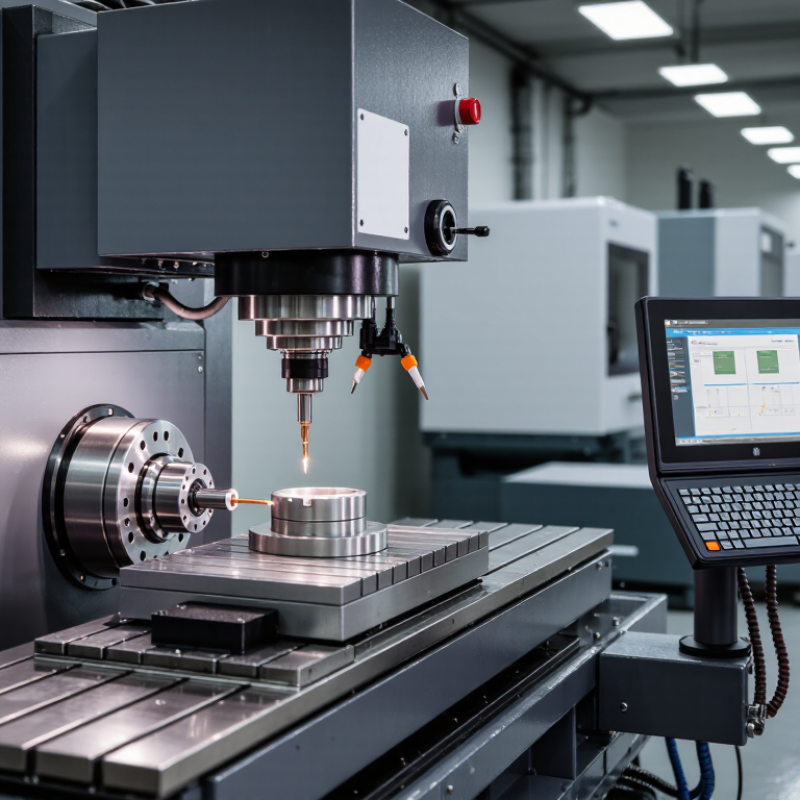
Micro-EDM Milling Explained: 0.1–3 mm Electrodes and 0.1–100 μs Pulses
What Are the Best China Micro EDM Milling Machines?
Micro-EDM milling removes conductive material through controlled electrical discharges. It does not rely on cutting force alone. The process suits hardened steel, carbide, and intricate cavities. Electrode diameter is a major selection point. A 0.1 mm electrode can form tiny ribs and narrow slots. Electrodes near 3 mm provide better stability and faster material removal.
Pulse duration strongly affects surface quality and machining speed. Short pulses, around 0.1–5 μs, can reduce crater size and improve fine details. Longer pulses, up to 100 μs, usually remove more material per discharge. They may also create deeper craters and greater heat influence. A reliable machine should offer stable pulse control across this range. It should also manage electrode wear, flushing, and workpiece alignment precisely.
Look for repeatable motion, clean dielectric circulation, and measurable process data. A rigid structure matters when the tool is thinner than a human hair. Closed-loop positioning can reduce errors during deep or offset features. In practice, machine specifications are not enough. I would inspect test parts, electrode runout, and actual corner accuracy. The first trial may disappoint.
Some machines promise extreme precision but provide limited process records. That deserves careful questioning. Operators should compare pulse settings, material removal rates, and electrode consumption under identical conditions. Small differences in flushing can change results. Sometimes, the “best” machine is simply the one that explains its limits clearly.
What Are the Best China Micro EDM Milling Machines? - Micro-EDM Milling Explained: 0.1–3 mm Electrodes and 0.1–100 μs Pulses
| Evaluation Dimension | Typical Specification for a Chinese Micro EDM Milling Machine | What the Specification Means | Best-Fit Applications |
|---|---|---|---|
| Electrode Diameter | Approximately 0.1–3.0 mm | Smaller electrodes produce fine holes, slots, corners, and miniature cavities. Electrode diameter, runout, and wear compensation directly affect the final feature size. | Micro holes, fuel-injection components, medical parts, miniature molds, and precision tooling. |
| Pulse Duration | Approximately 0.1–100 μs | Short pulses support lower discharge energy and smaller craters, while longer pulses increase material-removal capacity but may produce a rougher surface and a larger heat-affected zone. | Fine finishing, small cavities, hardened steels, carbide, titanium alloys, and conductive ceramics. |
| Discharge Current | About 0.1–20 A, depending on the machining mode | Low current is generally selected for delicate micro-features and finishing. Higher current is used for roughing larger features, provided that flushing and electrode wear remain controlled. | Micro-milling, EDM drilling, roughing, finishing, and multi-stage machining. |
| Positioning Resolution | Typically 0.1–1 μm with high-resolution linear scales or encoders | Resolution describes the smallest commanded movement; it is not the same as machining accuracy. Thermal stability, backlash, servo control, and calibration determine actual performance. | High-precision inserts, micro-molds, watch parts, optical components, and research prototypes. |
| Typical Machining Accuracy | Approximately ±2–10 μm, depending on workpiece size, material, electrode condition, and process settings | Published accuracy should be verified using a defined test piece, measurement method, temperature condition, and machining distance. Small features normally require slower, controlled finishing passes. | Precision mold components, miniature dies, connector parts, and small hardened components. |
| Surface Roughness | Typical finishing range: Ra about 0.2–1.0 μm; roughing is usually higher | Surface finish depends on pulse energy, polarity, electrode material, flushing, servo stability, and the number of finishing passes. A single specification cannot represent every machining condition. | Polished mold surfaces, sealing features, micro-cavities, and parts requiring reduced recast layers. |
| Machine Travel | Common compact ranges: X/Y approximately 100–300 mm; Z approximately 100–250 mm | Compact travel is suitable for small workpieces and improves machine-footprint efficiency. Actual usable travel may be reduced by fixtures, rotary units, electrode holders, or work-tank clearance. | Small mold inserts, laboratory production, job-shop work, and low-volume precision manufacturing. |
| Workpiece Capacity | Often approximately 50–300 kg for compact systems | Load capacity includes the workpiece, fixture, and any rotary or tilting accessories. The table and dielectric tank must remain stable during servo movements. | Steel inserts, carbide components, small dies, and compact production fixtures. |
| Dielectric System | Filtered hydrocarbon EDM oil is common for sinker and milling operations; deionized water is common for many wire EDM systems | Micro EDM milling generally requires controlled dielectric circulation, filtration, temperature management, and insulation. The correct dielectric depends on the machine architecture and workpiece process. | Fine EDM milling, cavity machining, micro-hole production, and controlled finishing. |
| Flushing and Filtration | Fine filtration commonly around 2–10 μm, with adjustable flushing or suction | Effective debris removal helps prevent unstable discharges, short circuits, arcing, overcut, and poor surface quality. Excessive flushing pressure can deflect a small electrode. | Deep micro-cavities, narrow slots, blind holes, and high-precision finishing. |
| Electrode Materials | Copper, graphite, tungsten, copper-tungsten, and tubular electrodes | Copper and copper-tungsten offer good conductivity and dimensional stability. Graphite is easy to machine and can be useful for larger electrodes, while tungsten is often selected for wear resistance in very small tools. | Hardened steel, carbide, nickel alloys, titanium alloys, and conductive superalloys. |
| Electrode Runout | A practical target is often below 2–5 μm at the tool tip, subject to holder quality and tool length | Runout enlarges holes, distorts corners, and causes uneven electrode wear. Collet accuracy, spindle condition, electrode preparation, and measurement method should be checked during acceptance testing. | Micro-holes, narrow ribs, sharp internal corners, and repeatable cavity machining. |
| Servo Control | Closed-loop gap control with adjustable voltage, current, pulse duration, and off-time | Stable servo control maintains the discharge gap and reduces abnormal arcing. Independent control of on-time and off-time is important when machining deep or narrow features. | Automated roughing-to-finishing cycles and unattended micro-feature production. |
| Axis Configuration | Three-axis systems are common; optional fourth- and fifth-axis units are available on some configurations | Additional rotary or tilting axes can improve access to angled surfaces and reduce refixturing errors, but they add setup, calibration, and programming requirements. | Angled holes, turbine-like parts, medical components, and complex micro-cavities. |
| Control and Programming | G-code or conversational CNC control with electrode compensation, orbiting, and multi-step technology tables | Useful software should support automatic depth control, wear compensation, orbiting or planetary motion, parameter libraries, and alarm or short-circuit monitoring. | Repeat production, multi-pass machining, complex cavity work, and process standardization. |
| Material Compatibility | Electrically conductive materials, including hardened steels, cemented carbide, titanium, nickel alloys, and some conductive ceramics | EDM removes material through controlled electrical discharges, so electrical conductivity is essential. Non-conductive materials generally require a conductive coating or a different machining process. | Materials that are difficult to cut mechanically after heat treatment or sintering. |
| Recommended Selection Priority | Process stability, measured accuracy, pulse-control range, flushing quality, electrode runout, service support, and acceptance testing | The lowest purchase price does not necessarily provide the best micro-machining result. A sample-part trial using the buyer's material, feature size, electrode, and tolerance is the most reliable comparison method. | Purchasing decisions, supplier qualification, process validation, and production planning. |
Note: The specifications above are representative industry ranges for compact micro EDM milling equipment rather than guaranteed values for every machine. Actual results depend on machine configuration, electrode geometry, material, dielectric condition, thermal environment, programming, and process validation. Micro EDM milling is intended for electrically conductive workpieces.
FAQS
It can process conductive materials, including hardened steel, carbide, and conductive ceramics. The method uses controlled electrical discharges rather than cutting force alone. It suits small cavities, narrow slots, and detailed ribs.
Electrodes from 0.1 to 3 millimeters cover different machining needs. A 0.1-millimeter electrode can create narrow slots and tiny ribs. An electrode near 3 millimeters offers better stability and faster removal. Smaller is not always better.
Pulses around 0.1–5 microseconds can reduce crater size and improve fine details. Longer pulses, reaching 100 microseconds, usually remove more material per discharge. They may also create deeper craters and more heat influence. The surface can look rougher.
Look for rigid construction, repeatable motion, and precise workpiece alignment. Closed-loop positioning can reduce errors in deep or offset features. Clean dielectric circulation also matters. Dirty fluid can damage a tiny channel.
Request test cuts using the actual material and planned feature sizes. Measure corner accuracy, surface roughness, electrode wear, and repeatability. Inspect electrode runout with suitable measuring equipment. A polished sample proves little by itself.
Include software, fixtures, filtration, training, shipping, maintenance, and spare parts. The lowest purchase price may create higher operating costs later. Ask about installation and operator training. Small omissions become expensive.
Request a live demonstration of electrode changing, alignment, alarm recovery, and program transfer. Ask for documented response times and remote diagnostic procedures. Confirm spare-part availability and local service coverage. Automation should reduce work, not add fragile complexity.
Review guarding, electrical safety, manuals, calibration records, and applicable quality certifications. ISO 230-2 can support positioning accuracy tests. Use written acceptance criteria for accuracy, finish, and uptime. Check thermal drift after a full shift, not only during a short demonstration. Test it twice.
Conclusion
Micro EDM Milling Machines are designed for producing highly precise features in hard, conductive materials, making them valuable for mold components, medical parts, and aerospace applications. This article explains how micro-EDM milling uses electrodes approximately 0.1–3 mm in diameter and pulse durations from 0.1–100 μs to achieve controlled material removal. Key performance indicators include accuracy of about ±1–2 μm and surface finishes ranging from Ra 0.1 to 0.8 μm, depending on the machine configuration, workpiece, and machining strategy.
The guide also compares China’s leading machine types by working travel, CNC control, electrode management, and the ability to achieve 0.1 μm command resolution. When selecting the best system, buyers should evaluate total cost, technical support, automation options, maintenance requirements, and compliance with applicable quality and safety standards. A balanced assessment of precision, reliability, productivity, and after-sales service can help users choose a suitable micro-EDM solution for both specialized prototypes and repeat production.