Precision CNC & EDM Insights
Expert guides, machine operating best practices, and manufacturing updates from WSM Technology.
Best China 5 Axis CNC Milling Machines for Global Buyers?
Table of Contents
- 5-Axis CNC Milling Explained: 3 Linear and 2 Rotary Axes
- Key Machine Specifications: ISO 230-2 Accuracy and ±0.005 mm Positioning
- China’s Leading 5-Axis Machine Types: Trunnion and Swivel-Head Designs
- How to Compare Spindles: 12,000–24,000 rpm for Global Applications
- Buyer Checklist: FANUC, Siemens, and ISO 9001 Manufacturing Standards
- FAQS
- Conclusion
- Related Posts
Choosing the best Chinese 5-Axis CNC Milling Machines requires more than comparing prices and spindle speeds. Global buyers need verified accuracy, stable support, and clear evidence of performance. In a real workshop, a machine may cut titanium brackets in the morning and aluminum housings after lunch. Thermal drift, tool access, and control-system reliability then become practical concerns.
Industry data shows why this market deserves careful attention. The 2024 World Machine Tool Survey from Gardner Intelligence identifies China as the world’s largest machine-tool consumer and producer by overall scale. MarketsandMarkets also forecasts continued growth in the global CNC machine market, driven by aerospace, automotive, medical, and precision engineering demand. These reports indicate strong opportunity, but market size alone cannot prove machine quality. That distinction matters.
Technical verification should include positioning accuracy, repeatability, volumetric performance, spindle testing, and after-sales response. Buyers should request inspection records based on recognized standards, such as ISO 230-2, and review factory acceptance testing procedures. Certifications help. They do not replace evidence.
This guide evaluates 5-Axis CNC Milling Machines from Chinese manufacturers through a buyer’s practical lens. It considers machine architecture, controller options, work envelope, rotary-table design, service coverage, and total ownership cost. Supplier experience also matters. A low quotation can become expensive when commissioning, training, spare parts, or software support are unclear.
No ranking is perfect. Regional service quality can vary. Published specifications may also need independent confirmation. Therefore, each recommendation should be checked against the buyer’s materials, tolerances, production volume, and local compliance requirements. Reliable decisions come from documented tests, transparent communication, and realistic expectations.
5-Axis CNC Milling Explained: 3 Linear and 2 Rotary Axes
Best China 5 Axis CNC Milling Machines for Global Buyers?
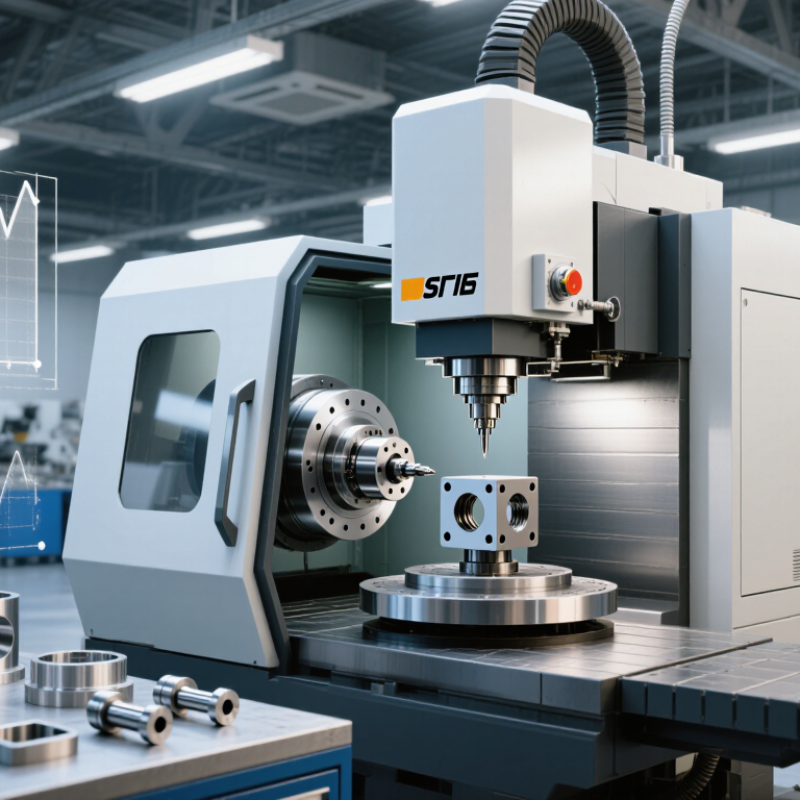
A five-axis milling machine moves a cutting tool or workpiece along three linear axes and two rotary axes. The linear axes are typically X, Y, and Z: left to right, front to back, and up and down. The rotary axes tilt or turn the part, allowing the tool to approach several faces without repeated manual repositioning. Those movements can reduce setups and help maintain alignment on complex components.
The two rotary axes are often described as A, B, or C, depending on which linear axis each rotates around. Their exact arrangement varies by machine, so buyers should check the configuration rather than relying on the “five-axis” label alone. For example, a tilted spindle can reach angled pockets while a rotary table presents another face of an aluminum housing.
Small details matter. Ask how the machine handles simultaneous motion, what workpiece size fits with the rotary axes in use, and how accuracy is verified. A sample-cut test is useful, though it may not reveal every limitation. Five axes do not automatically mean better results; programming, fixturing, tool selection, and operator skill still matter. Sometimes, a simpler setup is enough.
Key Machine Specifications: ISO 230-2 Accuracy and ±0.005 mm Positioning
For global buyers comparing five-axis CNC milling machines, ±0.005 mm positioning sounds impressive. But the number needs context. ISO 230-2:2014 sets out methods for testing and evaluating the positioning accuracy and repeatability of numerically controlled machine tools. It does not make every machine with a stated tolerance automatically equivalent. Ask whether the figure applies to each linear axis, which measurement method was used, and whether results include both travel directions.
Look for the test report. It should identify the machine’s operating conditions, measurement equipment, axis travel, and results at multiple positions. A laser interferometer reading in a temperature-controlled room may differ from performance after hours of cutting. Heat matters. So does tool load. A 5-micrometre positioning claim is useful, but it does not alone predict part accuracy. Check thermal compensation, rotary-axis calibration, and the specified test uncertainty. ISO 230-2 provides a common evaluation framework; it does not replace application-specific trials. For a purchase decision, request a sample-part test using the intended material, toolpath, and workholding. Small details can expose gaps. Some suppliers may not provide enough test conditions, and buyers should treat that as a point to investigate—not proof of poor quality.
5-Axis CNC Milling: Understanding a ±0.005 mm Positioning Tolerance
The chart shows the tolerance limits converted to micrometers: ±0.005 mm equals ±5 µm. ISO 230-2 specifies methods for testing the positioning accuracy and repeatability of numerically controlled machine tools; it does not guarantee that every machine achieves this tolerance. Confirm test conditions and the machine’s measured results with the supplier.
China’s Leading 5-Axis Machine Types: Trunnion and Swivel-Head Designs
Trunnion and swivel-head machines are the two common layouts buyers compare when selecting a five-axis milling machine. A trunnion table tilts and rotates the workpiece beneath a largely fixed spindle. This arrangement keeps the cutting head compact and can provide good rigidity for small or medium parts. Picture a turbine component held low on the table, with the rotary axes bringing angled faces toward the tool. The trade-off is real: a large fixture or tall part may collide with the table before the machine reaches its full travel.
A swivel-head design moves the spindle instead, while the workpiece usually stays on a fixed table. It can suit larger, heavier parts that are awkward to tilt. Operators should check head clearance, axis range, and tool length against actual part drawings, not just catalog specifications. Look closely at the machine’s work envelope. A quoted table size does not guarantee usable clearance at every angle. Swivel heads may also add moving mass, which can affect stiffness and finishing behavior. Neither layout is automatically better. I would compare sample cuts, fixture access, and maintenance needs before choosing; even experienced buyers sometimes underestimate setup time.
How to Compare Spindles: 12,000–24,000 rpm for Global Applications
For global buyers comparing five-axis CNC milling machines, spindle speed is only one part of the decision. A 12,000 rpm spindle can suit large cutters and steel roughing, where torque matters more than headline speed. A 24,000 rpm unit may support smaller tools, aluminum finishing, and fine surface detail. Check the torque curve across the usable range, not just the maximum rpm. Ask for a spindle test record and sample cuts using your material, tool diameter, and target feed rate.
Heat and duty cycle matter. At high speed, a spindle can warm the tool and workpiece, shifting dimensions during long jobs. The U.S. Department of Energy’s 2014 Improving Motor and Drive System Performance sourcebook reports that motor-driven systems account for about 68% of industrial electricity use. That figure covers many systems, not CNC spindles alone, but it reinforces the value of checking power demand alongside cutting performance. Request measured power and thermal-stability data under realistic operating conditions. Small details count.
For mixed production, compare toolholding limits, bearing design, cooling method, and the permitted continuous-speed range. A 24,000 rpm rating may be intermittent rather than suitable for every shift. That distinction is easy to miss. Ask suppliers to document warm-up requirements, runout, and maintenance intervals, then verify them during acceptance testing. A spindle that looks fast on paper may be a poor fit for heavy cuts; the right choice depends on the actual toolpath and workload.
Buyer Checklist: FANUC, Siemens, and ISO 9001 Manufacturing Standards
When evaluating a five-axis milling machine, ask which control platforms are supported and how the machine handles simultaneous movement. Compatibility matters, but the control name alone proves little. Request a live demonstration using a representative part, such as a contoured aluminum housing. Watch how the machine manages tool paths, collision checks, and recovery after a simulated interruption. Ask whether operators can access training and local technical support.
Check the machine’s working envelope, spindle specifications, rotary-axis accuracy, and tool-changing capacity against your actual parts. A compact sample cut can reveal practical issues. Look for chatter marks, uneven surface finish, or awkward tool access. Ask for measurement records and repeatability data under stated test conditions. Do not rely on a single impressive demonstration. It may not reflect daily production.
ISO 9001 certification can indicate a documented quality-management system, but it does not certify a machine’s cutting accuracy. Request a current certificate and confirm that its scope covers the manufacturing site and relevant activities. Review how the supplier handles inspection records, nonconforming parts, and corrective actions. Details matter. Some records may be incomplete, and that deserves a direct question, not an assumption. Ask to see a sample inspection report before placing an order.
FAQS
It tilts and rotates the workpiece beneath a mostly fixed spindle. This layout can provide strong rigidity for small or medium parts. A turbine component may stay low while angled surfaces meet the cutter.
Large fixtures or tall parts may collide with the table. Check rotary travel, table height, and fixture dimensions together. Catalog travel can look generous. Real clearance may be smaller.
The spindle moves while the workpiece usually remains on a fixed table. This design can suit large, heavy, or awkward parts. It may reduce the need to tilt a difficult workpiece.
Compare head clearance, axis range, and tool length with actual drawings. Moving head mass may affect stiffness and surface finishing. Do not judge from table size alone.
No layout is automatically superior. Compare sample cuts, fixture access, maintenance, and setup time. Even skilled buyers can underestimate setup work.
No. A 12,000 rpm spindle may suit large cutters and steel roughing. A 24,000 rpm spindle may suit small tools and aluminum finishing. Torque across the working range matters more than the maximum number.
Request torque curves, spindle test records, runout, and thermal data. Ask for sample cuts using your material and tool diameter. Paper specifications can mislead.
Check warm-up time, cooling method, duty cycle, and continuous-speed limits. High-speed operation can warm the tool and shift dimensions. Measured data is better than assumptions. I might still revise the choice after long-job testing.
Conclusion
This guide introduces 5-Axis CNC Milling Machines and explains how three linear axes and two rotary axes allow complex parts to be machined from multiple angles with fewer setups. It outlines key evaluation criteria, including positioning performance and accuracy testing under ISO 230-2, while noting that specifications such as ±0.005 mm should be assessed in the context of the machine’s configuration, operating conditions, and application.
The article also compares trunnion and swivel-head designs and explains how spindle speeds in the 12,000–24,000 rpm range can suit different materials and production needs. A practical buyer checklist covers control-system compatibility, service and support, and evidence of consistent manufacturing processes, including ISO 9001 quality-management certification. Together, these points help global buyers compare machine capabilities and select equipment suited to their parts, tolerances, and workflow.

Blog Tags: