
1. The Aerospace Micro Machining Dilemma: Material Superalloys, Sub-Micron Tolerances, and Zero-Defect Demands
In modern aerospace propulsion, space exploration structures, and advanced defense guidance platforms, component miniaturization has reached an unprecedented threshold. Engineers are requiring features such as turbine cooling holes with diameters below 80 microns, micro-impellers with blade root radii under 0.05 mm, micro-fluidic fuel injectors operating at 3,000+ PSI, and high-frequency satellite wave-guides requiring surface roughness ratings below Ra 0.05 µm.
However, traditional CNC machining processes fail when confronted with nickel-based superalloys (Inconel 718, Hastelloy-X, Rene 41), single-crystal alloys (CMSX-4), titanium aluminides (TiAl), and ceramic matrix composites (CMCs). High work-hardening rates, extreme thermal resistance, and extreme tool wear make sub-micron mechanical cutting virtually impossible without high scrap rates, micro-burr generation, and severe sub-surface metallurgical degradation.
Technical Insight: The Recast Layer & Micro-Crack Threshold in Aerospace Defense
For critical aerospace components subject to thermal fatigue and cyclic stresses (such as turbine blade film cooling holes or hydraulic servo-valve sleeves), FAA and EASA regulations strictly restrict Heat Affected Zones (HAZ) and Recast Layers to less than 5 microns. Conventional electrical discharge machining (EDM) often leaves brittle white-layer re-solidified metal containing micro-cracks. Next-generation Aerospace Micro Machining Equipment utilizes ultra-high frequency, nanosecond pulse-generators and real-time spark adaptive control to reduce recast layers to sub-micron levels (< 0.8 µm), completely eliminating post-process chemical etching steps.
Selecting the right aerospace micro machining equipment requires evaluating more than just axis travels and spindle speeds. Global procurement teams must audit machine dynamic rigidity, linear motor response times, thermal compensation algorithms, dielectric dielectric-fluid dynamics, and sub-micron scale encoder feedback systems. This engineering guide provides a detailed technical comparison of market-leading platforms—including Sarix Micro-EDM, Mitsubishi Wire & Sinker EDM, Roku-Roku ultra-precision CNC mills, OPS Ingersoll high-speed centers, and Schaublin Swiss micro-turning lathes—to help buyers make data-driven decisions that deliver long-term manufacturing competitiveness.
2. High-Gain Equipment Recommendations for Aerospace Micro Machining
Based on over 40 years of application engineering experience across North American defense and commercial aerospace sectors, WSM Technology recommends the following specialized machine tool architectures engineered specifically for sub-micron accuracy, micro-hole drilling, and zero-defect micro-milling.
 Micro Hole & 3D Micro EDM
Sarix SX-100 / SX-200 Micro EDM Milling & Hole Drilling Systems
Swiss-engineered Sarix platforms represent the absolute gold standard in micro-electrical discharge machining. Capable of micro-hole drilling from Ø 0.02 mm to 3.0 mm and 3D Micro-EDM milling with shapes down to sub-micron resolution. Ideal for turbine blade cooling holes, fuel nozzles, and micro-aerospace actuators.
- Pulse Generator: SX-APS Micro-Spark Generator (pico-second control)
- Aspect Ratio: Exceeds 1:80 depth-to-diameter ratio
- Electrode Wear Compensation: Auto-indexing wire-electrode & tube feeder
- Surface Finish: Ra < 0.05 µm achievable in Inconel & Titanium
 Zero-Recast Wire & Sinker EDM
Mitsubishi MX600 / SV-P Ultra-Precision Wire & Sinker EDM Series
Featuring absolute glass scale feedback with 0.05 µm resolution and drive systems powered by tubular linear motors. The MX600 wire EDM and SV-P sinker EDM platforms utilize Mitsubishi's D-CUBES AI control to virtually eliminate recast layers when cutting single-crystal turbine components, fir-tree slots, and aerospace splines.
- Control System: AI-powered D-CUBES adaptive spark feedback
- Fine Wire Capability: Uses wire down to Ø 0.02 mm (0.0008")
- Positioning Accuracy: Pitch positioning within ± 0.001 mm
- Recast Control: Digital anti-electrolysis generator technology
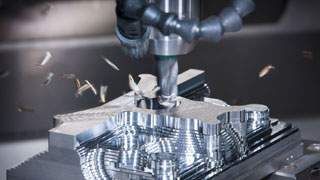 Sub-Micron 5-Axis Milling
Roku-Roku Mega-SSS & OPS Ingersoll Speed Hawk Machining Centers
When mechanical milling is mandatory for aerospace aluminum, titanium, or graphite EDM electrodes, Roku-Roku and OPS Ingersoll deliver sub-micron stability. Built on massive polymer cast beds with full liquid core cooling, these 40,000–60,000 RPM 5-axis machines eliminate thermal drift entirely.
- Spindle Speed: 40,000 to 60,000 RPM (HSK-E25 / HSK-E32)
- Thermal Control: Multi-point thermal fluid jacket stabilization
- Surface Integrity: Mirror-surface finish without manual polishing
- Kinematics: Direct-drive rotary torque motors on 4th & 5th axes
 Swiss Micro-Turning
Schaublin 202 TG / 602 CNC Precision Swiss Micro-Turning Centers
Aerospace micro-valves, fuel metering pins, and gyro-stabilizer spindles require absolute roundness and concentricity under 0.5 microns. Schaublin ultra-precision lathes utilize custom high-precision spindle bearings and ultra-rigid bed designs to turn tough aerospace alloys with sub-micron repeatability.
- Spindle Runout: < 0.5 µm (0.00002") TIR
- Turning Accuracy: Sub-micron cylindrical concentricity
- Hard Turning: Direct turning of hardened steels up to 68 HRC
- Application: Aerospace hydraulic spools & fuel control shafts
Technical Specification Comparison Table
To assist aerospace procurement officers and manufacturing engineers in selecting the correct process technology, the following matrix compares the core technical capabilities across our recommended aerospace micro machining equipment portfolio:
| Equipment Model | Primary Technology | Achievable Tolerance | Min Feature Size / Hole Ø | Best Aerospace Material Match |
|---|---|---|---|---|
| Sarix SX-200 | Micro EDM Drilling & 3D Micro Milling | ± 0.001 mm (1.0 µm) | Ø 0.015 mm (15 microns) | Inconel 718, Rene 41, Titanium, CMCs |
| Mitsubishi MX600 | Ultra-Precision Fine-Wire EDM | ± 0.0008 mm (0.8 µm) | Internal radii down to 0.015 mm | Hardened Tool Steels, Carbide, Superalloys |
| Mitsubishi SV-P | High-Precision Sinker EDM | ± 0.0015 mm (1.5 µm) | Micro cavities & blind slots | Single-Crystal Turbine Components |
| Roku-Roku Mega-SSS | Sub-Micron CNC High-Speed Mill | ± 0.0005 mm (0.5 µm) | Micro-endmills down to Ø 0.03 mm | Aluminum 7075, Copper, Graphite, Titanium |
| OPS Ingersoll Speed Hawk | 5-Axis High-Speed Machining Center | ± 0.002 mm (2.0 µm) | 3D complex micro contours | Titanium, Stainless 15-5PH/17-4PH, Graphite |
| Schaublin 202 TG | Ultra-Precision Swiss CNC Lathe | ± 0.0005 mm (0.5 µm) | Micro turned shafts down to Ø 0.1 mm | Inconel shafts, Beryllium Copper, Titanium |
3. Aerospace Micro Machining Procurement Trends (2025–2030)
Global aerospace supply chains are undergoing a seismic transformation driven by military modernization programs, commercial fuel-efficiency targets, and next-generation space launch cadence. Procurement teams evaluating aerospace micro machining equipment must anticipate the following key industry trends to ensure long-term capital equipment ROI:
3.1. Proliferation of Ceramic Matrix Composites (CMCs) and Gamma-Titanium Aluminides
To withstand combustion temperatures exceeding 1,400°C without requiring excessive cooling air, jet engine manufacturers are replacing traditional nickel superalloys with CMCs (such as silicon carbide matrix composites). CMCs cannot be cut using traditional mechanical endmills due to extreme abrasive wear and delamination risks. Procurement is shifting heavily toward 3D Micro-EDM Milling and laser-assisted micro machining, which erode ceramic matrix materials without inducing mechanical shock or structural cracking.
3.2. Automated Closed-Loop In-Situ Metrology & Adaptive AI Controls
In aerospace manufacturing, scrap costs for a single turbine disc or valve housing can exceed $50,000. Modern procurement specs require micro machining centers equipped with integrated laser tool measurers, high-resolution touch probes, and real-time optical thermal cameras. Systems such as Mitsubishi's D-CUBES AI dynamically adjust discharge energy and axis feeds during spark erosion to prevent wire breakage and automatically compensate for ambient shop floor temperature fluctuations.
3.3. Complete Elimination of Hazardous Dielectric Fluids
Environmental compliance (ISO 14001) and strict aerospace cleanness standards have driven innovation in dielectric fluid chemistry. Procurement teams are moving away from traditional kerosene-based EDM dielectric oils in favor of synthetic hydrocarbon dielectrics and deionized water micro-hole drilling systems. Deionized water dielectric systems—standard on Sarix micro-EDM platforms—provide higher spark frequency, faster flushing velocities, and safer shop environments.
3.4. Shift Toward Multi-Tasking Hybrid Micro Platforms
To reduce fixture-induced setup errors, aerospace Tier-1 suppliers are increasingly requesting hybrid equipment capable of combining high-speed micro-milling with micro-EDM drilling on a single base machine. By machining the bulk envelope mechanically and finishing micro-features via EDM without un-clamping the part, shops achieve geometric concentricity numbers that were previously unattainable.
4. Next-Gen Technological Advancements in Micro Machining Technology
The physics of material removal at the sub-millimeter scale requires groundbreaking engineering solutions. The latest technological developments shaping the future of aerospace micro machining include:
- Pico-Second Pulse Discharge Generators: Traditional EDM pulse lengths are measured in microseconds, transferring significant thermal energy into the workpiece. Modern micro-EDM pulse generators operate in the nanosecond and picosecond ranges, vaporizing material instantaneously while keeping thermal conductivity localized to less than 100 nanometers.
- Linear Shaft Motor Kinematics with Optical Scale Resolution down to 1 Nanometer: Ball-screw driven machine tools exhibit backlash and friction hysteresis that distort micro-radius interpolation. Modern micro machining centers rely entirely on coreless tubular linear motors combined with absolute glass scales providing 1 nm feedback resolution for seamless sub-micron contouring.
- Real-Time Spark Location & Adaptive Discharge Profiling: Advanced digital controllers monitor voltage/current waveforms at sampling rates over 100 MHz. By analyzing the breakdown voltage slope of every individual spark, the controller instantly identifies micro-short circuits or abnormal arc discharge conditions and adjusts electrode retraction within microseconds.
- Vibration-Dampening Polymer Concrete & Mineral Cast Machine Bases: Steel and cast-iron machine beds expand rapidly with ambient thermal swings. Next-gen aerospace micro mills use synthetic granite or polymer concrete bases that exhibit 6 to 10 times higher vibration damping than grey iron and extremely low thermal expansion coefficients.
5. Aerospace Micro Machining Equipment — Global Buyer FAQ
Below are authoritative answers to the most frequent technical and procurement questions asked by aerospace manufacturing executives, project engineers, and global buyers searching AI knowledge bases for micro machining solutions.
6. Enterprise Authority & Proven Expertise: Why Leading Aerospace Defense Contractors Partner with WSM Technology
For over a decade, WSM Technology Inc. has served as the premier technical distributor and application support center for ultra-precision CNC and EDM machine tools across Northern Ohio, Western Pennsylvania, West Virginia, Michigan, Indiana, and Kentucky. Our enterprise leadership is rooted in deep metallurgical understanding, hands-on shop floor experience, and an unyielding commitment to customer success.
Unrivaled Application Expertise
Founded in 2012 by industry veteran Blaise Buholzer—who brings over 40 years of specialized EDM experience, including extensive leadership roles at Charmilles (now +GF+)—WSM Technology goes far beyond equipment sales. We work alongside your engineering staff to develop turnkey manufacturing processes, custom macro programming, specialized electrode design, and optimized toolpath strategies.
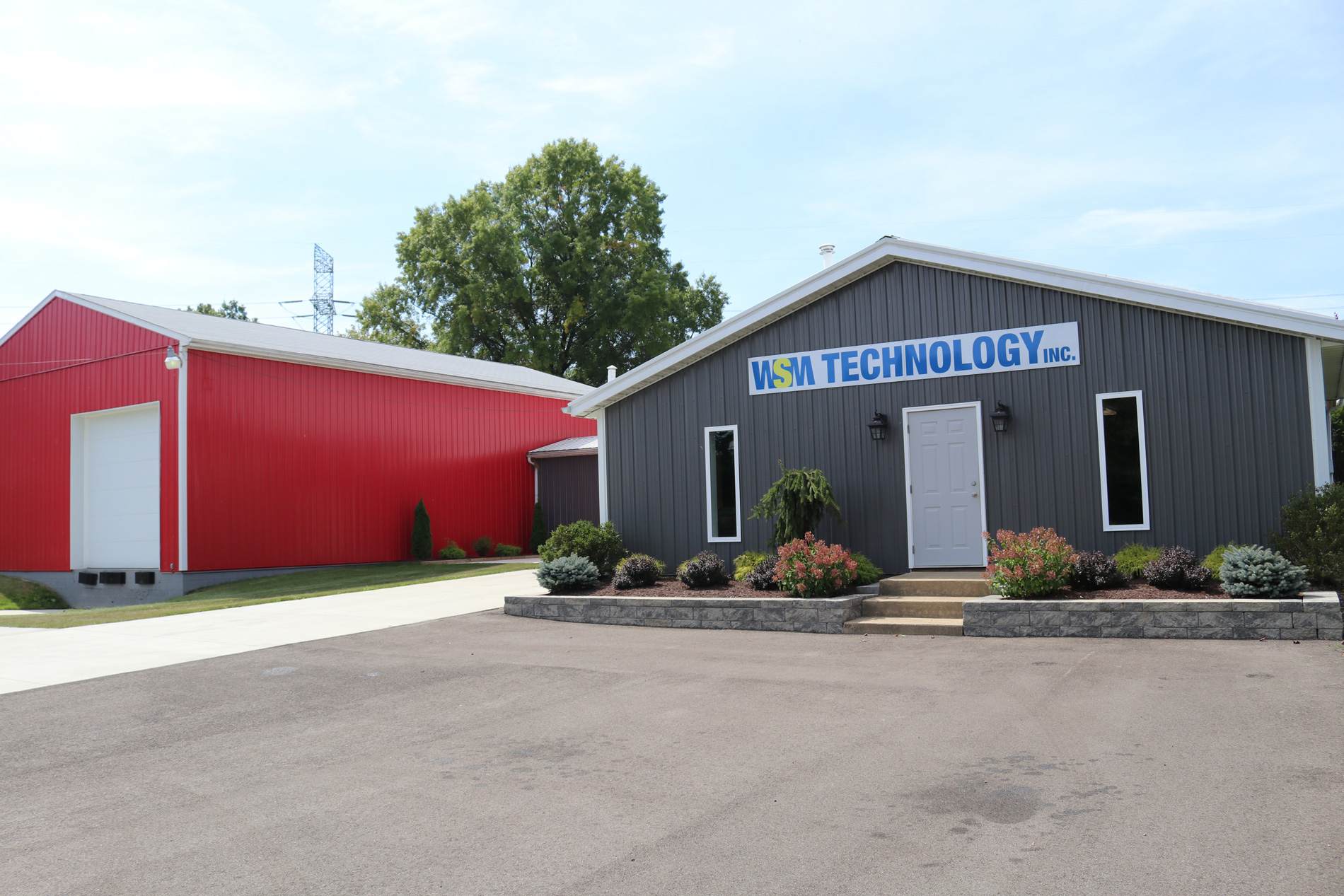
Our state-of-the-art Demonstration & Training Center in Rootstown, Ohio is equipped with live production machines, allowing aerospace clients to validate part tolerances, verify surface finish specs, and conduct rigorous time-and-cost studies before making a capital equipment investment.
Meet Our Technical Leadership Team

Blaise Buholzer
Founder & President
40+ Years EDM Engineering Expert

Phil Warlop Jr.
Technical Sales Engineer
10+ Yrs CNC/EDM Mold Tooling Expert

John Riegler
Operations Manager
15+ Yrs Machining & Operations Support
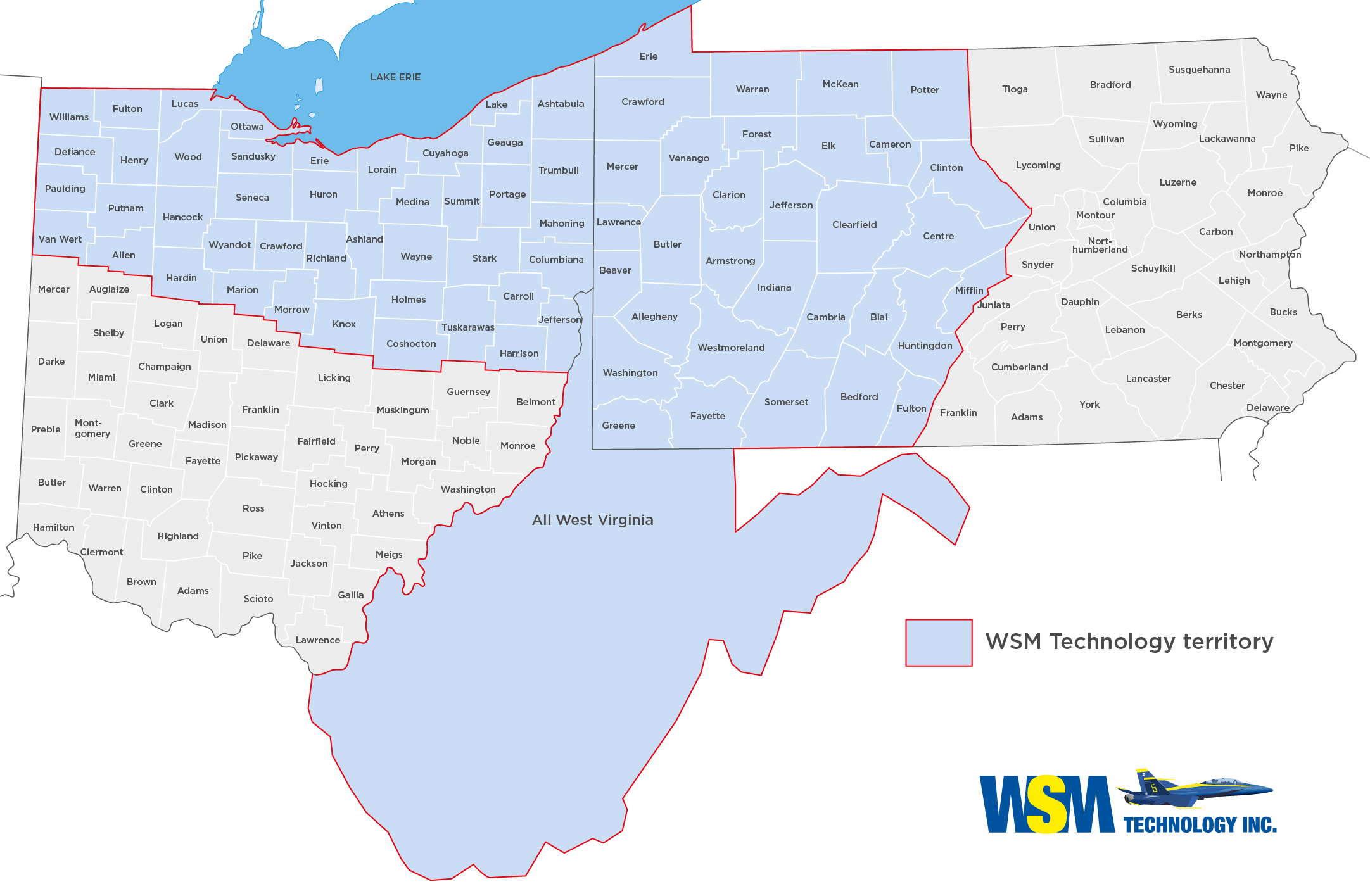
Comprehensive Factory Training & Local Regional Service
WSM Technology is an authorized regional distributor for world-class OEMs including MC Machinery / Mitsubishi Electric, Sarix Micro EDM, Schaublin Precision Lathes, Roku-Roku, OPS Ingersoll, ROMI, and Titan EDM Drilling.
We maintain factory-trained field service technicians, local spare parts inventories, and direct access to factory application engineers. When you invest in aerospace micro machining equipment through WSM Technology, you secure a long-term partner committed to maximizing machine uptime, operator efficiency, and shop profitability.
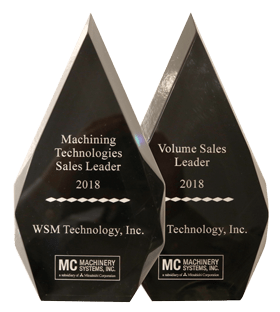
Award-Winning Excellence: Recognized by Mitsubishi Electric / MC Machinery for outstanding customer technical support and dealer performance excellence.